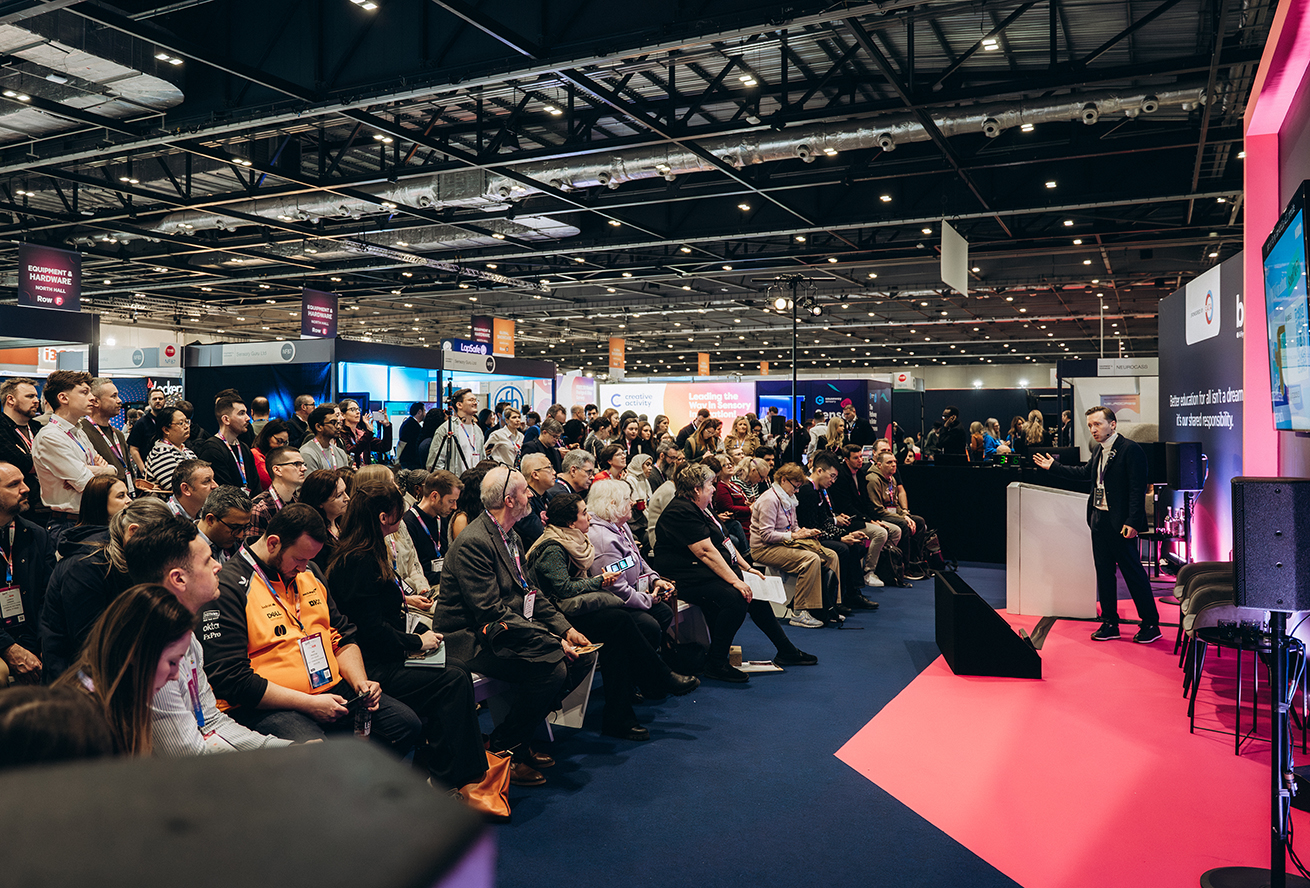

Inclusive education in Kazakhstan, launched in partnership with the World Bank, has become a vivid example of how a regional initiative can evolve into a global product. The comprehensive project implemented between 2021 and 2024 with the support of the World Bank (Project No. 8709-KZ) laid the foundation for the creation and scaling of the UNOWA brand — an international company that developed the world’s first full-cycle inclusive education solutions. Particularly inspiring is the fact that the Kazakhstan experience became the driving force behind the creation of the MIKKO AI Agent, presented on the global stage at Bett 2026 in London. Let us examine the structure of this project and how it transformed the inclusive education landscape.
Three Components: Model, People, Infrastructure
The project consisted of three key components addressing different dimensions of inclusion:
QCBS-12 — Development of an Inclusive Education Model.
The UNOWA team, in collaboration with the Ministry of Science and Higher Education of the Republic of Kazakhstan, developed a national inclusive education model. This comprehensive model defined the principles and goals of inclusion, the methodological framework, and the support and monitoring system, integrating international best practices with local solutions. At its core lies the proprietary “6 Domains of Development” methodology — a holistic approach assessing a child’s potential across six key domains: cognitive, speech, social-emotional, sensory, daily living skills, and physical development. The resulting structure became the “framework” for all subsequent steps, ensuring systemic coherence from policy and standards to classroom practices.
QCBS-13 — Specialist Training.
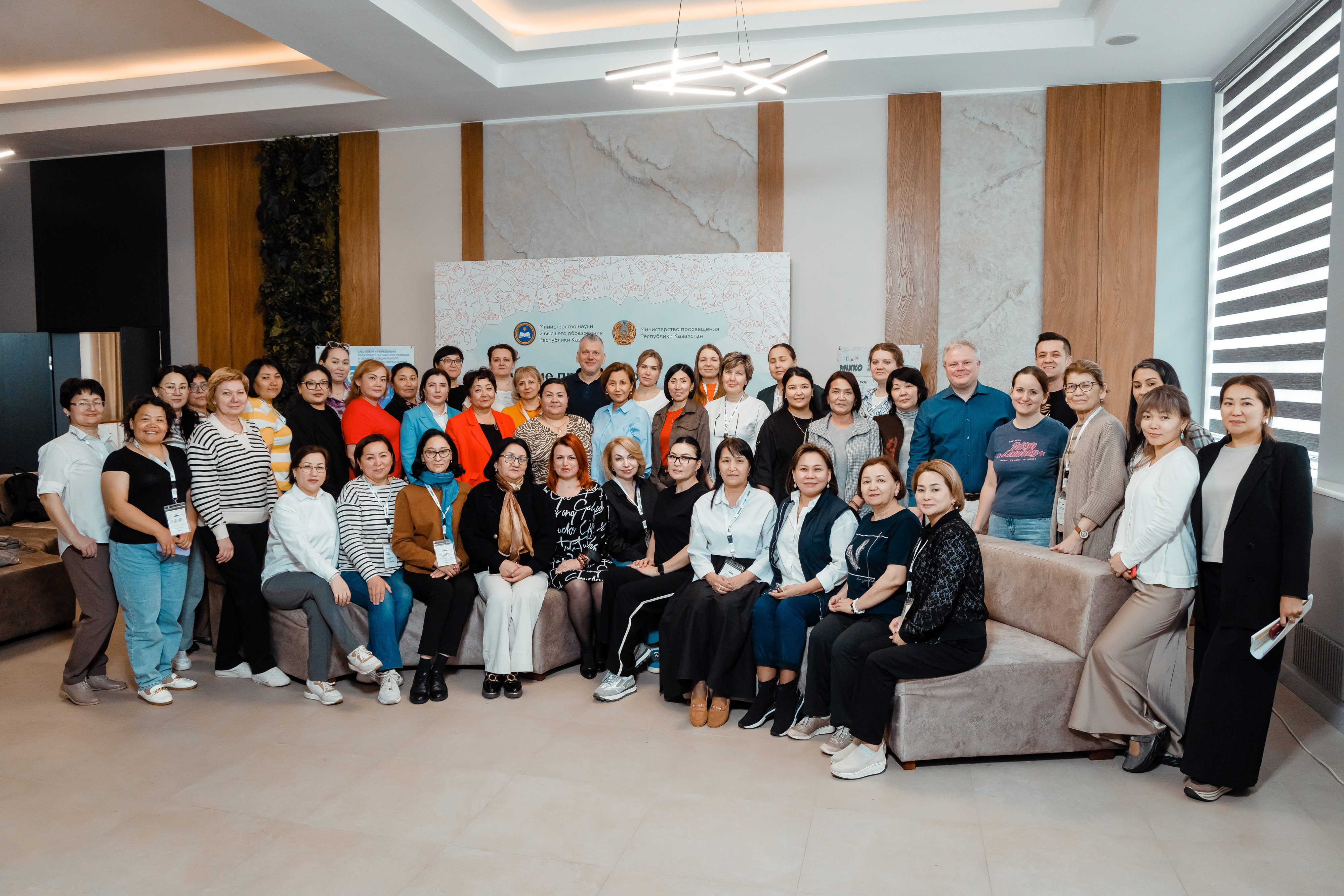
The second component was a large-scale retraining program based on the “training of trainers” approach, aimed at building a national team of inclusion experts 555. Between 2022 and 2024, 70 university lecturers and practicing specialists completed advanced training in modern inclusive methodologies. The program combined theory and practice: participants studied MIKKO courses, the “6 Spheres of Development” screening system, Applied Behavior Analysis (ABA) techniques, and ADOS-2 diagnostics. As a result, a network of trainers capable of educating colleagues and promoting inclusive practices at the regional level was established. A rich digital knowledge base was created — 232 video lectures and five online courses available on an educational platform. This component laid the foundation for sustainable human-capital development, ensuring the presence of trained mentors across the country, united within a professional community.
NCB-5 — Equipping Inclusive Classrooms.
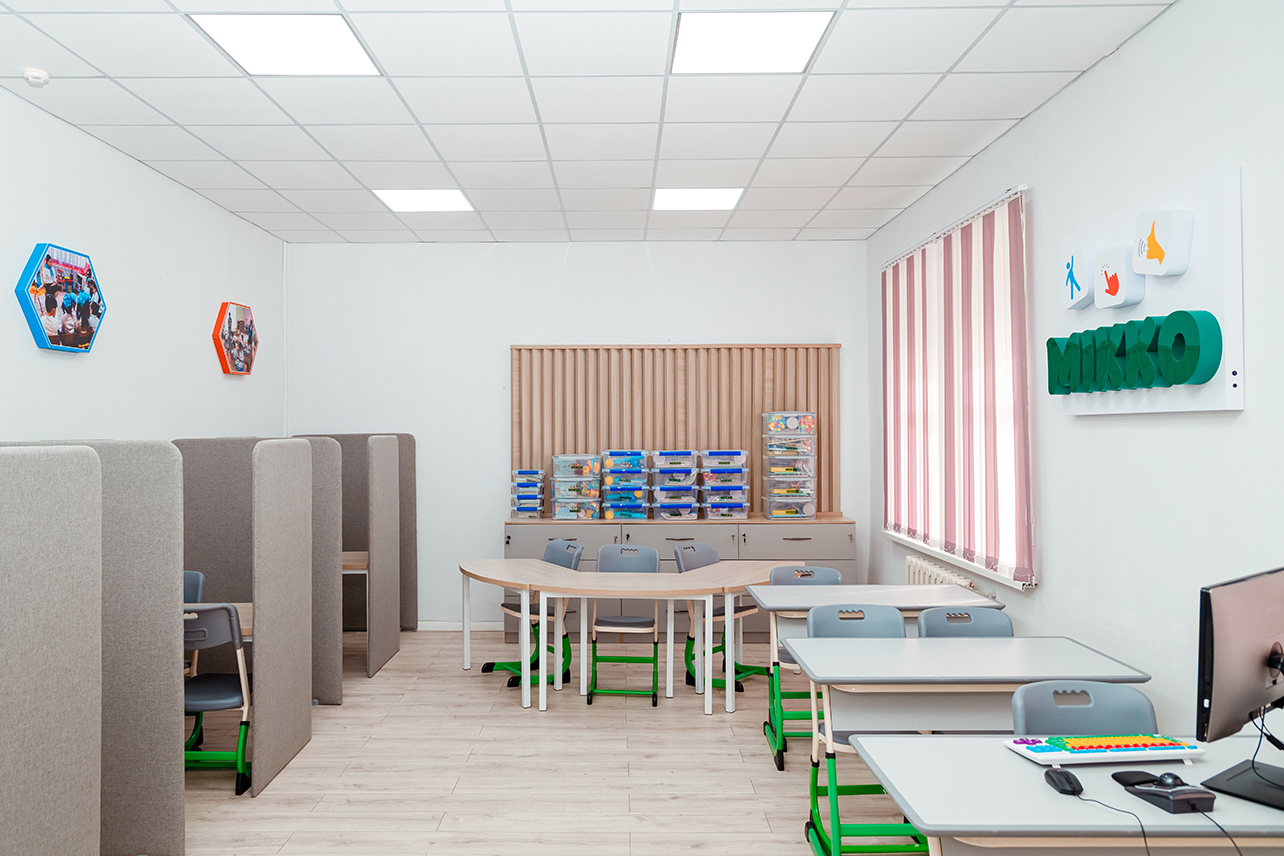
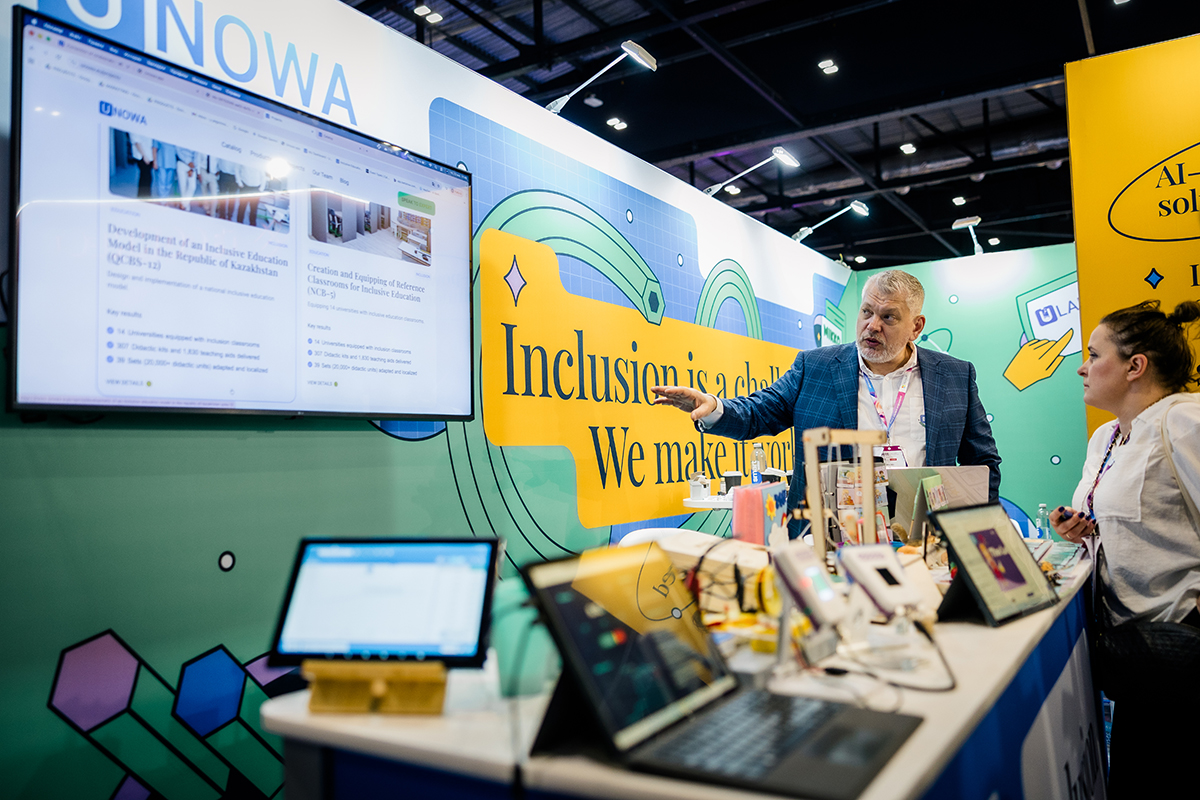
The third component focused on building the material infrastructure for inclusive education. Within the project, 14 pedagogical universities received reference inclusive classrooms equipped with state-of-the-art technology 999. A total of 307 didactic kits (over 20,000 adapted learning units) and 1,830 teaching materials were supplied, along with specialized furniture and auxiliary computer equipment 999. Each classroom was equipped with interactive tools and visual materials enabling the application of inclusive methodologies in real-life settings. Student teachers gained hands-on experience in supporting children with special educational needs in a modern learning environment. This component ensured that the innovative model was not merely conceptual but immediately implemented in real classrooms and learning spaces.
UNOWA: From a National Project to a Global Integrator
UNOWA’s role in the project was multifaceted: the company acted as a model developer, technology provider, and full-cycle solution integrator. Drawing on international expertise and a deep understanding of local needs, UNOWA integrated methodology, capacity building, and infrastructure into a single inclusive education ecosystem. As a result, Kazakhstan established a solid foundation for inclusion embedded within the national education system at all levels. This foundation did not remain local — the developed model already serves as a template for replication in other countries. In other words, Kazakhstan became a pilot platform where globally applicable solutions were tested and refined.
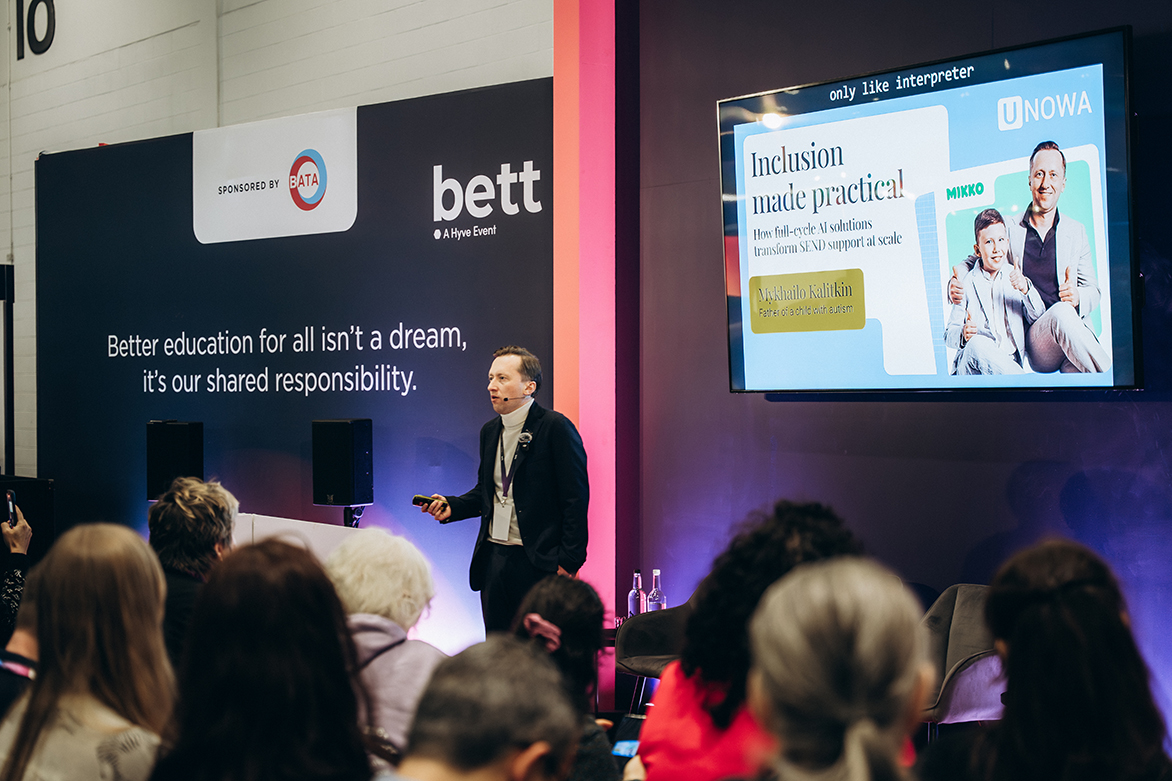
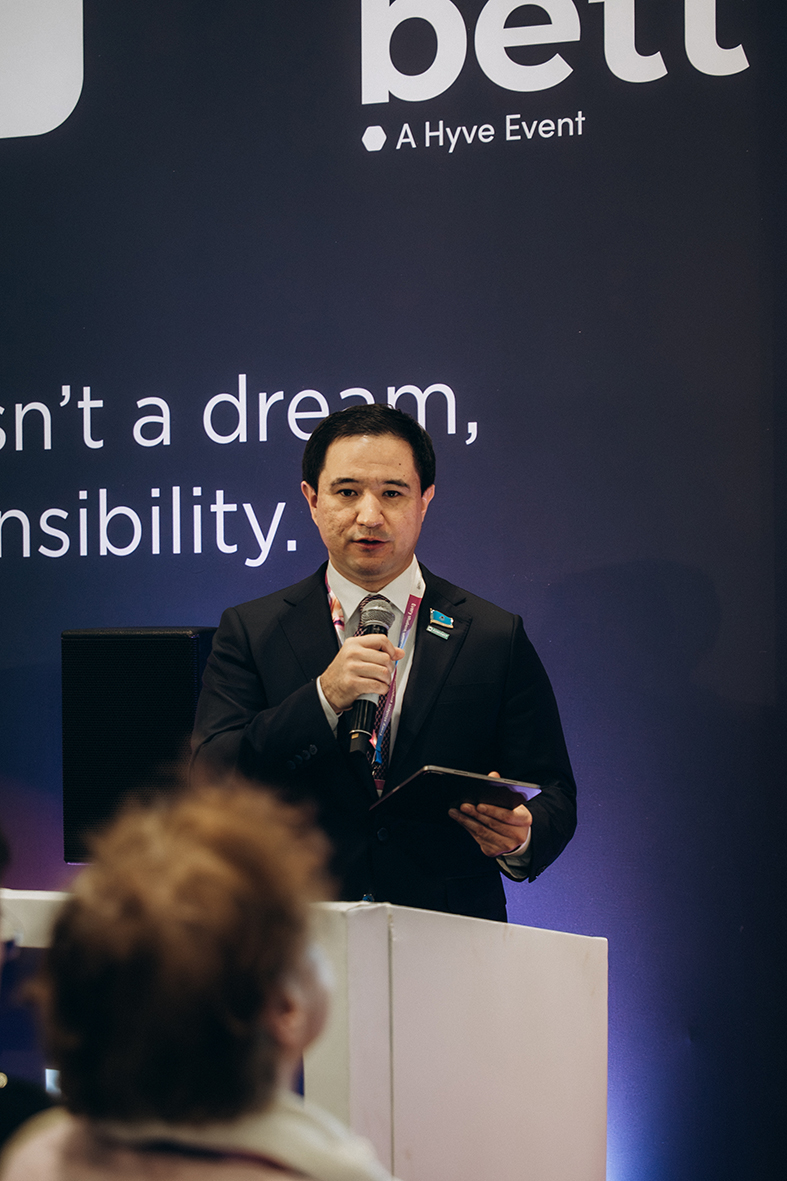
The Kazakhstani project was instrumental in shaping the UNOWA brand as a new name on the global EdTech market. The company consolidated its accumulated expertise into a product portfolio, including the MIKKO solution, and entered the international arena. Five years of intensive work culminated in a landmark event — the presentation of the MIKKO AI Agent at Bett 2026 in London, the world’s largest education technology exhibition. At Bett 2026, UNOWA presented its full-cycle “Inclusion Made Practical” model, demonstrating how an integrated system of screening, training, analytics, didactic tools, and AI support can scale inclusion from the classroom to the national level. It was particularly noted that Kazakhstan’s experience formed the basis of MIKKO — this World Bank project became the first large-scale implementation of the new system. Effectively, a product born from a regional initiative was introduced on the global stage.
MIKKO AI: Artificial Intelligence Advancing Inclusion
The MIKKO AI Agent is the core of the UNOWA ecosystem and a transformative tool redefining inclusive education. Designed as the world’s first AI assistant for inclusive learning, MIKKO aims to relieve educators of routine administrative tasks and allow them to focus on what matters most — working with children. Its operating logic is built around the “diagnosis → recommendation → planning” cycle: a digital assistant embedded in the UNOWA platform automatically converts assessment results based on the “6 Domains of Development” into a personalized Individual Education Plan (IEP) for each child.
In practice, a specialist conducts a structured assessment across six developmental domains and enters the data into the system — MIKKO immediately analyzes the profile. The AI compares skills with age norms, identifies strengths and gaps, and considers interconnections between domains (for example, how speech delays affect cognitive development). Based on this analysis, the agent prioritizes developmental goals and generates a ready-to-use IEP, including specific objectives, success criteria, instructional methods, and links to relevant MIKKO didactic materials. If behavioral challenges are present, the algorithm additionally generates a behavior support plan with ABA-based recommendations. All plans and recommendations are grounded in UNOWA’s verified knowledge base and are available to educators 24/7, enabling continuous professional support.
Thus, MIKKO automates one of the most labor-intensive processes — the development of individual education programs — freeing teachers from extensive paperwork. “Less paperwork, more time for children” was a key message emphasized at the World Inclusion Congress (WIC 2025) in Almaty, where experts from around the world highlighted the urgent need to reduce administrative burdens on educators. MIKKO directly addresses this demand. Its implementation ensures that the entire support team works with a single, coherent plan, while the continuous chain “assessment → planning → implementation → monitoring” makes child development support systematic and manageable. This scalable, system-based approach differs fundamentally from fragmented tools of the past and enables high standards of inclusive support to be replicated at scale — across schools, districts, and countries.
Scientific Validation: Kazakhstan as a Standardization Hub
It is important to note that all MIKKO solutions undergo scientific testing and adaptation in Kazakhstan. In 2025, East Kazakhstan University named after S. Amanzholov (Ust-Kamenogorsk) signed a memorandum of cooperation with UNOWA and launched a joint pilot of the “6 Domains of Development” system in real-world conditions. The pilot involved 107 children and was conducted through partnerships between the university, a city school, and a kindergarten. In particular, the “Sauletai” kindergarten and students of the special education faculty joined the project, participating in diagnostics and child support under faculty supervision. This collaboration format enables both hands-on specialist training and the collection of valuable scientific data.
Crucially, the Kazakhstani pilot is research-driven rather than formal. The “6 Domains of Development” system is undergoing a full cycle of standardization and validation on a national sample, making Kazakhstan a unique platform for the development of an internationally applicable tool. In essence, the country has become a testing ground for a new global standard in early diagnostics for inclusive education — empirically validated and culturally and linguistically adapted. The collected data will inform further refinement of MIKKO, while the pilot’s success will pave the way for implementation in other countries. This evidence-based approach distinguishes UNOWA in the EdTech space: all solutions are tested in real conditions and grounded in research before being scaled globally.
Impact: Cross-Border Cooperation and Technological Leadership
The launch of the inclusive education project in Kazakhstan clearly demonstrated how a regional initiative, supported by an international organization, can transform into a world-class solution. Within just a few years, joint efforts by national experts and the UNOWA team resulted in an ecosystem now being adopted by other countries. World Bank representatives have recognized the Kazakhstan experience as one of the most successful examples of innovative technology implementation in education. This recognition highlights the importance of combining international cooperation — pooling knowledge and resources across countries — with technological leadership, including the bold application of AI and data to address social challenges.
The story of UNOWA and MIKKO is an inspiring example of how a shared goal — making education accessible to every child — can unite people worldwide. What began as a local project has grown into a global movement for inclusive education without borders. UNOWA’s technological leadership, reinforced by scientific validation and the support of partners such as the World Bank, is shaping a new educational pathway — one in which every child, regardless of individual needs, has the opportunity to realize their potential, and educators are equipped with the tools to make that opportunity a reality. The Kazakhstan project became the starting point of this journey, proving that with the right support and knowledge exchange, even a single country can deliver innovations that transform the lives of thousands of children. This experience inspires confidence that, through collaboration and advanced technologies, inclusive education can truly become a global reality.

Check out other articles
Explore the latest perspectives from our digital research team

Equipping 439 schools: what a national STEM rollout actually takes
Armenia aims to equip every school with a science laboratory by the end of 2026. A look at the delivery layer of a 439-school rollout: seven laboratory configurations, 1.8 million items, 200+ localised teaching materials — and what ministries should ask suppliers.

Responsible AI in Education Starts Before the Algorithm
Responsible AI in education depends on knowing what your data actually represents. A UNOWA pilot study shows why measurement validity has to come before AI interpretation.
Differentiated Support in Inclusive Education: Why a Score Is Only the Start
Differentiated support in inclusive education starts where scoring ends. Here's why assessment should answer "what's getting in the way," not just "what's wrong."