
A ministry can approve a national STEM programme, secure the financing and sign the contracts, and still end up with sealed boxes in school basements. The gap between a funded decision and a changed science lesson is a delivery problem — and it is the part of educational transformation that almost never gets written about.
Armenia is currently closing that gap at national scale. In January 2026, the Office of the Prime Minister reported that "about 70 percent of the republic's schools, or about 800 schools, are equipped with modern natural science (Geography, Biology, Physics, Chemistry) and engineering (Informatics) laboratories," and that "in 2026, the program for equipping all schools with laboratories will be completed." In April 2025, Deputy Minister of Education, Science, Culture and Sports Araksiya Svadjyan had already set the target publicly: "By the end of 2026, all general education schools will be equipped with such laboratories."
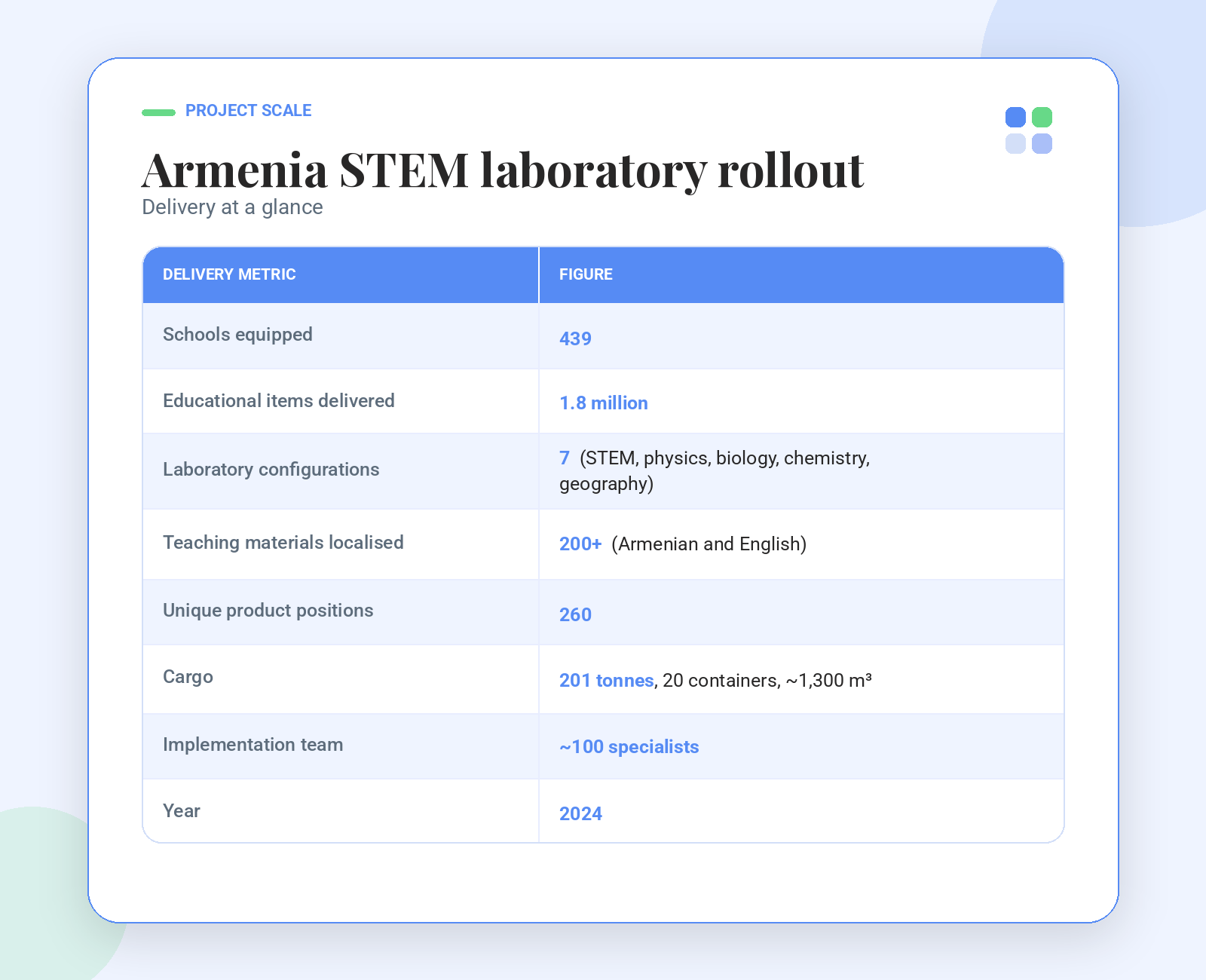
UNOWA delivered 439 of those school laboratories.
This article describes what that delivery involved — the configurations, the logistics, the localisation and the coordination — because the equipment list is the least interesting part of the story.
The context: financing was never the constraint
Armenia's laboratory programme sits inside a well-documented reform architecture. The European Union has been the principal grant financier of STEM in Armenian schools: a 2024 EU grant reported at €20–25 million was directed in part at establishing STEM laboratories and introducing new curricula, within an EU education portfolio in Armenia exceeding €70 million. The World Bank has financed the parallel Education Improvement Project, including a $25 million loan approved in 2022, and, with EU financing, the EU4Innovation STEM Project. A World Bank results framework for the education programme records 107 schools equipped against a target of 107 — the equipment phase that preceded mass rollout.
Implementation runs through the Center for Education Projects (CFEP), the project implementation unit under the Ministry of Education, Science, Culture and Sports. CFEP procures laboratory equipment through international competitive bidding, packaged in regional lots — its published tender documents include, for example, ICB 1.1 "Procurement of Science Laboratory Equipment and Materials for Schools of Armenia in Tavush".
Two things follow from this. First, the money and the political decision were settled before delivery began. Second, the programme was designed as a sequence of regional supply packages, each of which had to arrive complete, on time, and usable by teachers who had not previously worked with that equipment.
The challenge: a national rollout is a synchronisation problem
Equipping one school is a purchase. Equipping several hundred simultaneously changes the nature of the task in four ways.
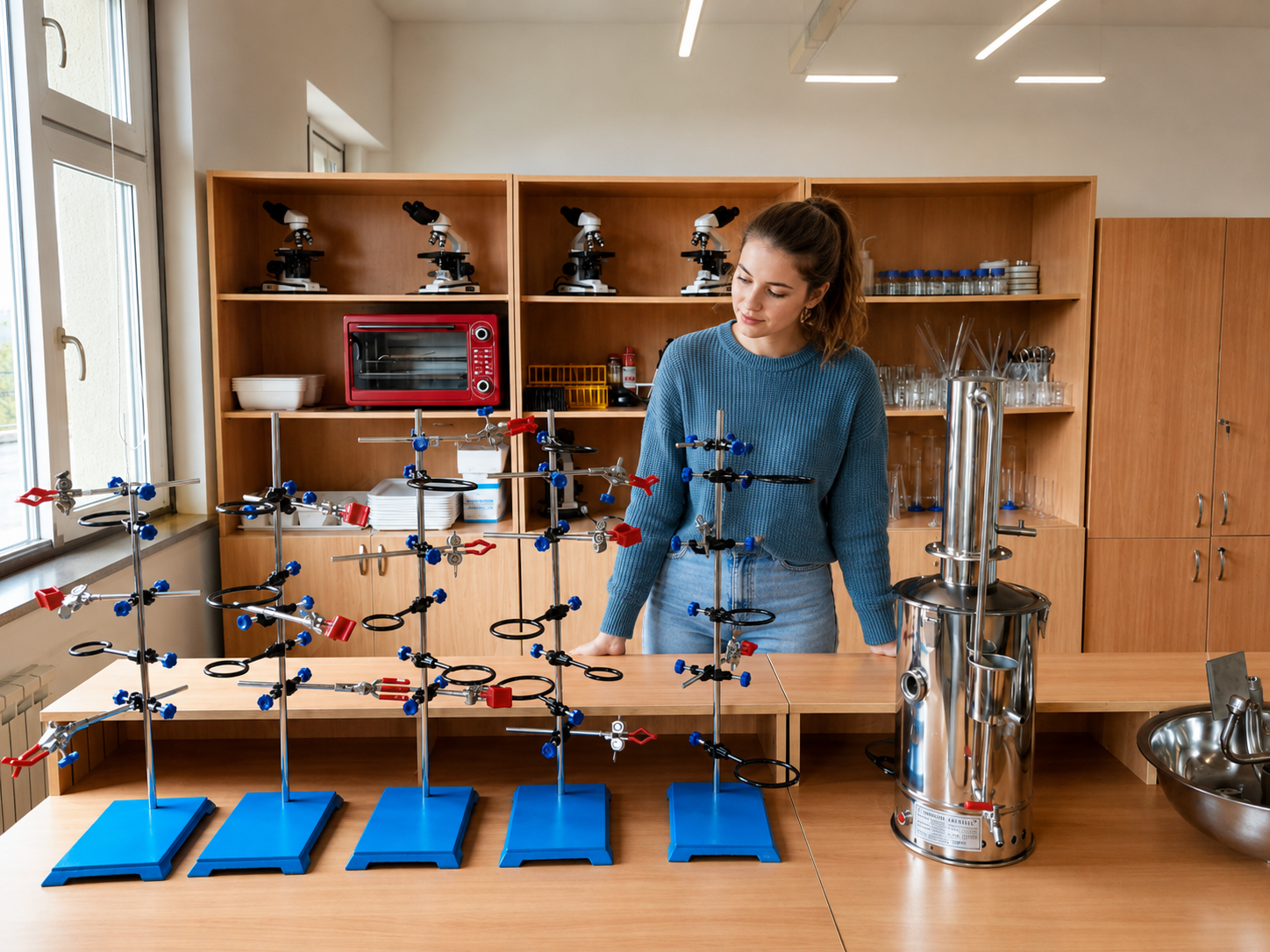
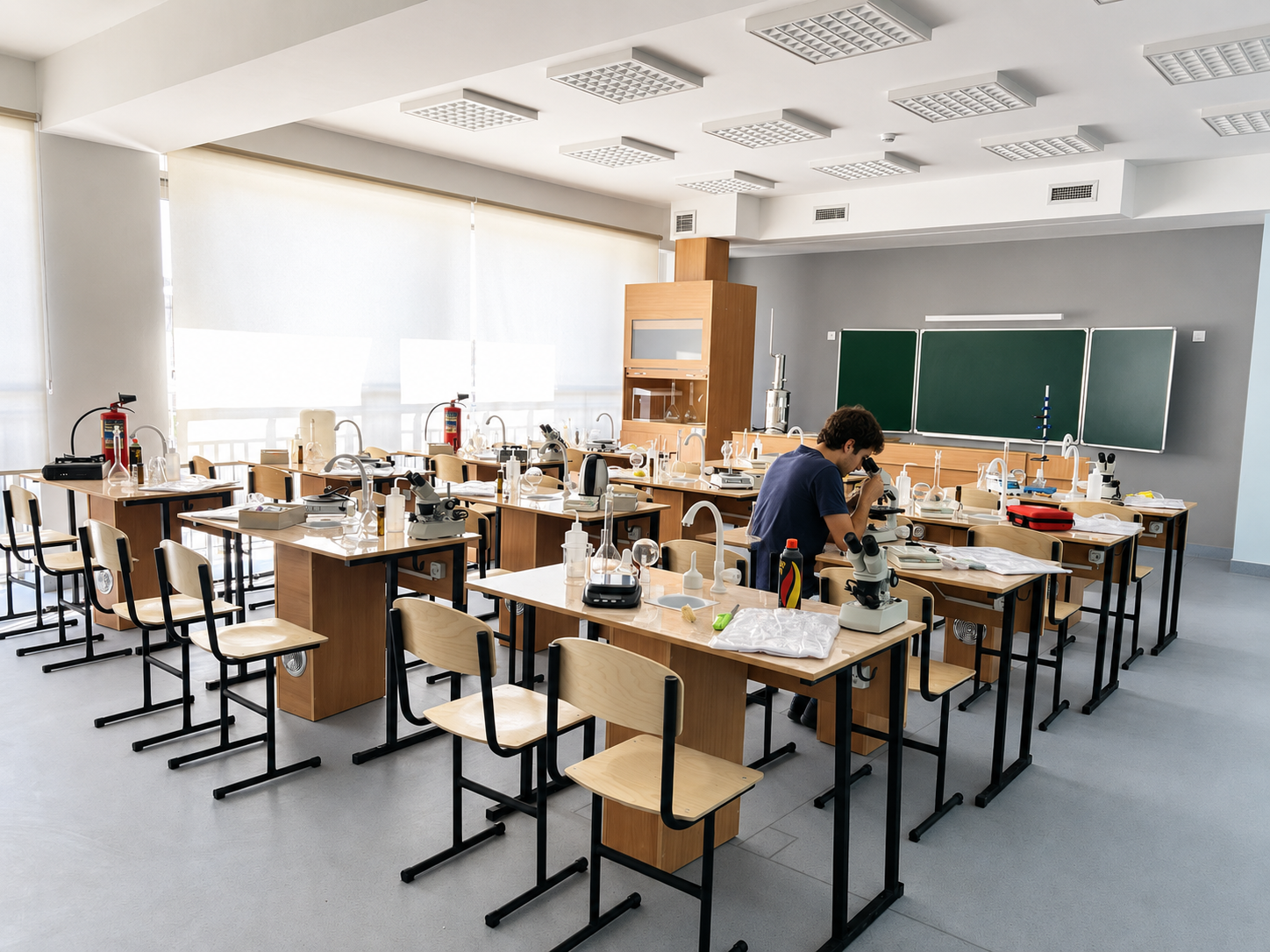
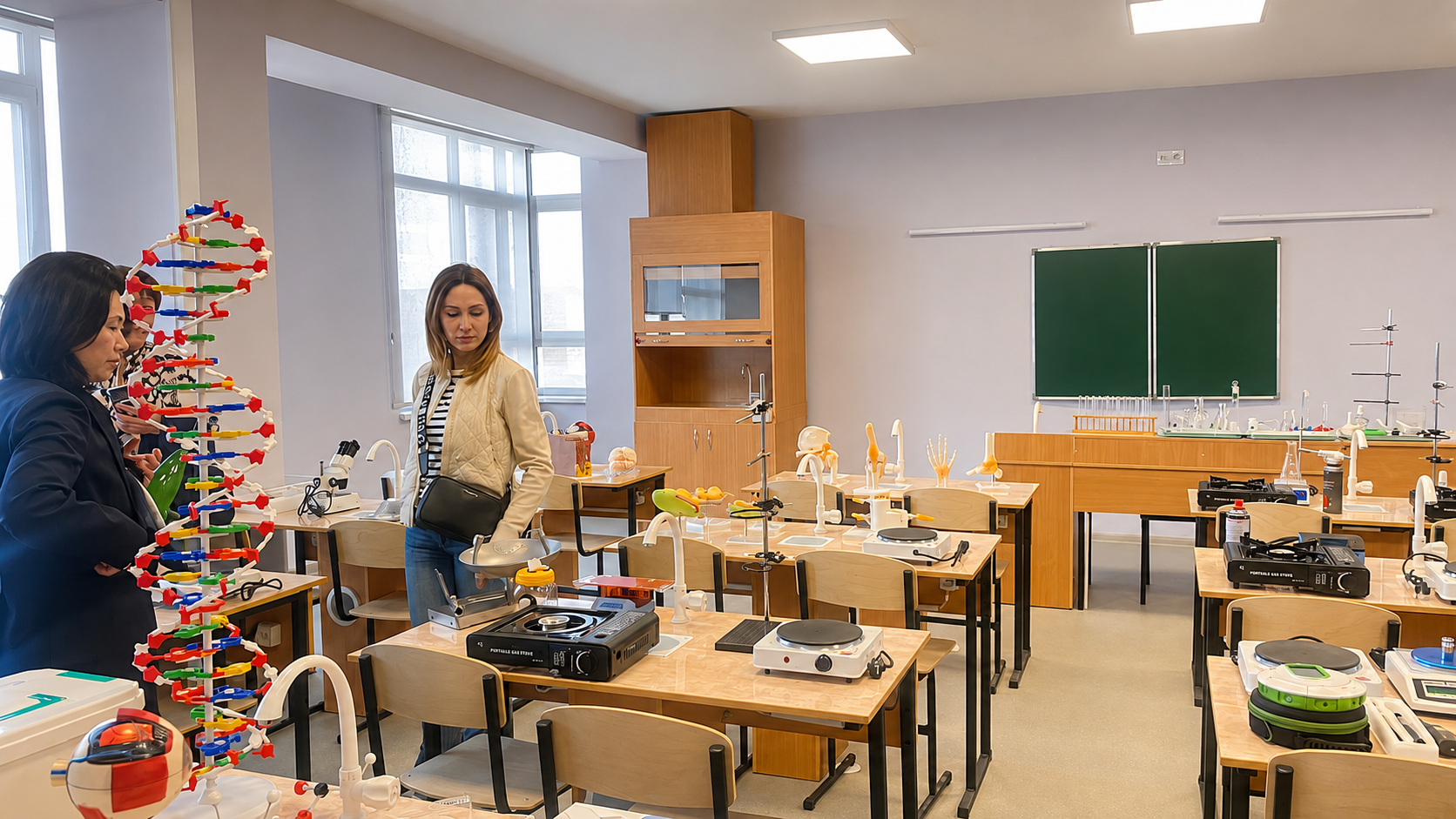
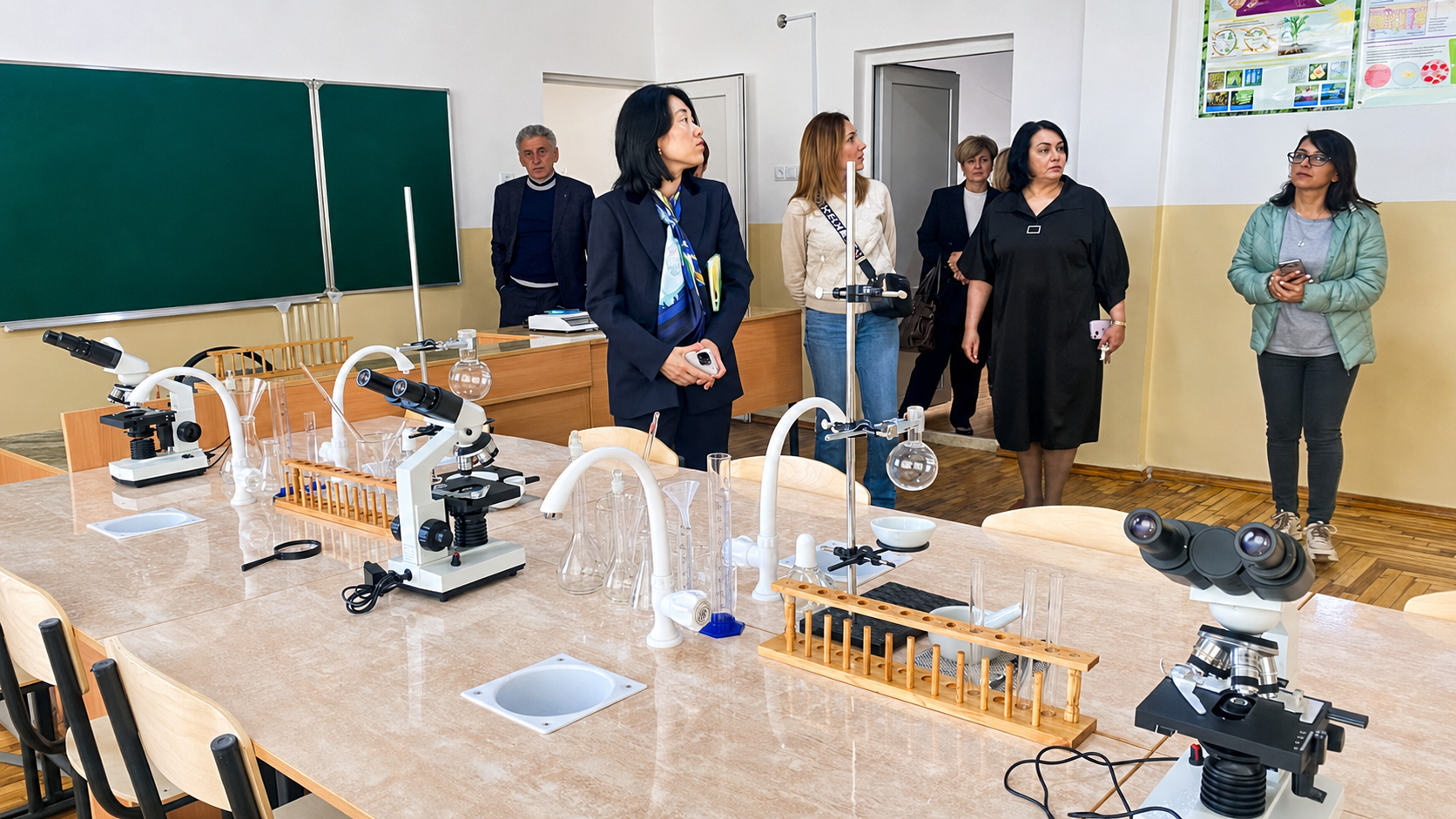
Configuration. Schools differ in size, subject offering, room availability and existing equipment. A single universal laboratory kit either overspends on small schools or underserves large ones. UNOWA's delivery used seven configurations of educational laboratories, covering STEM, physics, biology, chemistry and geography.
Volume and sequencing. The project moved 1.8 million educational items — 201 tonnes of cargo across 20 shipping containers, approximately 1,300 m³, comprising 260 unique product positions. At that volume, a single missing position multiplied across hundreds of schools stops a subject from being taught, not one lesson.
Language and curriculum fit. Equipment arrives with documentation written for the manufacturer's market. Teaching materials written for another curriculum do not map onto national standards, assessment requirements or lesson time. More than 200 teaching materials were localised into Armenian and English and aligned to national standards.
Coordination. The work was carried out by an international implementation team of around 100 people, working to the client's schedule across regions.
What was implemented
Each equipped school received a laboratory configuration matched to its subject profile, with the accompanying localised methodological materials. The delivery also introduced Sensorium AI Digital Labs — digital laboratory tooling for real-time experimentation in the sciences, where sensors capture measurements during an experiment and students work with the resulting data rather than with a textbook value.
A note on what that does and does not mean: digital laboratory tooling changes what a student can observe and analyse in a 45-minute lesson. It does not teach the lesson. The teacher remains the person who decides what the experiment is for, and the localised methodology exists precisely because equipment without a lesson plan is inert.
Scale
For national context: the Government of Armenia reported approximately 800 schools equipped with modern natural science and engineering laboratories by the end of 2025, across the whole programme and all suppliers.
What can and cannot be concluded from these numbers
Delivery metrics are evidence of implementation capacity. They are not evidence of learning outcomes, and it is worth being explicit about the difference.
What the figures show: that a national-scale laboratory rollout can be delivered to schedule with curriculum-aligned materials in the language of instruction. What they do not show: how much students learned as a result. That question requires classroom-level measurement over time, and it is a different study.
There is, however, relevant external evidence on where learning gains come from in this specific system. In February 2024, the World Bank published a study finding significant learning gains among Armenian middle-school students following curriculum reform. The instructive part is what the gains were attributed to — a change in what and how students were taught. Equipment enables that change; it does not substitute for it.
Lessons
Localisation is the schedule risk, not the shipping. Containers move predictably. Adapting 200+ teaching materials to a national standard, in two languages, with subject specialists reviewing them, is the work that determines whether laboratories are used in the term after delivery or the year after.
Configure, don't standardise. Seven configurations existed because one would have produced systematic mismatch. Ministries planning a rollout should specify configuration logic in the tender, not discover it during delivery.
Completeness beats speed. A laboratory delivered at 95% completeness is not 95% usable — the missing 5% frequently includes the consumable or the sensor the experiment depends on. Position-level completeness tracking across 260 positions is a delivery requirement, not administrative overhead.
The reference case is the previous phase. Armenia's programme records an equipment phase of 107 schools, against a target of 107, before national rollout. Programmes that skip that step tend to discover configuration and methodology problems at the least recoverable scale.
What decision-makers should ask a supplier
Before signing a national or regional laboratory package, four questions separate suppliers from implementation partners:
- How many configurations do you propose, and on what basis are schools assigned to them?
- Who localises the teaching materials, into which languages, and against which national standard — and who reviews the result?
- How is position-level completeness verified per school, not per shipment?
- What happens in the term after delivery: who trains the teachers, and who is accountable if the laboratories go unused?
Armenia's programme is on course to reach every school in the country. The reason has less to do with equipment catalogues than with the answers to those four questions.

Check out other articles
Explore the latest perspectives from our digital research team
Responsible AI in Education Starts Before the Algorithm
Responsible AI in education depends on knowing what your data actually represents. A UNOWA pilot study shows why measurement validity has to come before AI interpretation.

Differentiated Support in Inclusive Education: Why a Score Is Only the Start
Differentiated support in inclusive education starts where scoring ends. Here's why assessment should answer "what's getting in the way," not just "what's wrong."
Sensory Processing in Child Development: What the UNOWA Pilot Found
A plain-language breakdown of the UNOWA pilot study on sensory processing in child development — the data, the factor analysis, and what still needs validation.