
Assessment becomes meaningful when it changes what happens next.
In inclusive education, this sounds obvious. Yet many assessment processes still end at the same point: a score, a category, or a description of what a child can and cannot do.
That information can be useful. But it isn't the same as support. A school still needs to answer a more practical question: what should we change so this child can participate, communicate, and learn more effectively?
The UNOWA Six Developmental Domains pilot study raises a distinction that can help answer that question differently.
The pilot analysed data from 153 children aged 18–83 months across five functional domains: cognitive, social, physical, sensory, and daily living skills. Four domains showed substantially stronger relationships with age. Sensory functioning didn't follow the same pattern — it was much less strongly associated with age, showed weak or near-zero relationships with the other developmental domains, and separated onto a distinct factor in exploratory factor analysis.
The study proposes that sensory functioning may be better understood as a regulatory profile rather than another age-graded developmental score. That distinction has practical consequences for differentiated support in inclusive education.
What a Child Can Do Is Not Always What a Child Can Access
Developmental assessment often focuses on capability: can the child follow an instruction, solve a task, communicate a need, complete a daily activity, participate socially?
These are essential questions. But performance never happens in a vacuum.
A child may understand a task and still struggle to demonstrate that understanding in a noisy or overstimulating environment. A child may want to join a group but withdraw when auditory or tactile demands get too high. A child may have the physical ability to complete an activity but find an unpredictable transition difficult to regulate.
In each case, the underlying skill may be present. What changes is access to that skill under specific conditions — which is the whole reason the distinction between developmental level and sensory-regulatory profile matters.
From "What's Wrong?" to "What's Getting in the Way?"
Observable behaviour is usually the first thing adults notice: a child covers their ears, leaves their seat, avoids a material, refuses to move to the next activity, withdraws from a group.
These behaviours are real. They aren't explanations.
The pilot study's discussion shows how the same behaviour can be understood differently once sensory-regulatory conditions come into the picture. Covering the ears may be linked to auditory overload rather than simply "not listening." Repeated movement may reflect a regulatory need rather than only inattention. Avoidance may connect to tactile demand. Difficulty with transitions may be affected by unpredictability and sensory load.
This isn't a claim that every behavioural difficulty is sensory in origin — the study doesn't support that. The point is narrower and more useful: behaviour alone may not give a school enough information to choose the right support.
Assessment Should Change the Support Decision
If a child can't complete a task because the cognitive demand is too high, simplifying or scaffolding the task may be appropriate.
But if the child understands the task and can't access that ability because the environment is overwhelming, simplifying the learning objective misses the actual barrier. The support decision is different because the problem is different.
The pilot study discusses possible environmental and instructional responses, including reducing unnecessary noise, using visual instructions, working in smaller groups where appropriate, providing movement opportunities, creating more predictable routines, and preparing children for transitions.
None of these are a universal checklist. A movement break isn't automatically the right response to every child who leaves their seat. Noise reduction isn't the answer to every participation difficulty. Visual instructions aren't a substitute for understanding the individual profile. The value lies in differentiation — using assessment to identify which conditions may matter for which child.
Why This Matters Beyond One Classroom
At school and system level, inclusive education can't depend entirely on individual improvisation.
Teachers need information they can translate into practice. SEN and inclusion teams need a shared language for barriers to participation. School leaders need approaches that scale consistently without reducing children to labels. Education systems need evidence that connects assessment, support, and outcomes.
That's why "what does the score say?" is too small a question. A more useful sequence:
- What can the child currently do?
- What conditions may be interfering with participation?
- What support response is appropriate to test?
- What information do professionals need to make that response practical?
What the Study Does — and Doesn't — Show
The UNOWA pilot doesn't answer all of these questions. It's a pilot study, and the authors explicitly identify the need for further psychometric refinement, larger samples, test-retest reliability, external validation, and more differentiated sensory subscales.
That caution matters. The study shouldn't be read as proof that a particular intervention works for every child, or as final validation of a complete assessment system. What it does provide is an initial, evidence-based reason to take the distinction between developmental capability and sensory-regulatory conditions seriously.
For the full data behind this distinction — the correlations, the factor analysis, the item-level findings — see our research explainer on the UNOWA pilot.
From Measurement to Participation
Inclusive assessment should do more than classify difficulty. Its practical value is helping professionals understand what enables participation.
Sometimes that means teaching a new skill. Sometimes it means changing how a task is presented. Sometimes it means making a transition more predictable. Sometimes it means reducing unnecessary sensory load. And sometimes it means recognising that the child already has the skill — the current environment is just making it hard to access.
That's where assessment starts to become differentiated support. Not when it produces another score. When it helps create a clearer, more individualised next step.
FAQ
What does differentiated support mean in inclusive education? It means matching the support response to the specific conditions affecting a child's participation, rather than applying the same intervention to every child who shows similar behaviour.
How is a sensory-regulatory profile different from a skill level? A skill level describes what a child can do. A sensory-regulatory profile describes the conditions under which the child can access and use that skill — and, per this pilot, it doesn't follow the same age-linear pattern as other developmental domains.
Should schools apply the same environmental fixes to every child? No. The study is explicit that its examples — noise reduction, visual instructions, movement breaks, predictable transitions — are possible responses to test, not a universal checklist.
Is the UNOWA pilot a finished, validated assessment tool? No. It's a preliminary pilot study. The authors call for larger samples, test-retest reliability, and external validation before the sensory domain is ready for full standardization.

Check out other articles
Explore the latest perspectives from our digital research team
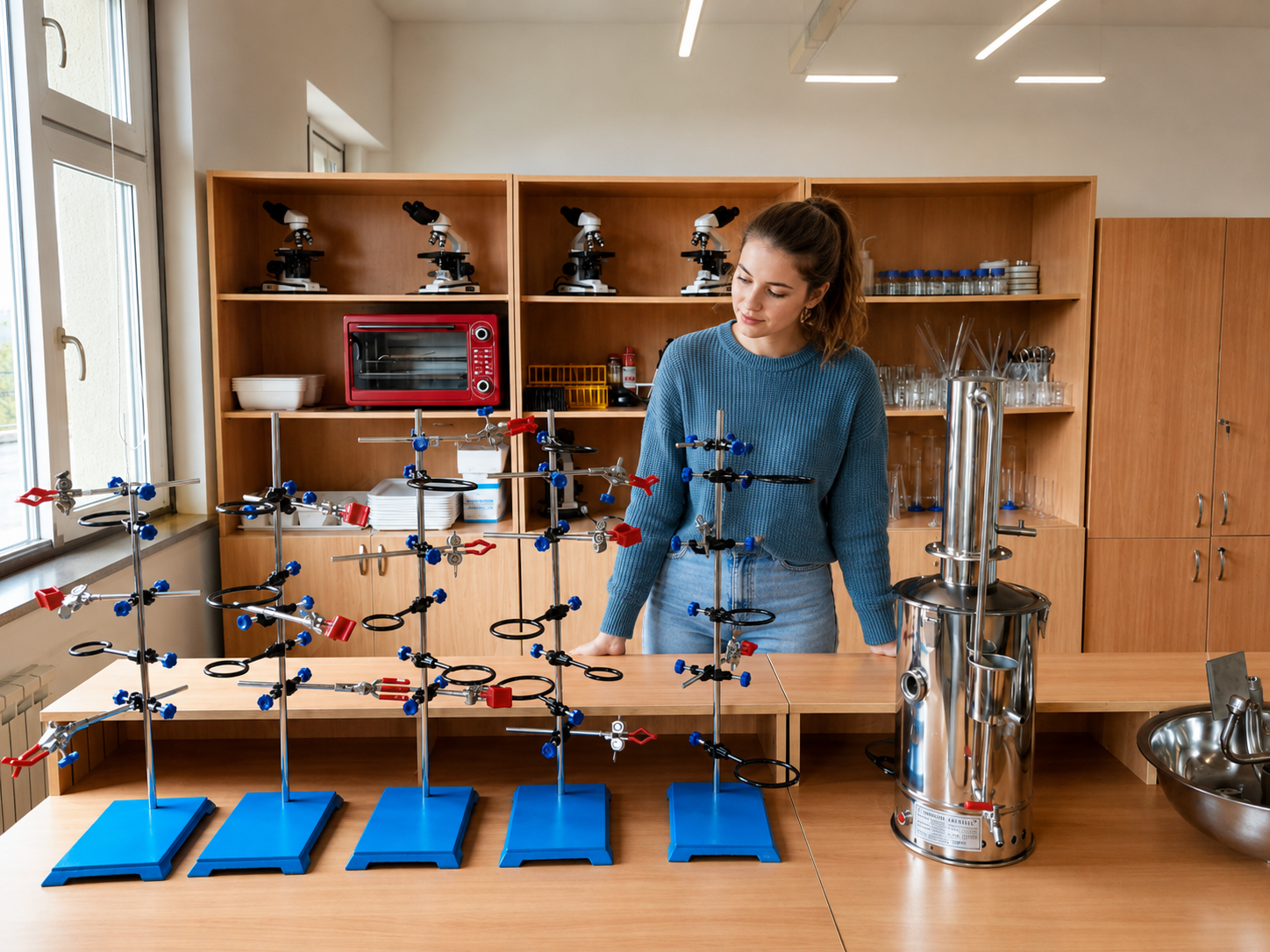
Equipping 439 schools: what a national STEM rollout actually takes
Armenia aims to equip every school with a science laboratory by the end of 2026. A look at the delivery layer of a 439-school rollout: seven laboratory configurations, 1.8 million items, 200+ localised teaching materials — and what ministries should ask suppliers.

Responsible AI in Education Starts Before the Algorithm
Responsible AI in education depends on knowing what your data actually represents. A UNOWA pilot study shows why measurement validity has to come before AI interpretation.

Sensory Processing in Child Development: What the UNOWA Pilot Found
A plain-language breakdown of the UNOWA pilot study on sensory processing in child development — the data, the factor analysis, and what still needs validation.