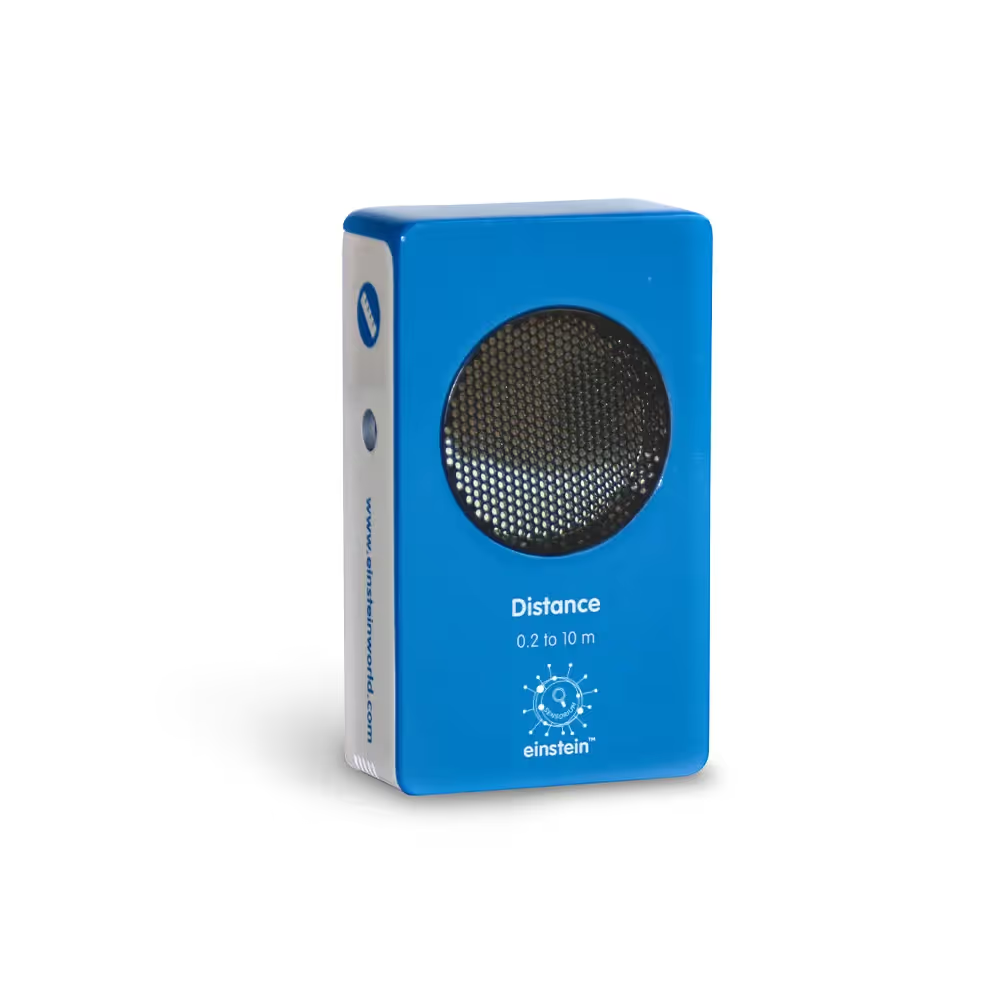
Wireless conductivity sensor

ULabs
sens-at-019
Sensorium

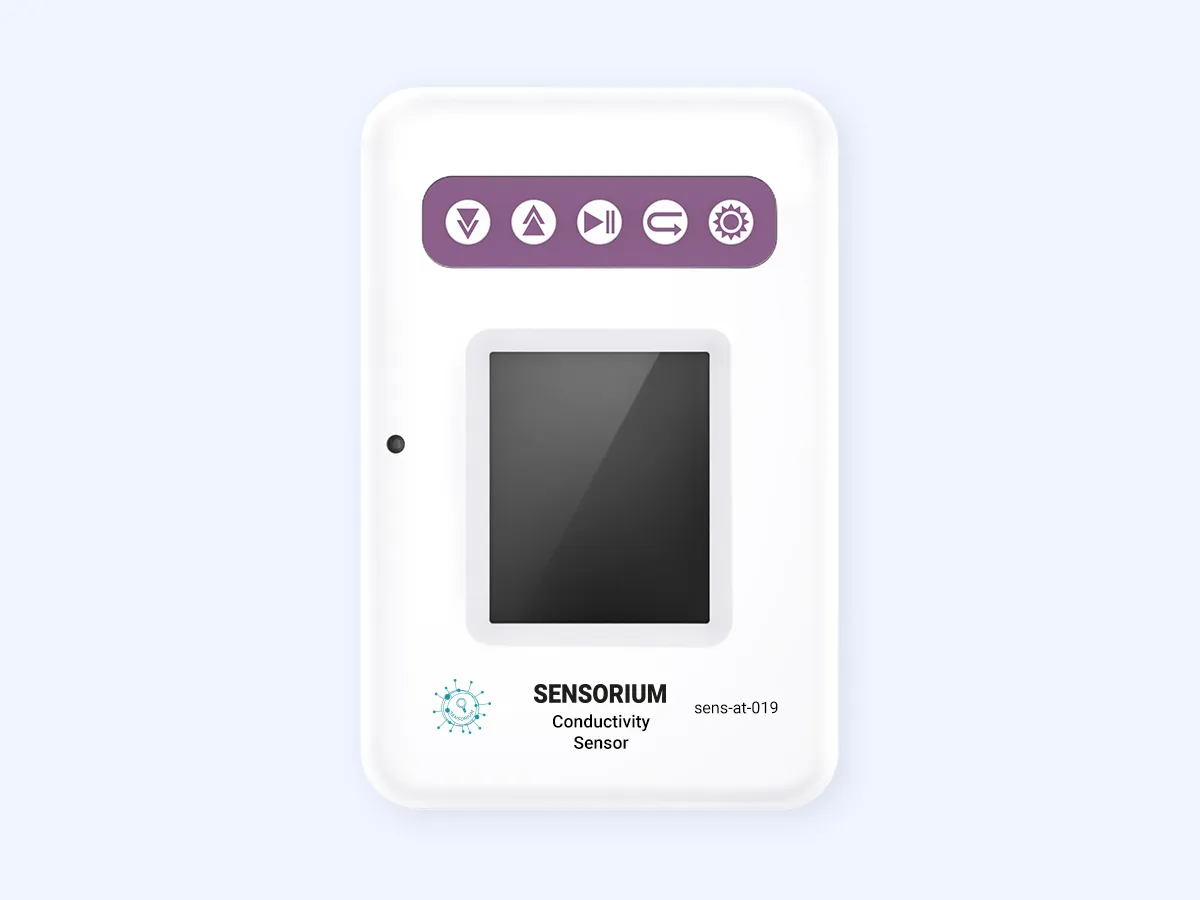
Conductivity sensor featuring platinum electrodes to measure total ion concentration in solutions.

Thank you! Your submission has been received!
Oops! Something went wrong while submitting the form.

Specification

icon plus

Working Principle

The conductivity electrode has two platinum plates fixed on a built-in glass base, with their positions and distance preset. When the electrode is inserted into a liquid or conductive fluid, the sensor measures the solution's conductivity by detecting the current between the two platinum plates. A potential difference is applied between the two platinum electrodes, and the resulting current is proportional to the solution's conductivity. The sensor converts this current signal into a voltage signal, which is then transformed into a 0–5 V output via the data collector's analog-to-digital converter. The results are stored in the collector's memory.

Since current in a solution is transmitted through ions, higher ion concentrations lead to stronger conductivity. Therefore, the conductivity sensor can also be used to measure the concentration of ions in solutions.

Measurement Capabilities

Range: 0–20,000 μS/cm

Resolution: 1 μS/cm

Structure and Features

  1. Equipped with a 1.8-inch color LCD screen.
  2. Configured with five functional buttons for simple and convenient operation.
  3. Supports high-speed USB data transfer for fast communication with data collectors.
  4. Enables wireless communication with experimental terminals.
  5. Features a built-in large-capacity removable battery.
  6. Includes a snap-on sensor interface for compatibility with standard sensors in combined experiments.
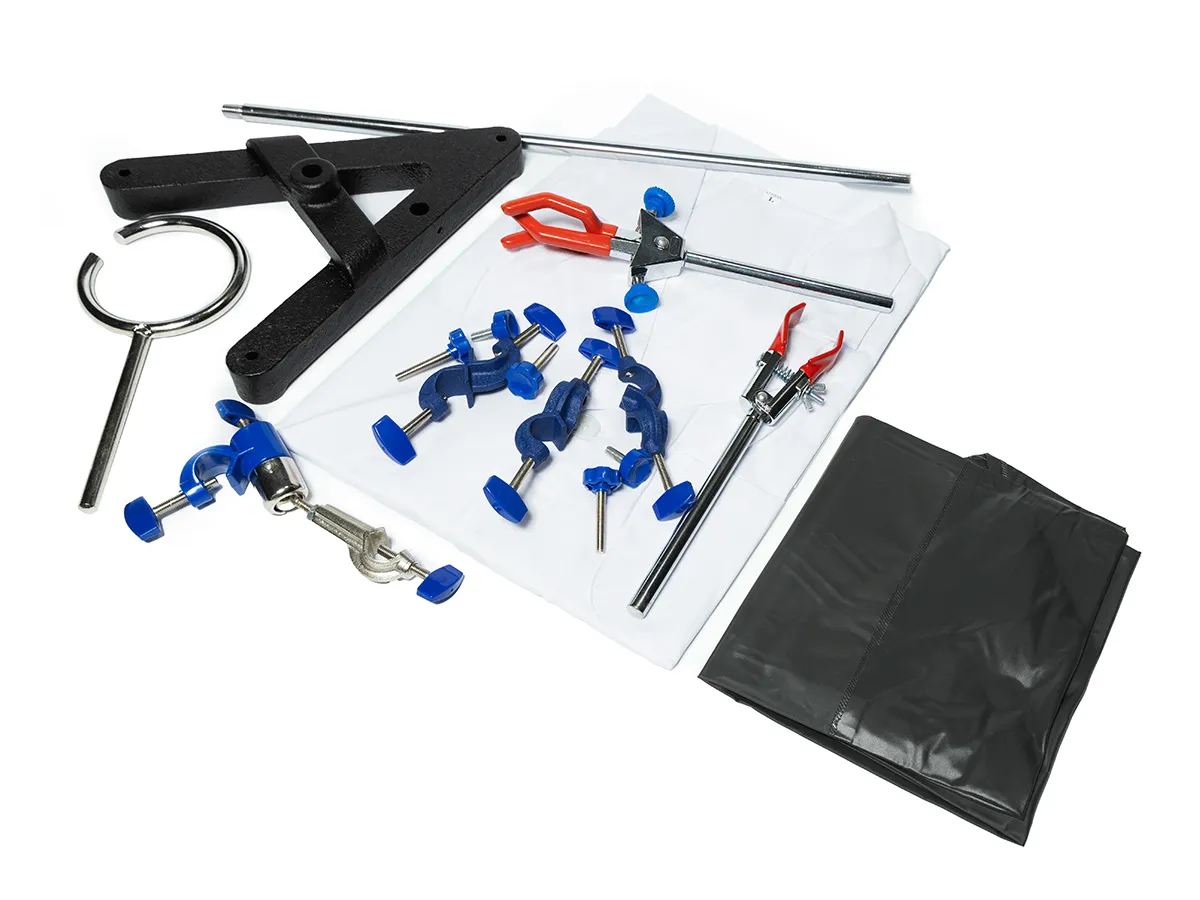
  7. Provides a fixed mounting position for integration with traditional equipment on an iron stand.
  8. Compatible with iOS, Android, and Windows operating systems.

Powered by AI

icon plus

Built‑in AI functions open new possibilities for data analysis, automated processing of results, and the creation of interactive experiments.

Additional info

icon plus

Typical Applications

The conductivity sensor can be used in the field or laboratory to measure solution conductivity or total ion concentration. While it cannot identify specific ion types, it quickly determines the total concentration of ions. Typical applications include studying the conductivity of various solutions, environmental research, monitoring water purity, and investigating the effects of chemical coagulation on conductivity, among other uses.

Note

This product is intended for educational purposes only and should not be used for industrial, medical, research, or commercial applications.

Usage Tips

  1. Rinse the sensor electrode tip with distilled water before use.
  2. When inserting the sensor tip into the sample solution, ensure the electrode is fully submerged.
  3. After use, rinse the electrode with distilled water and dry it with a paper towel or lab cloth before storage. Avoid damaging the electrode's inner surface during drying.
  4. Fats, oils, fingerprints, and other residues on the electrode may cause inaccurate measurements and unstable responses.
  5. If the sensor probe is contaminated, soak it in water with mild detergent for 15 minutes, followed by immersion in a diluted acid solution (preferably 0.1 M HCl or 0.5 M acetic acid) for another 15 minutes, then rinse thoroughly with distilled water.
  6. For storage, it is best to soak the probe in deionized water. If stored dry, soak it in deionized water for 5–10 minutes before use.
  7. The conductivity sensor probe is made of glass and is fragile — handle with care.
  8. Operating temperature range for the conductivity sensor probe: 0–80 °C.
  9. Response time: Achieves 98 % of readings within 10 seconds.
  10. Service life of the conductivity probe: 1 year.
  11. pH and temperature sensors should not be connected to the same data collector as the conductivity sensor or placed in the same solution simultaneously (because the conductivity sensor generates an output signal in the solution, which may interfere with other sensors).
  12. If simultaneous use with the above sensors is necessary, the following methods are available: To obtain readings for both conductivity and pH or conductivity and temperature, connect the sensors to two separate data collectors.
How long is the MIKKO Course?
Is the MIKKO Course good for new teachers
How long is the MIKKO Course?
Ask something?
More information

What it is

Wireless sensor with built‑in AI features that unlock new possibilities for data analysis and make experiments highly interactive.

Who it’s for

Ideal for school laboratories, university courses, and STEM projects.

Benefits

  • Fully wireless connection — mobility and ease of use.
  • Wide range of experiments in physiology, ecology, biochemistry, and cell biology.
  • The sensor is designed for both teachers and students, providing a complete learning cycle: from experiment setup to real‑time analysis and interpretation of results for K-12 curriculum.

Innovation

Built‑in AI functions open new possibilities for data analysis, automated processing of results, and the creation of interactive experiments.

More information

What it is

Wireless sensor with built‑in AI features that unlock new possibilities for data analysis and make experiments highly interactive.

Who it’s for

Ideal for school laboratories, university courses, and STEM projects.

Benefits

  • Fully wireless connection — mobility and ease of use.
  • Wide range of experiments in physiology, ecology, biochemistry, and cell biology.
  • The sensor is designed for both teachers and students, providing a complete learning cycle: from experiment setup to real‑time analysis and interpretation of results for K-12 curriculum.

Innovation

Built‑in AI functions open new possibilities for data analysis, automated processing of results, and the creation of interactive experiments.

Related products
view all

What our clients are saying about us.
view all

Customer testimonials

What our clients are saying about us.

Working with UNOWA was a turning point for our university. Their expert-led training in ABA, ADOS-2 and MIKKO reshaped how we think, teach, and prepare inclusive educators. The model inclusion classroom they equipped has become a living lab, a space where theory becomes hands-on skill. This partnership didn’t just support a project. It laid the foundation for a more humane, modern and inclusive education system in Kazakhstan.
Yerkin Zhumankulova
Yerkin Zhumankulova
Thanks to UNOWA’s innovative approach and professional guidance, we’ve redefined how we prepare future educators. The MIKKO training and inclusion lab brought international best practices to our university, not just as theory, but as living, hands-on tools that inspire confidence and real change.
Irina Rovnyakova
Vice-Rector in Academic Affairs. Kazakh National Women's Teacher Training University
Working with the UNOWA team was a valuable and supportive experience in delivering psychological and educational projects. Their reliable platform, openness to dialogue, and continuous technical support allowed me to focus on the quality and meaning of education. I confidently recommend UNOWA as a trusted partner for the development of psychological education and human-centered support.
Liudmyla Lahuta
Liudmyla Lahuta
Thanks to our partnership with UNOWA, even schools in Armenia’s most remote regions now have access to fully equipped science and technology labs. Nearly half of the country’s schools have been modernized, bringing equal learning conditions to every student, no matter where they live.
Zhanna Andreasyan
President of the International Institute of Psychological Maturity INC
UNOWA's national project equipped 14 Kazakhstan universities with inclusive classrooms to a unified standard. They delivered top-quality kits, equipment, digital courses with 24/7 access, and localized resources. This game-changer strengthened inclusive education foundations nationwide.
Dastan Yessenov
Dastan Yessenov
UNOWA's national-level ABA and ADOS-2 training became a milestone for Kazakhstan's education system. The program was comprehensive, well-structured, and perfectly aligned with inclusive education modernization goals nationwide. I appreciated the balance of deep theory, practical sessions, and 24/7 online access. This strengthened specialists' ABA and diagnostics skills, directly improving support for children with special needs.
Karlygash Zholdassova
Coordinator of the PIU of World Bank in the Republic of Kazakhstan
icon arrow left
icon arrow right

Customer testimonials

What our clients are saying about us.

UNOWA's national project equipped 14 Kazakhstan universities with inclusive classrooms to a unified standard. They delivered top-quality kits, equipment, digital courses with 24/7 access, and localized resources. This game-changer strengthened inclusive education foundations nationwide.
Dastan Yessenov
Coordinator of the PIU of World Bank in the Republic of Kazakhstan
UNOWA's national-level ABA and ADOS-2 training became a milestone for Kazakhstan's education system. The program was comprehensive, well-structured, and perfectly aligned with inclusive education modernization goals nationwide. I appreciated the balance of deep theory, practical sessions, and 24/7 online access. This strengthened specialists' ABA and diagnostics skills, directly improving support for children with special needs.
Karlygash Zholdassova
Inclusion Education Specialist of PIU of World Bank in the Republic of Kazakhstan
Working with the UNOWA team was a valuable and supportive experience in delivering psychological and educational projects. Their reliable platform, openness to dialogue, and continuous technical support allowed me to focus on the quality and meaning of education. I confidently recommend UNOWA as a trusted partner for the development of psychological education and human-centered support.
Liudmyla Lahuta
President of the International Institute of Psychological Maturity INC
Thanks to our partnership with UNOWA, even schools in Armenia’s most remote regions now have access to fully equipped science and technology labs. Nearly half of the country’s schools have been modernized, bringing equal learning conditions to every student, no matter where they live.
Zhanna Andreasyan
Minister of Education, Science, Culture and Sport. The Government of the Republic of Armenia
Thanks to UNOWA’s innovative approach and professional guidance, we’ve redefined how we prepare future educators. The MIKKO training and inclusion lab brought international best practices to our university, not just as theory, but as living, hands-on tools that inspire confidence and real change.
Irina Rovnyakova
Vice-Rector for Strategic Development and International Relations Sarsen Amanzholov East Kazakhstan University
Working with UNOWA was a turning point for our university. Their expert-led training in ABA, ADOS-2 and MIKKO reshaped how we think, teach, and prepare inclusive educators. The model inclusion classroom they equipped has become a living lab, a space where theory becomes hands-on skill. This partnership didn’t just support a project. It laid the foundation for a more humane, modern and inclusive education system in Kazakhstan.
Yerkin Zhumankulova
Vice-Rector in Academic Affairs Kazakh National Women's Teacher Training University
icon arrow left
icon arrow right
Wireless conductivity sensor
Speak to expertimage of finger pointing to a graph