 Speak to expert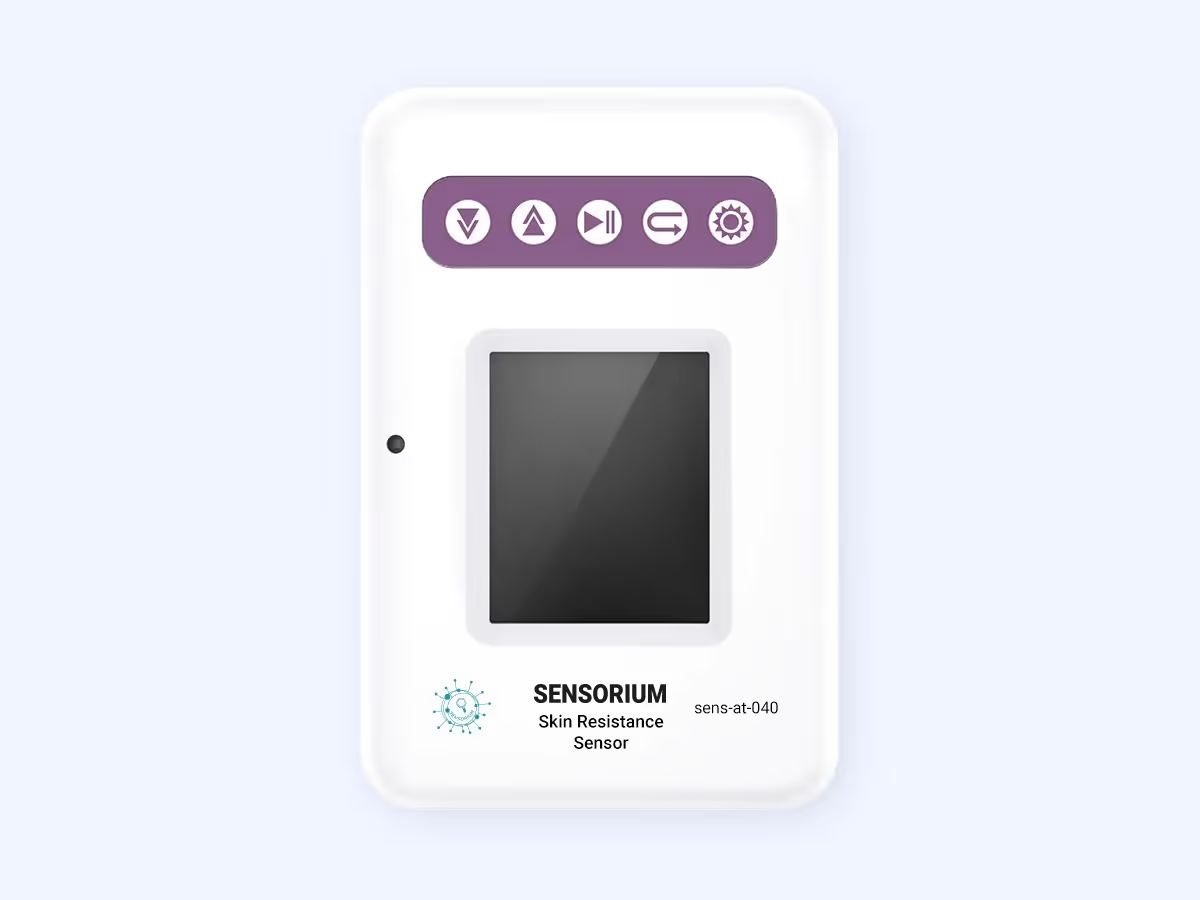






.png)







Galvanic Skin Response (GSR) sensor designed for measuring skin conductivity and physiological emotional arousal.

The principle of skin resistance sensors is to measure changes in the electrical resistance of the skin surface, which reflects the physiological or emotional state of a person. These changes primarily originate from variations in sweat gland activity, as it is correlated with emotional arousal. Skin resistance sensors utilize the electrical properties of the skin to measure GSR (galvanic skin response), specifically the variation in skin resistance due to sweat gland activity. When sweat gland activity increases, perspiration rises, leading to a decrease in skin resistance. Therefore, the most common metric for GSR signals is not resistance but conductance, as conductance is inversely proportional to resistance and measured in siemens (conductance = 1/resistance). This facilitates easier signal interpretation, since higher sweat gland activity corresponds to higher skin conductance.
Conductivity range: 0–20 µS
Built‑in AI functions open new possibilities for data analysis, automated processing of results, and the creation of interactive experiments.
Skin resistance biosensors represent a category of unobtrusive wearable devices used for health monitoring and human-machine interfaces. These devices typically incorporate conductive materials deposited on or embedded within elastomeric polymer sheets, enabling the detection of multiple biometric signals, including blood pressure, skin tension, body temperature, and acoustic vibrations. Although these sensors are generally non-specific, meaning a single resistance signal corresponds to one type of biometric data (unimodal sensors), they remain crucial for monitoring physiological parameters.
This product is suitable for educational purposes only and is not intended for industrial, medical, research, or commercial applications.
When using the skin sensor for detection, first place the sensor on the skin surface. Then, connect the sensor to a computer to initiate the detection process. During detection, the sensor continuously collects data from the skin surface and transmits it to the computer. The computer processes and analyzes the data before generating relevant reports.
Wireless sensor with built‑in AI features that unlock new possibilities for data analysis and make experiments highly interactive.
Ideal for school laboratories, university courses, and STEM projects.
Built‑in AI functions open new possibilities for data analysis, automated processing of results, and the creation of interactive experiments.
What our clients are saying about us.




.avif)
.avif)


What our clients are saying about us.