 Speak to expert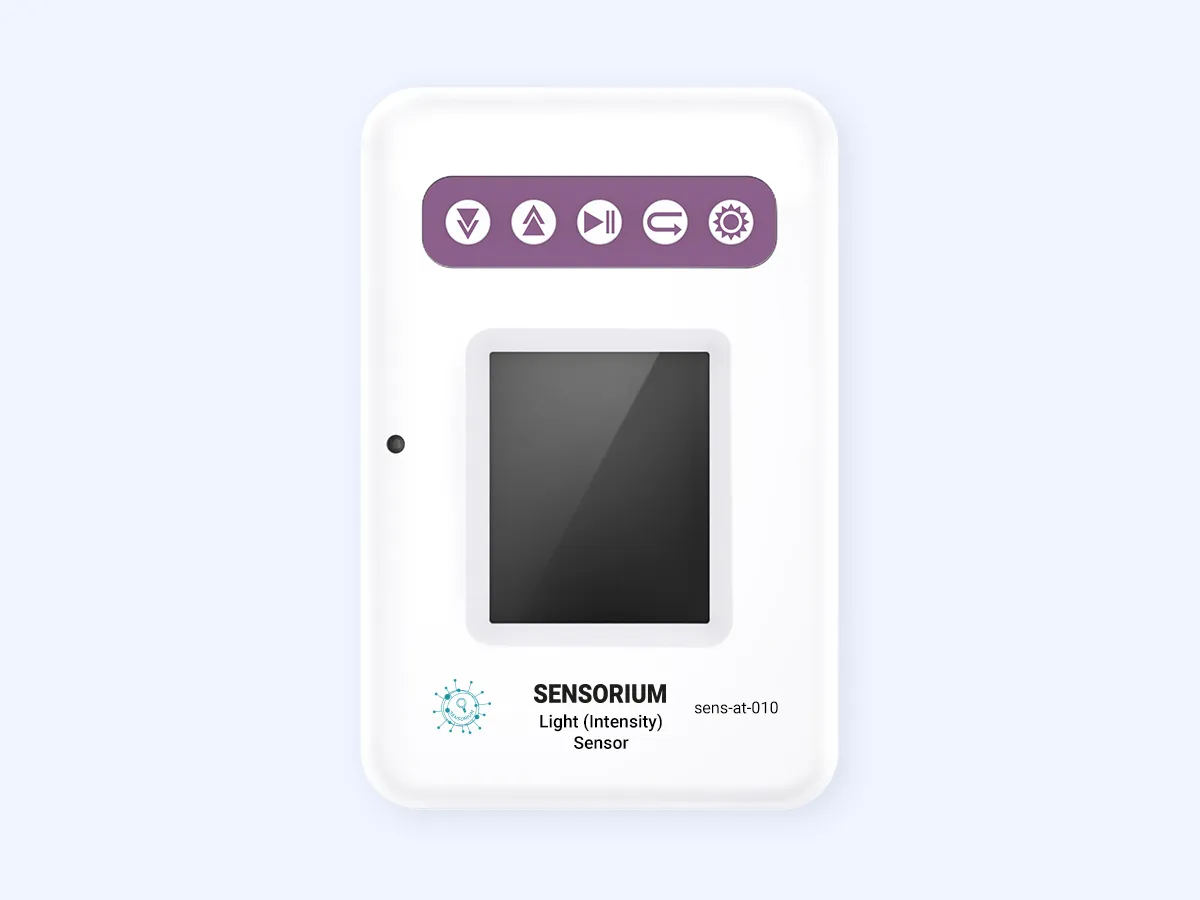



.png)




Wireless digital light sensor with spectral characteristics similar to the human eye for indoor and outdoor experiments.

The wireless digital light sensor employs a linear silicon photodiode to directly convert light intensity signals into current signals, which are then amplified into standard electrical signals. The spectral characteristics of the photodiode closely resemble those of the human eye, making it an ideal visible light intensity sensor.
Range: 0–8,000 lux; Resolution: 1 lux
Built‑in AI functions open new possibilities for data analysis, automated processing of results, and the creation of interactive experiments.
The light intensity sensor detects variations in light levels and is an ideal device for comparative indoor/outdoor light intensity experiments. Its wide measurement range also makes it suitable for chemistry, biology, and environmental science experiments conducted outdoors. Typical applications include:
This product is intended solely for educational use and is not suitable for industrial, medical, research, or commercial applications.
The photosensitive element is located at the probe tip. During measurement, ensure it directly faces the light source being measured.
Wireless sensor with built‑in AI features that unlock new possibilities for data analysis and make experiments highly interactive.
Ideal for school laboratories, university courses, and STEM projects.
Built‑in AI functions open new possibilities for data analysis, automated processing of results, and the creation of interactive experiments.
What our clients are saying about us.




.avif)
.avif)


What our clients are saying about us.