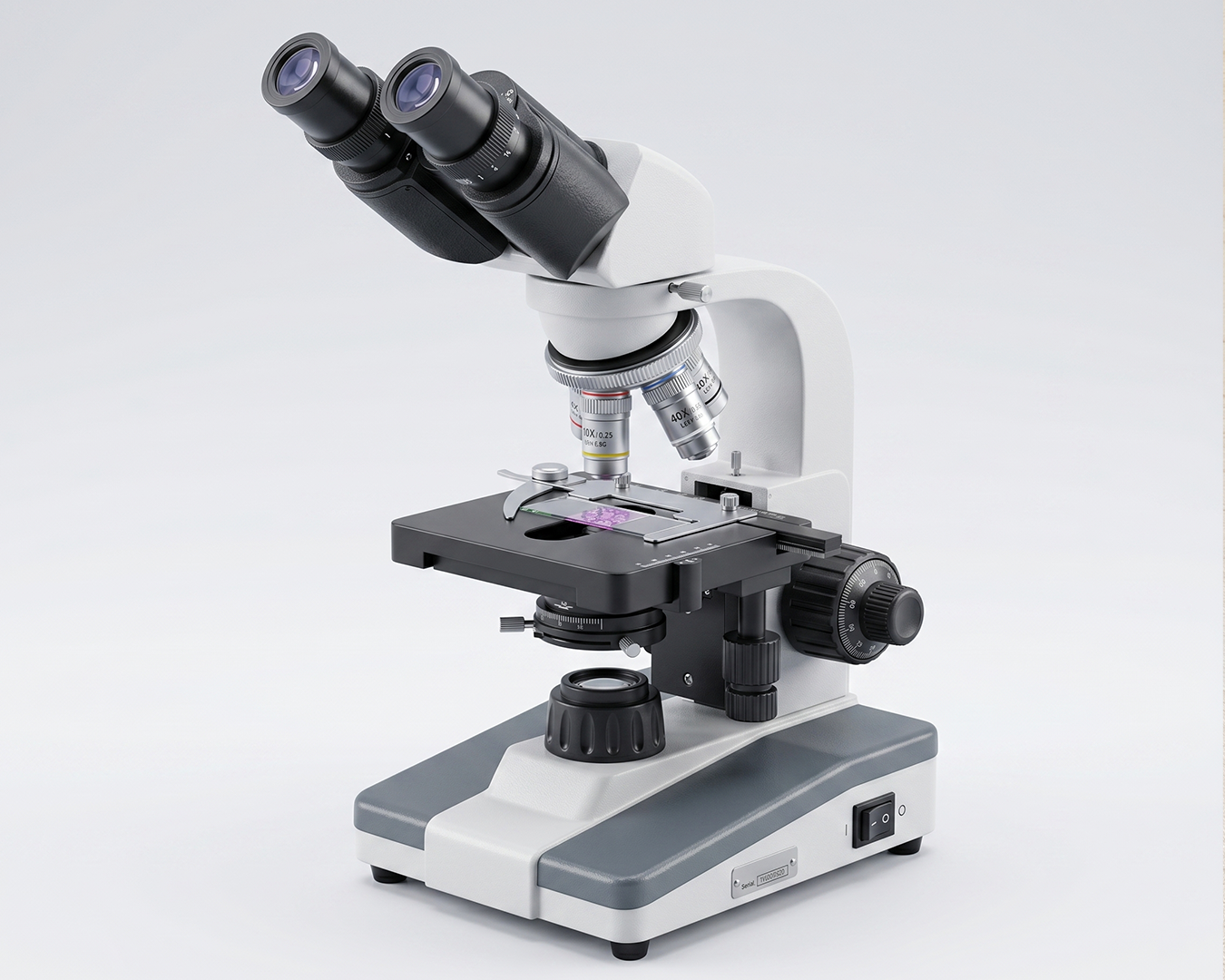
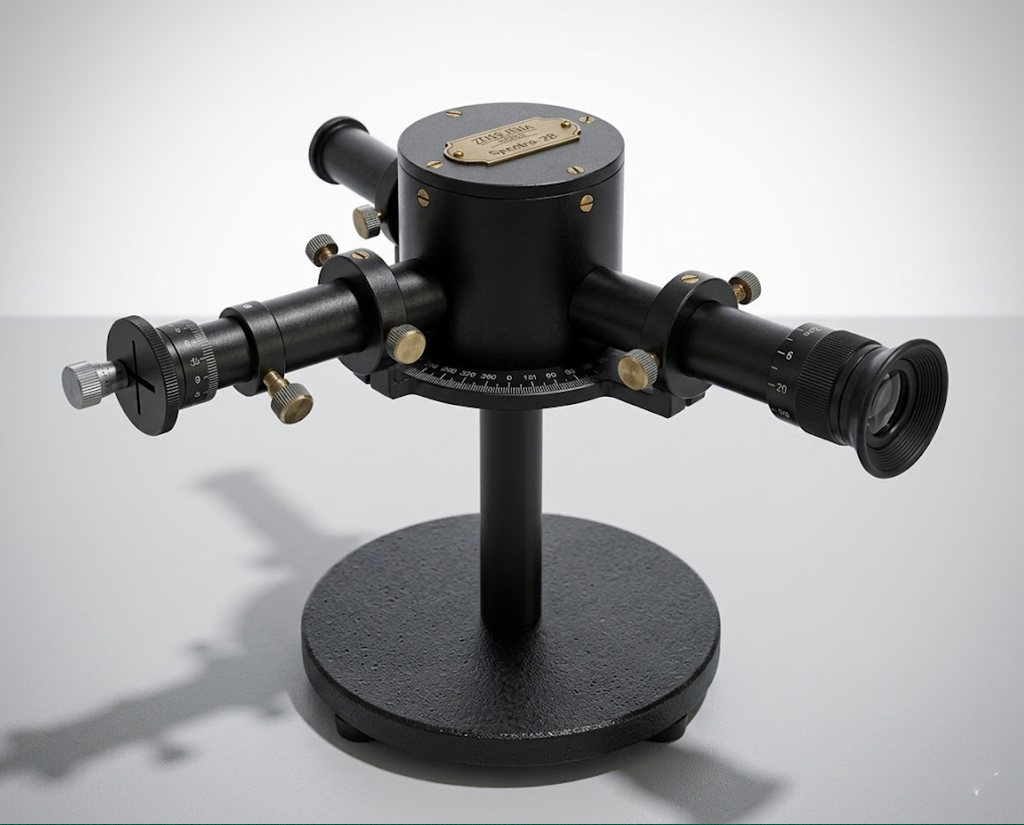
Spectroscope with a Set of Spectral Lamps

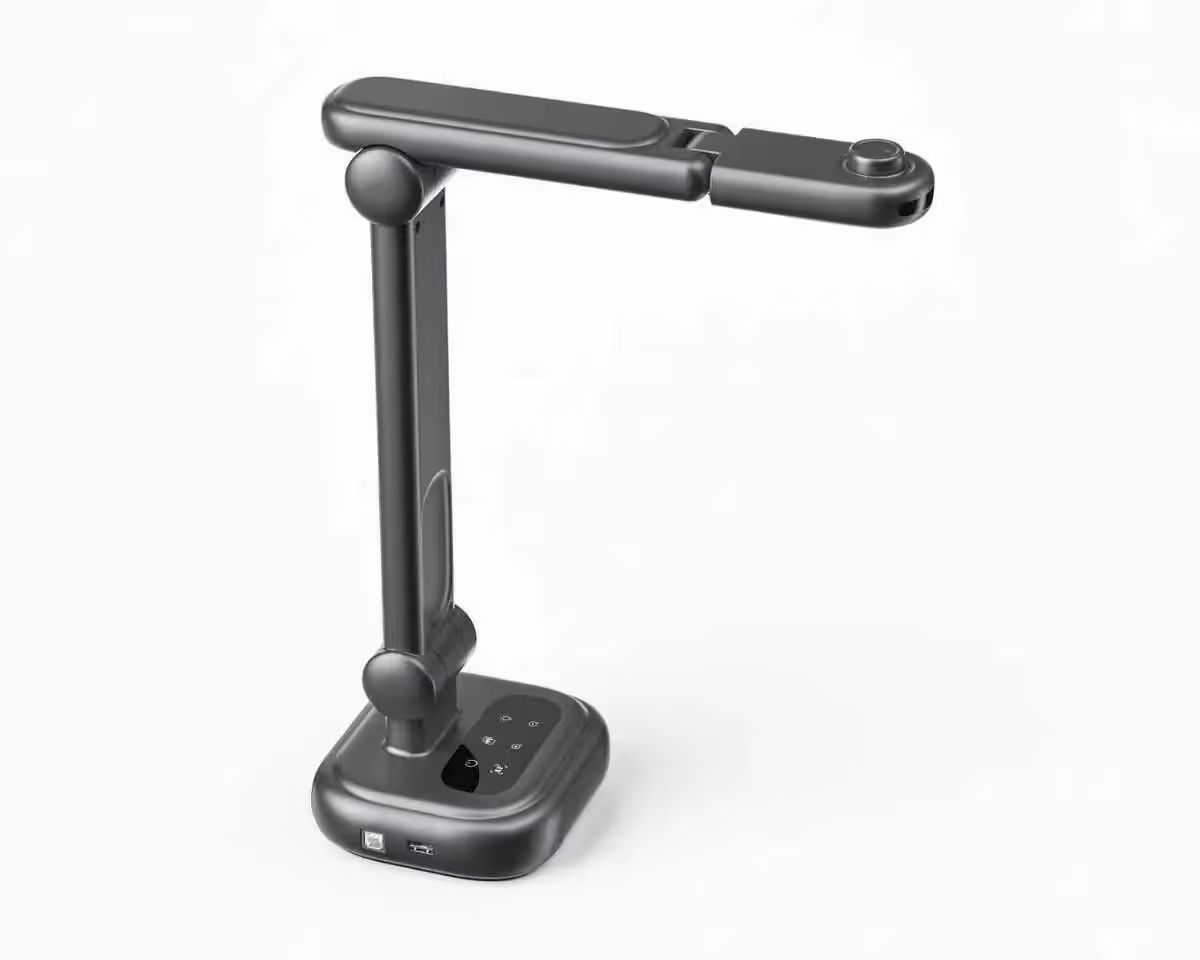
A direct-reading spectroscope with six gas-filled spectral lamps and a mains power unit for school physics classrooms. Students observe continuous and line spectra and read the wavelength of each line straight off the instrument scale, comparing the spectra of helium, neon, hydrogen, mercury, argon and krypton.

Thank you! Your submission has been received!
Oops! Something went wrong while submitting the form.

Specification

icon plus
  • Purpose: visual observation of continuous and line spectra and measurement of the wavelengths of gas emission, for the Optics section of the school physics course
  • Spectroscope type: direct-reading, with a wavelength scale
  • Operating principle: dispersion of a light beam into a spectrum — light from the source passes through the entrance slit and the dispersing element, and the observer sees the spectrum together with the scale in the eyepiece, reading the wavelength of a line directly
  • Observed spectra: continuous and line
  • Number of spectral lamps (tubes): 6
  • Gases in the lamps: helium, neon, hydrogen, mercury, argon, krypton
  • Lamp power supply: from the supplied power unit, AC mains 220-230 V, 50 Hz
  • Base material: metal
  • Base diameter: 140 mm
  • Height: 220 mm

Kit Contents:

  • Direct-reading spectroscope, on a metal base 140 mm in diameter, overall height 220 mm — 1 pc
  • Set of spectral lamps, helium, neon, hydrogen, mercury, argon, krypton — 6 pcs
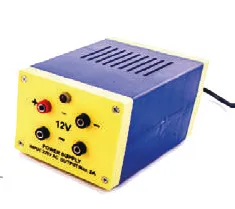
  • Power unit for the spectral lamps, AC mains 220-230 V, 50 Hz — 1 pc

Product passport: ULABS-PHY-DE-2008 (PDF)

Additional info

icon plus

Preparation for Work

  • Unpack the product and check the contents: direct-reading spectroscope, six spectral lamps and the power unit. Inspect every lamp against the light — the bulb should be whole, without cracks or chips, and the caps and contacts clean and not loose.
  • Set the spectroscope on its metal base on a level demonstration table. With an overall height of 220 mm the eyepiece is at about eye level for a seated observer; adjust the working height with the chair rather than with packing under the base.
  • Place the power unit next to the spectroscope so that the lamp holder faces the entrance slit and the mains cord does not cross a walkway. Make sure the power unit is switched off, and only then insert the required lamp into the holder, holding it by the caps.
  • Darken the room: line spectra are observed in a darkened classroom, since stray light washes out faint lines. Connect the power unit to an AC mains supply of 220-230 V, 50 Hz.

Observation and Wavelength Measurement

  • Switch on the power unit and let the discharge in the lamp stabilise: the glow should be even, without flicker.
  • Aim the entrance slit of the spectroscope at the luminous part of the lamp, choosing the distance so that the spectrum is bright but the lines do not blur.
  • Adjust the slit width and the eyepiece focus. A narrow slit gives thin, well-resolved lines, a wide one brighter but merged lines; focus until both the spectral lines and the scale divisions are sharp at the same time.
  • Read the wavelength of each visible line off the instrument scale, aligning the line with a division. Record the results from the red end of the spectrum to the violet, noting the colour of the line and its relative brightness.
  • Change the lamp following the safety procedure and repeat the observation. Comparing the spectra of helium, neon, hydrogen, mercury, argon and krypton shows that the set of lines is individual to each gas and identifies it.
  • To compare a line spectrum with a continuous one, aim the slit at the glowing filament of an incandescent lamp or at diffuse daylight: the field of view shows an unbroken band of colours with no separate lines.
  • When work is finished, switch off the power unit, disconnect it from the mains and let the lamp cool before removing it from the holder.

Safety

  • The power unit generates a high voltage: do not touch the holder contacts, the lamp electrodes or the connecting conductors until the power unit is switched off and disconnected from the mains.
  • Fit and replace a spectral lamp only with the power unit de-energised and after the previous lamp has cooled down: during the discharge the glass bulb heats to a temperature that causes burns.
  • Do not switch the power unit on without a lamp fitted, with a loosely secured lamp, or with a lamp whose bulb is cracked.
  • Do not look at the lamp discharge with the unprotected eye from a short distance or for a long time, especially the mercury lamp discharge: the spectrum is observed through the spectroscope eyepiece, not directly.
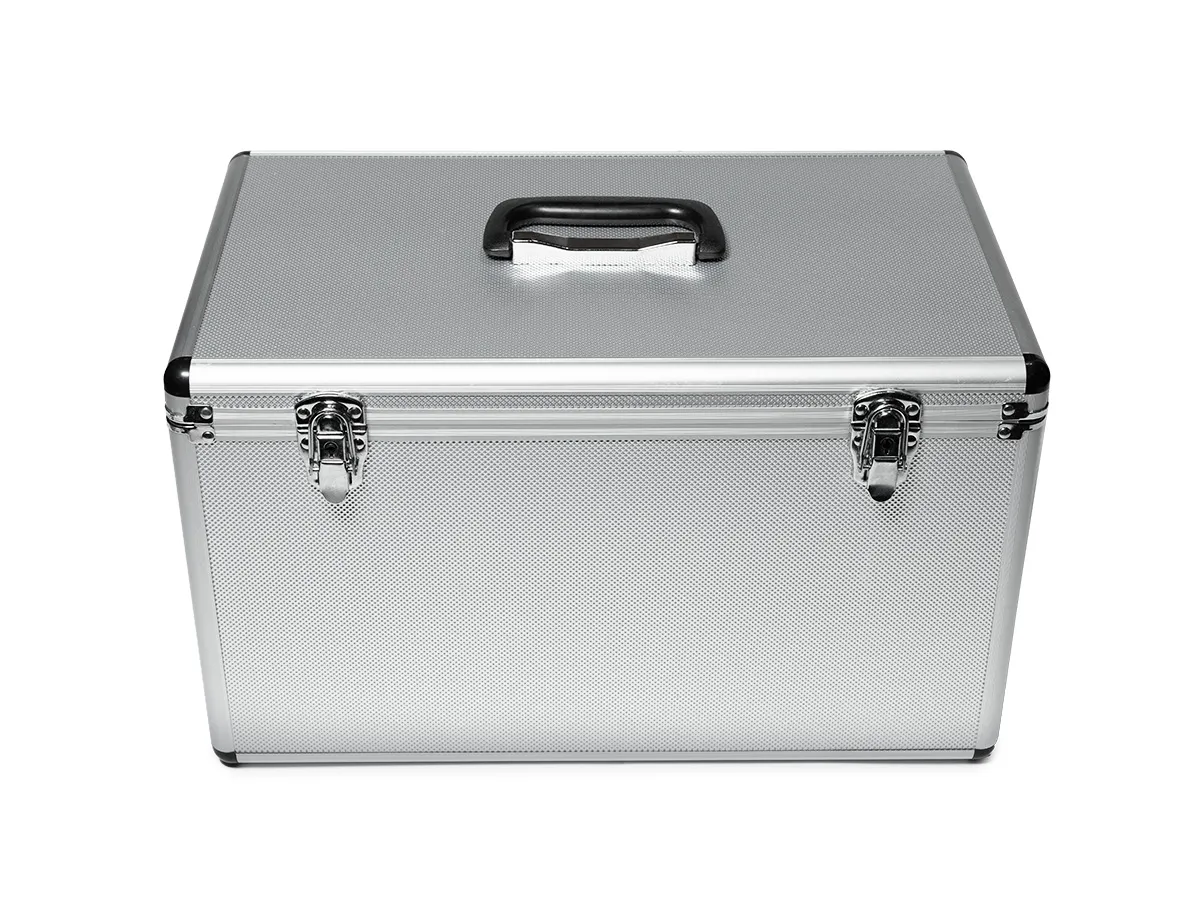
  • The spectral lamps are thin-walled — handle them by the caps only, apply no force when fitting them, and return each lamp to its own slot in the case.
  • If a mercury lamp breaks, ventilate the room immediately, do not collect the remains by hand and hand them over for disposal as a mercury-containing product.
  • Connect the product only to a power source with the voltage, frequency and ratings stated on the rating plate; do not use it with a damaged cord or plug, or after it has been dropped.
  • Do not immerse the product or its cord in liquid and do not expose them to moisture; switch off and unplug the product when it is not in use and before cleaning, pulling the plug and not the cord.
  • Supervise students closely while they use the product; do not leave it switched on unattended. The product is intended for educational use only and is recommended for learners aged 10 and older (grade 5 and up).

Lamp Replacement and Storage

  • Change a lamp only with the power unit switched off and unplugged, and only after the previous lamp has cooled.
  • Do not touch the luminous part of the bulb with your fingers: grease marks burn on during the discharge and darken that area. Remove any fingerprint from a cooled lamp with a dry lint-free wipe.
  • Keep each lamp in its own slot in the supplied case, in a dry heated room, away from heavy objects. The mercury lamp is stored and transported with particular care, in intact packaging.
  • A failed lamp is not thrown away with household waste: it is handed over for disposal under the rules for gas-discharge and mercury-containing products.

Operating and Storage Conditions

  • Air temperature: +5 °C to +40 °C
  • Relative humidity: 40 % to 60 %
  • Atmospheric pressure: 84 to 107 kPa (630-800 mm Hg)
  • Store the product in a dry heated room at +5 °C to +40 °C and relative humidity of 60 %, covered against dust, with the lamps kept in the case separately from the spectroscope; keep the air free of impurities that corrode metals.

Maintenance

  • Do not clean the optics — eyepiece, entrance slit and objective — with solvents and do not wipe them dry with a dry cloth. Blow dust off with a blower or remove it with a soft brush, and take off fingerprints with an optics wipe.
  • Do not dismantle the optical unit or realign the dispersing element yourself: after that the wavelength scale no longer matches the spectrum.
  • The slit mechanism and the focusing unit should move smoothly. Do not force the adjustment controls and do not lubricate them — excess lubricant reaches the optics.
  • After every lesson inspect the lamp holder contacts and the mains cord of the power unit. Blackened or burnt contacts, cracks in the housing and damaged insulation are grounds for withdrawing the product from service until it is repaired at a service centre.
  • Do not keep the discharge switched on longer than the observation requires: continuous operation shortens the service life of the spectral lamps.

Warranty and Disposal

  • Warranty: 3 years, covering defect elimination and replacement of defective parts or equipment; spare parts and consumables available for 5 years.
  • Compliance: the product meets the requirements of the applicable EU directives and regulations and bears the CE and WEEE markings.
  • Disposal: the WEEE marking (crossed-out wheeled bin) prohibits disposal with unsorted municipal waste; the product is handed over to a separate collection point for waste electrical and electronic equipment. Metal parts are recycled as scrap metal, electronic components go to specialised processing.

icon plus
How long is the MIKKO Course?
Is the MIKKO Course good for new teachers
How long is the MIKKO Course?
Ask something?
More information

More information

Related products
view all

What our clients are saying about us.
view all

Customer testimonials

What our clients are saying about us.

Working with UNOWA was a turning point for our university. Their expert-led training in ABA, ADOS-2 and MIKKO reshaped how we think, teach, and prepare inclusive educators. The model inclusion classroom they equipped has become a living lab, a space where theory becomes hands-on skill. This partnership didn’t just support a project. It laid the foundation for a more humane, modern and inclusive education system in Kazakhstan.
Yerkin Zhumankulova
Vice-Rector in Academic Affairs. Kazakh National Women's Teacher Training University
Thanks to UNOWA’s innovative approach and professional guidance, we’ve redefined how we prepare future educators. The MIKKO training and inclusion lab brought international best practices to our university, not just as theory, but as living, hands-on tools that inspire confidence and real change.
Irina Rovnyakova
Vice-Rector for Strategic Development and International Relations. Sarsen Amanzholov East Kazakhstan University
Working with the UNOWA team was a valuable and supportive experience in delivering psychological and educational projects. Their reliable platform, openness to dialogue, and continuous technical support allowed me to focus on the quality and meaning of education. I confidently recommend UNOWA as a trusted partner for the development of psychological education and human-centered support.
Liudmyla Lahuta
President of the International Institute of Psychological Maturity INC
Thanks to our partnership with UNOWA, even schools in Armenia’s most remote regions now have access to fully equipped science and technology labs. Nearly half of the country’s schools have been modernized, bringing equal learning conditions to every student, no matter where they live.
Zhanna Andreasyan
Minister of Education, Science, Culture and Sport. The Government of the Republic of Armenia
UNOWA's national project equipped 14 Kazakhstan universities with inclusive classrooms to a unified standard. They delivered top-quality kits, equipment, digital courses with 24/7 access, and localized resources. This game-changer strengthened inclusive education foundations nationwide.
Dastan Yessenov
Coordinator of the PIU of World Bank in the Republic of Kazakhstan
UNOWA's national-level ABA and ADOS-2 training became a milestone for Kazakhstan's education system. The program was comprehensive, well-structured, and perfectly aligned with inclusive education modernization goals nationwide. I appreciated the balance of deep theory, practical sessions, and 24/7 online access. This strengthened specialists' ABA and diagnostics skills, directly improving support for children with special needs.
Karlygash Zholdassova
Inclusion Education Specialist of PIU of World Bank in the Republic of Kazakhstan
icon arrow left
icon arrow right

Customer testimonials

What our clients are saying about us.

UNOWA's national project equipped 14 Kazakhstan universities with inclusive classrooms to a unified standard. They delivered top-quality kits, equipment, digital courses with 24/7 access, and localized resources. This game-changer strengthened inclusive education foundations nationwide.
Dastan Yessenov
Coordinator of the PIU of World Bank in the Republic of Kazakhstan
UNOWA's national-level ABA and ADOS-2 training became a milestone for Kazakhstan's education system. The program was comprehensive, well-structured, and perfectly aligned with inclusive education modernization goals nationwide. I appreciated the balance of deep theory, practical sessions, and 24/7 online access. This strengthened specialists' ABA and diagnostics skills, directly improving support for children with special needs.
Karlygash Zholdassova
Inclusion Education Specialist of PIU of World Bank in the Republic of Kazakhstan
Working with the UNOWA team was a valuable and supportive experience in delivering psychological and educational projects. Their reliable platform, openness to dialogue, and continuous technical support allowed me to focus on the quality and meaning of education. I confidently recommend UNOWA as a trusted partner for the development of psychological education and human-centered support.
Liudmyla Lahuta
President of the International Institute of Psychological Maturity INC
Thanks to our partnership with UNOWA, even schools in Armenia’s most remote regions now have access to fully equipped science and technology labs. Nearly half of the country’s schools have been modernized, bringing equal learning conditions to every student, no matter where they live.
Zhanna Andreasyan
Minister of Education, Science, Culture and Sport. The Government of the Republic of Armenia
Thanks to UNOWA’s innovative approach and professional guidance, we’ve redefined how we prepare future educators. The MIKKO training and inclusion lab brought international best practices to our university, not just as theory, but as living, hands-on tools that inspire confidence and real change.
Irina Rovnyakova
Vice-Rector for Strategic Development and International Relations Sarsen Amanzholov East Kazakhstan University
Working with UNOWA was a turning point for our university. Their expert-led training in ABA, ADOS-2 and MIKKO reshaped how we think, teach, and prepare inclusive educators. The model inclusion classroom they equipped has become a living lab, a space where theory becomes hands-on skill. This partnership didn’t just support a project. It laid the foundation for a more humane, modern and inclusive education system in Kazakhstan.
Yerkin Zhumankulova
Vice-Rector in Academic Affairs Kazakh National Women's Teacher Training University
icon arrow left
icon arrow right
Spectroscope with a Set of Spectral Lamps
Speak to expertimage of finger pointing to a graph