Laboratory Centrifuge with Rotor

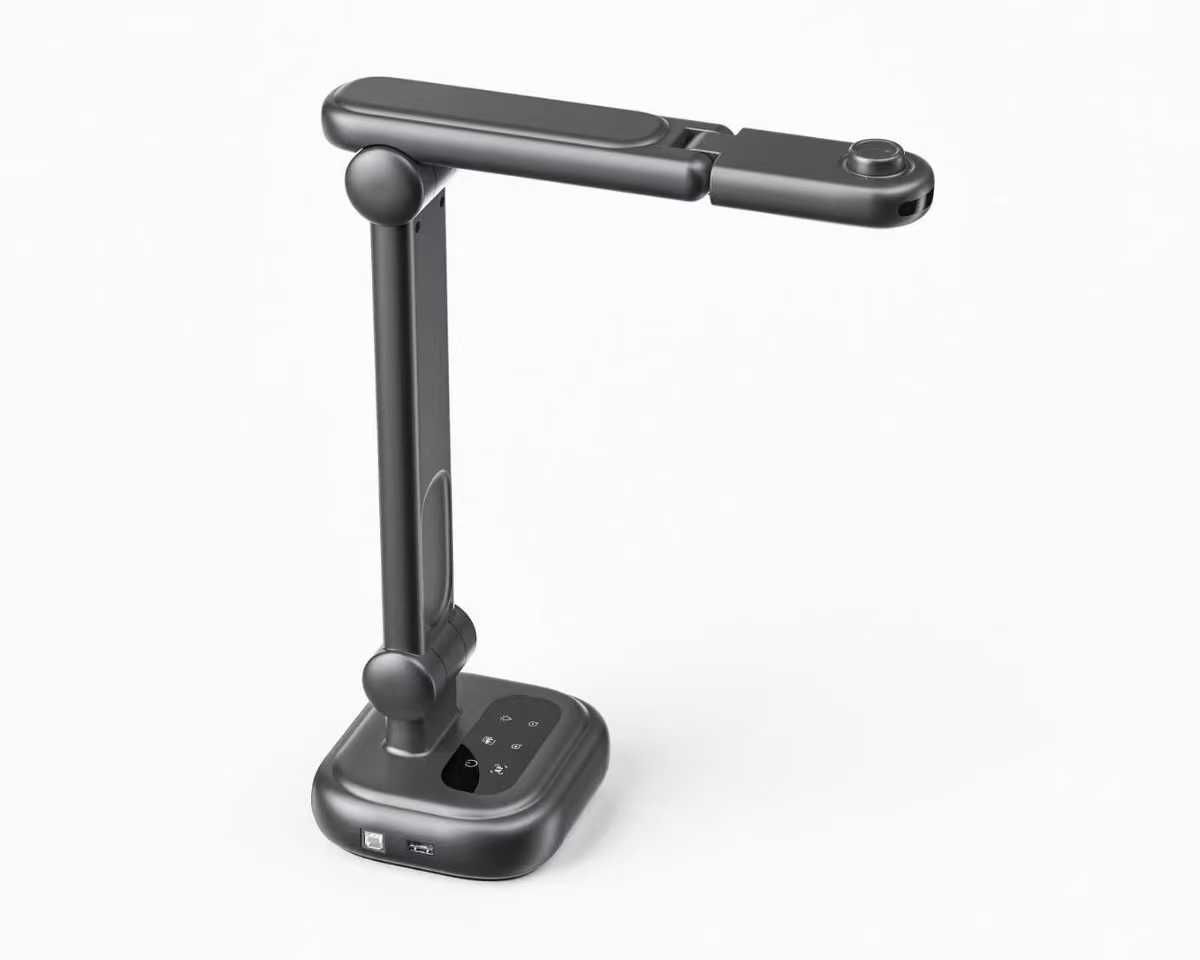
A compact benchtop centrifuge with a six-place rotor for 1.5/2.0 ml microtubes, a speed regulator, timer and digital display, used to sediment cells, biological components and molecules and to separate suspensions and emulsions. For K-12 biology and chemistry laboratory work under teacher supervision.

Thank you! Your submission has been received!
Oops! Something went wrong while submitting the form.

Specification

icon plus
  • Purpose: sedimentation of cells, biological components and molecules; separation of non-homogeneous mixtures - suspensions and emulsions
  • Maximum rotor speed: 6000 rpm
  • Maximum centrifugal acceleration: 2000 g
  • Speed setting range: 500 to 4000 rpm
  • Rotor: for 6 microtubes of 1.5/2.0 ml
  • Tubes: unified for standard laboratory microtubes of 1.5 and 2.0 ml
  • Control and indication: speed regulator, timer, digital display showing set and current values
  • Time to reach the set speed and to stop the rotor: a few seconds
  • Switch: safety on/off switch
  • Design: benchtop, compact
  • Recommended age: learners from 10 years (grade 5 and above), under teacher supervision
  • Conformity: CE and WEEE marking

Product passport: ULABS-B026 (PDF)

Additional info

icon plus

Additional Information

Preparation for Work
  • Unpack the product, remove the transport inserts and inspect the power cord, housing, lid and rotor; the rotor turns freely by hand, without sticking or axial play, and the tube wells are clean and dry
  • Place the appliance on a level, hard, horizontal laboratory bench, not on a soft pad and not on the edge of the table, with clearance on all sides - even a correctly loaded rotor vibrates during run-up
  • Test the appliance without samples: switch it on at a low speed and confirm that the display shows the set value, the timer counts down, and the rotor runs up and stops in a few seconds without extraneous noise
  • Prepare microtubes of the same type and size, 1.5 or 2.0 ml, and a counterweight tube filled with water for use whenever the number of samples is odd
Centrifuging Procedure
  • Fill the tubes leaving the top free and close the caps tightly; keep the sample volume the same in all tubes of one series, measured by volume rather than by eye, since a difference in tube mass unbalances the rotor
  • Load the rotor symmetrically: two tubes opposite each other, four crosswise, six in all wells; with three or five samples add a counterweight tube filled with water to the same mass
  • Close the lid, set the required speed with the regulator and the running time with the timer. Sedimentation of cells and coarse suspensions needs a lower speed and a short time; finely dispersed mixtures and small biological components need a higher speed and longer running
  • Switch the product on and stay beside it for the whole cycle; unbalanced loading shows itself during run-up, and the product is switched off immediately at any knocking or increased vibration
  • Wait until the timer finishes and the rotor has stopped completely, then open the lid and take the tubes out vertically, without turning or shaking them, otherwise the sediment mixes back into the liquid above it
  • Inspect the tubes after the cycle; if no sediment has formed, repeat with a higher speed or a longer time, changing only one of these parameters
Choosing the Mode
  • The result is determined by the centrifugal acceleration in units of g, not by the rotation speed itself; for this rotor 6000 rpm corresponds to 2000 g, and at lower speeds the acceleration falls considerably faster than the speed
  • Set the running mode within the regulation range of 500 to 4000 rpm and reserve 6000 rpm for samples that do not sediment at lower values
  • Record the speed and the time together with the result: without these two figures the experiments of different groups are not comparable
  • The rotor wells take microtubes of 1.5 and 2.0 ml. Tubes of another type, inserted skewed or with interference, catch the chamber and break; empty wells do no harm to the rotor, asymmetric loading always does
Operating Conditions
  • Air temperature: +5 °C to +40 °C
  • Relative humidity: 40 % to 60 %
  • Atmospheric pressure: 84 to 107 kPa (630-800 mm Hg)
Safety
  • Connect the product only to a power source with the voltage, frequency and rated parameters stated on the product rating plate
  • Keep close supervision when the product is used by students or works near them, and never leave it switched on unattended
  • Do not use the product with a damaged cord or plug, after it has been dropped or with any sign of damage
  • Do not immerse the product or the cord in liquid and do not expose them to moisture
  • Do not open the lid or touch the rotor until it has stopped completely: after switch-off the rotor keeps turning by inertia
  • Load the rotor only symmetrically, with tubes of equal mass and equal sample volume opposite each other
  • Use only undamaged tubes, fill them within their defined volume and close them tightly: a cracked or overfilled tube breaks under load and contaminates the rotor
  • Do not hold the product by hand during run-up and do not move it while the rotor turns
  • Switch the product off immediately at extraneous noise, knocking or increased vibration, wait for the rotor to stop and check the loading
  • Centrifuge biological samples and reagent solutions only in closed tubes, and remove a spilled sample from the rotor wells after the rotor has fully stopped
Maintenance
  • Check the rotor wells and the inner surface of the chamber after every session; remove spilled sample and traces of solutions with a soft cloth moistened with water or alcohol, after the rotor has stopped and the product is unplugged
  • Check the free movement of the rotor and the reliability of its seating on the shaft periodically; a rotor that sticks, wobbles or slows down longer than usual is not admitted to work - a sign of bearing wear or of centrifuging with unbalanced loading
  • Inspect the power cord, plug and switch; operation is prohibited until repair at an authorised service centre if the cord is damaged, the switch does not turn off reliably, or the display or timer malfunctions
Storage and Transport
  • Store with the lid closed, in a dry heated room at +5 °C to +40 °C and relative humidity of 60 % without condensation, with no tubes left in the rotor wells
  • Do not place foreign objects on the lid and do not carry the appliance by the lid
  • During transport the packed product is secured against movement, and the packaging is protected from precipitation and impact
Warranty and Disposal
  • Warranty: remedy of defects and replacement of defective parts or of the equipment for three (3) years; availability of spare parts and consumables for five (5) years
  • Disposal: WEEE marking - not to be disposed of with unsorted household waste; hand the product over to a separate collection point for waste electrical and electronic equipment. Metal parts are recycled as scrap metal, electronic components go to specialised processing

icon plus
How long is the MIKKO Course?
Is the MIKKO Course good for new teachers
How long is the MIKKO Course?
Ask something?
More information

More information

Related products
view all

What our clients are saying about us.
view all

Customer testimonials

What our clients are saying about us.

Working with UNOWA was a turning point for our university. Their expert-led training in ABA, ADOS-2 and MIKKO reshaped how we think, teach, and prepare inclusive educators. The model inclusion classroom they equipped has become a living lab, a space where theory becomes hands-on skill. This partnership didn’t just support a project. It laid the foundation for a more humane, modern and inclusive education system in Kazakhstan.
Yerkin Zhumankulova
Vice-Rector in Academic Affairs. Kazakh National Women's Teacher Training University
Thanks to UNOWA’s innovative approach and professional guidance, we’ve redefined how we prepare future educators. The MIKKO training and inclusion lab brought international best practices to our university, not just as theory, but as living, hands-on tools that inspire confidence and real change.
Irina Rovnyakova
Vice-Rector for Strategic Development and International Relations. Sarsen Amanzholov East Kazakhstan University
Working with the UNOWA team was a valuable and supportive experience in delivering psychological and educational projects. Their reliable platform, openness to dialogue, and continuous technical support allowed me to focus on the quality and meaning of education. I confidently recommend UNOWA as a trusted partner for the development of psychological education and human-centered support.
Liudmyla Lahuta
President of the International Institute of Psychological Maturity INC
Thanks to our partnership with UNOWA, even schools in Armenia’s most remote regions now have access to fully equipped science and technology labs. Nearly half of the country’s schools have been modernized, bringing equal learning conditions to every student, no matter where they live.
Zhanna Andreasyan
Minister of Education, Science, Culture and Sport. The Government of the Republic of Armenia
UNOWA's national project equipped 14 Kazakhstan universities with inclusive classrooms to a unified standard. They delivered top-quality kits, equipment, digital courses with 24/7 access, and localized resources. This game-changer strengthened inclusive education foundations nationwide.
Dastan Yessenov
Coordinator of the PIU of World Bank in the Republic of Kazakhstan
UNOWA's national-level ABA and ADOS-2 training became a milestone for Kazakhstan's education system. The program was comprehensive, well-structured, and perfectly aligned with inclusive education modernization goals nationwide. I appreciated the balance of deep theory, practical sessions, and 24/7 online access. This strengthened specialists' ABA and diagnostics skills, directly improving support for children with special needs.
Karlygash Zholdassova
Inclusion Education Specialist of PIU of World Bank in the Republic of Kazakhstan
icon arrow left
icon arrow right

Customer testimonials

What our clients are saying about us.

UNOWA's national project equipped 14 Kazakhstan universities with inclusive classrooms to a unified standard. They delivered top-quality kits, equipment, digital courses with 24/7 access, and localized resources. This game-changer strengthened inclusive education foundations nationwide.
Dastan Yessenov
Coordinator of the PIU of World Bank in the Republic of Kazakhstan
UNOWA's national-level ABA and ADOS-2 training became a milestone for Kazakhstan's education system. The program was comprehensive, well-structured, and perfectly aligned with inclusive education modernization goals nationwide. I appreciated the balance of deep theory, practical sessions, and 24/7 online access. This strengthened specialists' ABA and diagnostics skills, directly improving support for children with special needs.
Karlygash Zholdassova
Inclusion Education Specialist of PIU of World Bank in the Republic of Kazakhstan
Working with the UNOWA team was a valuable and supportive experience in delivering psychological and educational projects. Their reliable platform, openness to dialogue, and continuous technical support allowed me to focus on the quality and meaning of education. I confidently recommend UNOWA as a trusted partner for the development of psychological education and human-centered support.
Liudmyla Lahuta
President of the International Institute of Psychological Maturity INC
Thanks to our partnership with UNOWA, even schools in Armenia’s most remote regions now have access to fully equipped science and technology labs. Nearly half of the country’s schools have been modernized, bringing equal learning conditions to every student, no matter where they live.
Zhanna Andreasyan
Minister of Education, Science, Culture and Sport. The Government of the Republic of Armenia
Thanks to UNOWA’s innovative approach and professional guidance, we’ve redefined how we prepare future educators. The MIKKO training and inclusion lab brought international best practices to our university, not just as theory, but as living, hands-on tools that inspire confidence and real change.
Irina Rovnyakova
Vice-Rector for Strategic Development and International Relations Sarsen Amanzholov East Kazakhstan University
Working with UNOWA was a turning point for our university. Their expert-led training in ABA, ADOS-2 and MIKKO reshaped how we think, teach, and prepare inclusive educators. The model inclusion classroom they equipped has become a living lab, a space where theory becomes hands-on skill. This partnership didn’t just support a project. It laid the foundation for a more humane, modern and inclusive education system in Kazakhstan.
Yerkin Zhumankulova
Vice-Rector in Academic Affairs Kazakh National Women's Teacher Training University
icon arrow left
icon arrow right
Laboratory Centrifuge with Rotor
Speak to expertimage of finger pointing to a graph