Speak to expert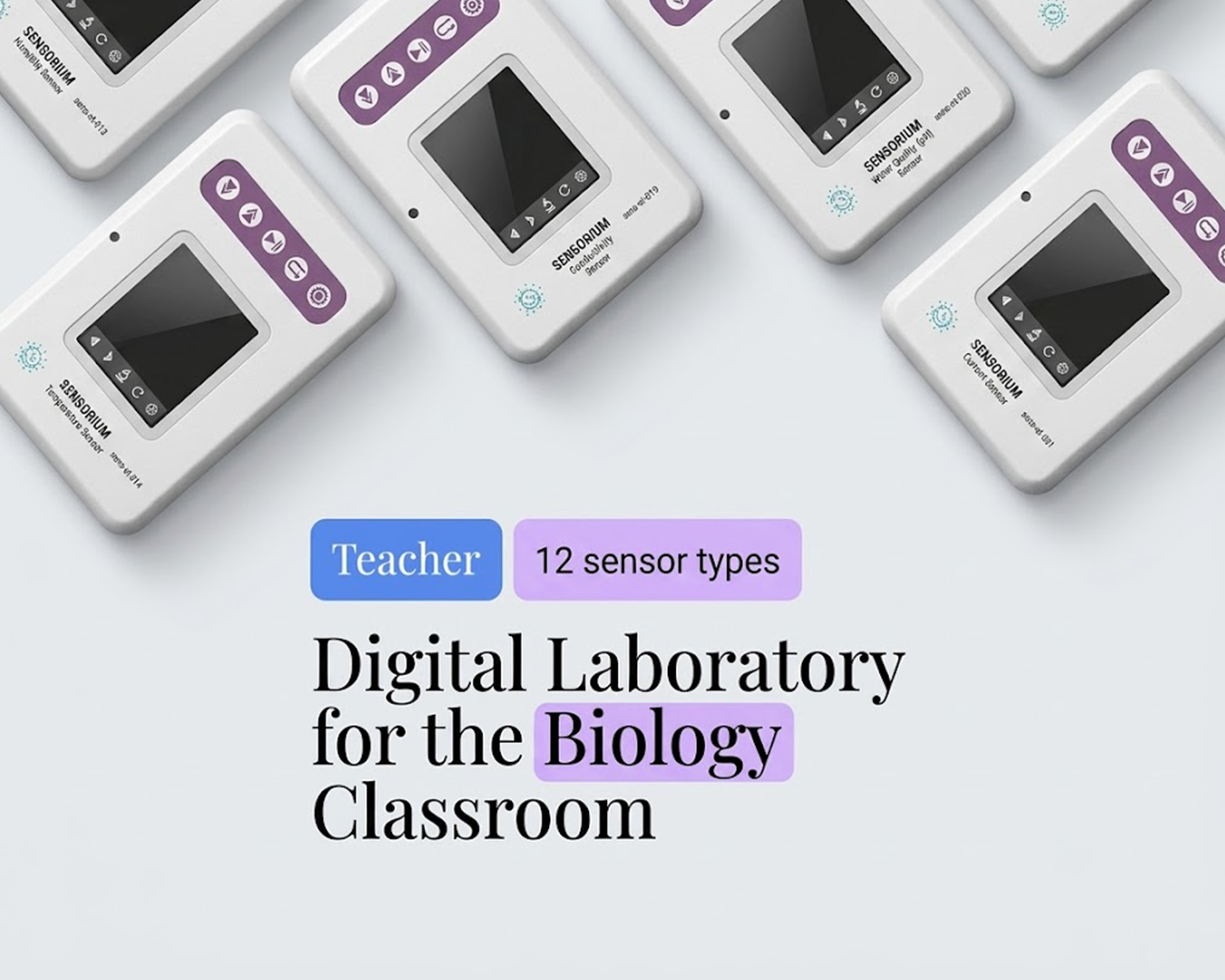

.png)

Digital Measurement Computer System for Biology
The wireless sensors are equipped with a 1.8-inch color LCD screen that immediately displays measurement results for conducting experiments.
The wireless sensors operate autonomously without additional devices or wires, specifically without a data logger or other analog-to-digital converter to transmit measurement results to a computer or tablet.
The digital course includes a separate tool utilizing artificial intelligence technologies, including capabilities for applying generative artificial intelligence.
The digital lab is a modern educational solution that combines software, multimedia content, and artificial intelligence elements to support inclusive and engaging learning.
– pH sensor;
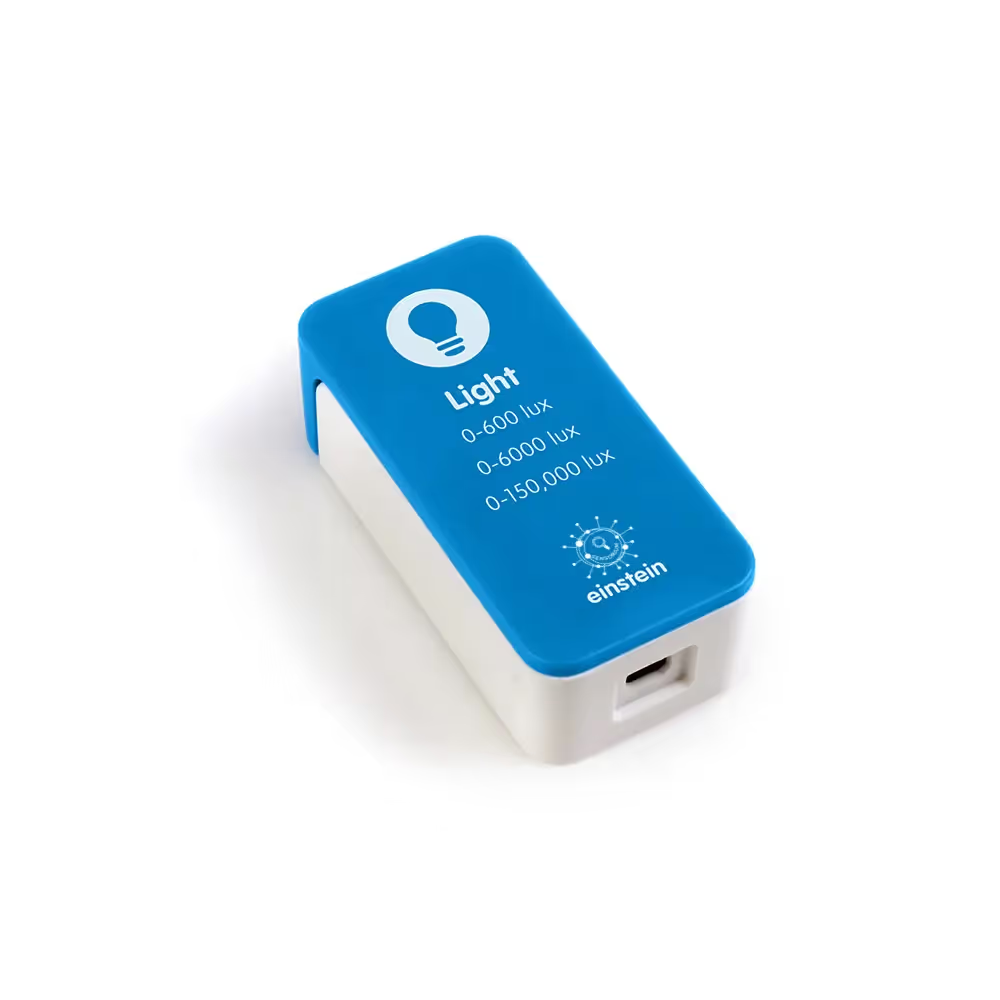
– light sensor;
– pressure sensor;
– carbon dioxide sensor;
– humidity sensor;
– respiration sensor;
– Electrocardiogram (ECG) sensor;
– Ultraviolet radiation sensor;
– Ambient temperature sensor;
– heart rate sensor;
– blood pressure sensor;
– Surface temperature sensor;
– Soil moisture sensor;
– skin electrical resistance sensor;
– spirometer sensor;
– stethoscope sensor;
The device allows you to listen to the body’s sounds and view them as real-time graphs
– dissolved oxygen sensor.
Digital Learning Materials
- structured modules based on an inquiry-based approach in physics, biology, chemistry, and STEM
- experiment scenarios
- step-by-step lab instructions
- video demonstrations of experiments
- interactive exercises
All modules are fully compatible with the purchased equipment, ensuring a direct link between “equipment → methodology → learning outcome.”
Integrated AI Agent (RAG-based)
- Selection of research tasks and experiments based on the lesson topic
- explaining the step-by-step procedure for conducting an experiment
- analyzing common mistakes made by students and providing recommendations
- adapting tasks to different levels of student proficiency
- assisting in the preparation of research reports and experiment summaries
- operating on a localized knowledge base aligned with the national curriculum
What our clients are saying about us.



.avif)
.avif)


What our clients are saying about us.