Demonstration Set of Atom Models with Rods for Assembling Molecular Models

A demonstration modelling set for the school chemistry classroom: coloured atom balls and connecting rods from which the teacher builds three-dimensional models of inorganic and organic molecules and shows them to the class. The assembled models reproduce the spatial arrangement of atoms and give students an idea of molecular shape, isomerism and chemical bonding.

Thank you! Your submission has been received!
Oops! Something went wrong while submitting the form.

Specification

icon plus
  • Type: demonstration set — assembled models are shown to the whole class while the structure of substances is explained
  • Purpose: three-dimensional modelling of molecules of inorganic and organic compounds; showing the spatial arrangement of atoms, molecular shape, isomerism and the nature of the chemical bond
  • Material: plastic, designed for repeated assembly and disassembly of models
  • Colour coding: atom models are colour-coded according to the generally accepted designations of chemical elements
  • Rod attachment: into holes in the atom models positioned at the valence angles of the corresponding elements, so an assembled model reproduces the directionality of the bonds and the real spatial structure of the molecule
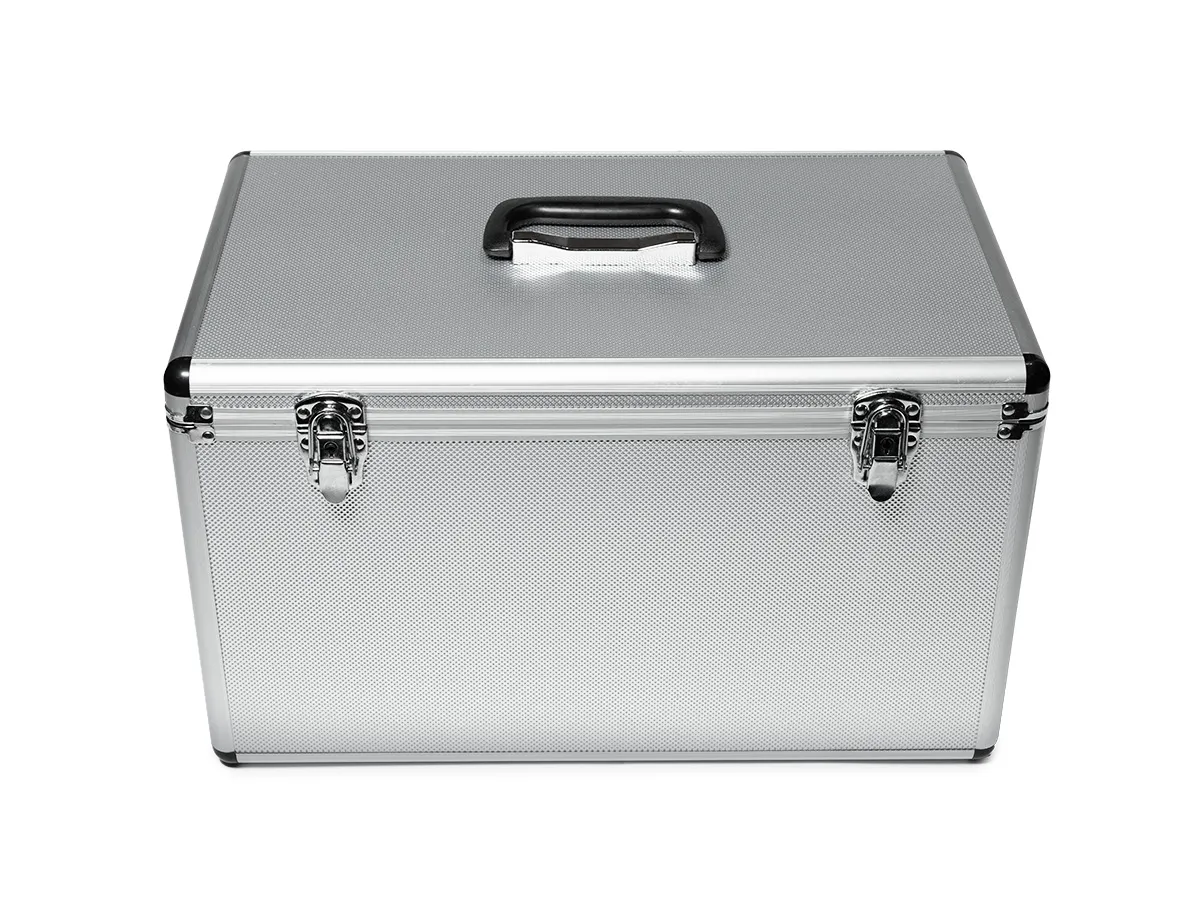
  • Packaging: box for storage and transport
  • Recommended age: 10 years and older (grade 5 and above), under the supervision of a teacher

Kit Contents:

Modelling components
  • Atom models (balls), coloured, with holes at valence angles — 111 pcs
  • Connecting rods, for modelling single and multiple bonds — 140 pcs
  • Orbital models, fitted onto an atom to show the spatial shape of electron clouds — 18 pcs
  • Tool for separating components — 1 pc
  • Total number of components — 270 pcs

Product passport: ULABS-C109 (PDF)

Additional info

icon plus

Preparation for work

  • Immediately after unpacking, count the components and check them against the specification: atom models, connecting rods, orbital models and the separating tool. This first count makes later completeness checks easier.
  • Sort the balls by colour and by number of holes, and the rods by length and stiffness, into separate compartments of the box. Searching for the right atom in a mixed set takes longer than assembling the model itself.
  • Inspect the holes of the balls and the ends of the rods. A ball with a broken hole edge does not hold a rod and the model falls apart; such components are set aside and not used for three-dimensional models.
  • Before the lesson, select the atom models and rod types needed for the planned molecules and, where possible, assemble the models in advance: during the demonstration the attention of the class should be on the finished model, not on the selection of balls.
  • Place the box and the selected components on the demonstration bench so that small parts cannot roll away. Hold and show an assembled model by an atom, not by a rod.

Assembling and demonstrating models

  • Every atom has its own colour and its own number of holes: the number of rod holes equals the valency of that atom in the molecule being modelled. The composition of the model is therefore determined from the formula of the compound — it gives the valency of each element and the balls to be selected.
  • Insert each rod into the hole as far as it goes, turning it slightly. Every hole of a ball must be either occupied by a rod or deliberately left free: a free hole in an assembled model means an unsaturated bond, and the choice of atom should be checked.
  • Model single bonds with short rigid rods. Assemble multiple bonds with flexible rods inserted into adjacent holes of both atoms: as many flexible rods are placed between a pair of atoms as there are bonds between them. As a result the distance between the atoms in a multiple bond comes out shorter than in a single one, as in a real molecule.
  • Build the model starting from the central atom of the molecule: first insert all its rods, then fit the peripheral atoms. Check the finished model by rotating it. The angles between bonds are set by the position of the holes in the atom models, so nothing needs to be adjusted — the model takes on the spatial shape of the real molecule by itself. If a closed model does not meet, check the choice of atoms and the type of bond between them.
  • When showing a model, hold it at the eye level of the class and rotate it slowly: the spatial arrangement of the atoms is visible only from several sides, and on a stationary model the three-dimensional structure reads as flat.
  • To show isomerism, assemble two models from the same set of atoms but with a different order of connection and demonstrate them side by side — the same formula gives a different spatial structure.
  • Fit orbital models onto an atom when showing the spatial shape of electron clouds and the directionality of bonds.

Disassembly and storage of components

  • Disassemble the models after every lesson. Plastic rods left in an assembled model for a long time widen the holes of the balls, and large models take up space in the box and break when carried.
  • Use the supplied tool to separate parts: place it under the base of the rod next to the ball and lever the rod out of the hole without skewing it. Pulling rods out by hand or with pliers breaks the edges of the holes and the balls stop holding the joint.
  • Return the disassembled components to their compartments and check that everything is in place before closing the box.

Safety

  • Use the product only for the purpose described in the passport; work with the product is conducted by the teacher.
  • The set contains small parts — do not leave the open box unattended where younger children are present.
  • Protect the product from impacts, falls and excessive mechanical loads; keep small components in the supplied packaging.
  • Do not heat the components, do not store the product near heating appliances and do not leave it in the sun — the plastic deforms and the angles of the holes change.
  • Check completeness after every lesson: lost rods make it impossible to assemble models with multiple bonds.

Maintenance

  • Wash soiled components in warm water with a neutral detergent and dry them thoroughly before putting them back in the box. Do not use hot water, solvents or abrasives — they bleach the colour coding and soften the plastic.
  • Inspect the connecting rods periodically: bent, cracked or lost components are replaced so that models with multiple bonds can still be assembled.
  • Keep the set in its box, in a dry room, away from heating appliances and direct sunlight.

Storage and transport

  • Store at +5 °C to +40 °C and relative humidity of 60 % (non-condensing), protected from direct sunlight, moisture, dust and heat sources.
  • Operating conditions: air temperature +5 °C to +40 °C, relative humidity 40 % to 60 %, atmospheric pressure 84 to 107 kPa.

Compliance and warranty

  • Complies with the general product safety requirements of EU legislation. Not electrical or electronic equipment, so the WEEE marking does not apply. Contains no hazardous substances and is disposed of as municipal solid waste after separation by material.
  • Warranty: 3 years; spare parts and consumables available for 5 years.

icon plus
How long is the MIKKO Course?
Is the MIKKO Course good for new teachers
How long is the MIKKO Course?
Ask something?
More information

More information

Related products
view all

What our clients are saying about us.
view all

Customer testimonials

What our clients are saying about us.

Working with UNOWA was a turning point for our university. Their expert-led training in ABA, ADOS-2 and MIKKO reshaped how we think, teach, and prepare inclusive educators. The model inclusion classroom they equipped has become a living lab, a space where theory becomes hands-on skill. This partnership didn’t just support a project. It laid the foundation for a more humane, modern and inclusive education system in Kazakhstan.
Yerkin Zhumankulova
Vice-Rector in Academic Affairs. Kazakh National Women's Teacher Training University
Thanks to UNOWA’s innovative approach and professional guidance, we’ve redefined how we prepare future educators. The MIKKO training and inclusion lab brought international best practices to our university, not just as theory, but as living, hands-on tools that inspire confidence and real change.
Irina Rovnyakova
Vice-Rector for Strategic Development and International Relations. Sarsen Amanzholov East Kazakhstan University
Working with the UNOWA team was a valuable and supportive experience in delivering psychological and educational projects. Their reliable platform, openness to dialogue, and continuous technical support allowed me to focus on the quality and meaning of education. I confidently recommend UNOWA as a trusted partner for the development of psychological education and human-centered support.
Liudmyla Lahuta
President of the International Institute of Psychological Maturity INC
Thanks to our partnership with UNOWA, even schools in Armenia’s most remote regions now have access to fully equipped science and technology labs. Nearly half of the country’s schools have been modernized, bringing equal learning conditions to every student, no matter where they live.
Zhanna Andreasyan
Minister of Education, Science, Culture and Sport. The Government of the Republic of Armenia
UNOWA's national project equipped 14 Kazakhstan universities with inclusive classrooms to a unified standard. They delivered top-quality kits, equipment, digital courses with 24/7 access, and localized resources. This game-changer strengthened inclusive education foundations nationwide.
Dastan Yessenov
Coordinator of the PIU of World Bank in the Republic of Kazakhstan
UNOWA's national-level ABA and ADOS-2 training became a milestone for Kazakhstan's education system. The program was comprehensive, well-structured, and perfectly aligned with inclusive education modernization goals nationwide. I appreciated the balance of deep theory, practical sessions, and 24/7 online access. This strengthened specialists' ABA and diagnostics skills, directly improving support for children with special needs.
Karlygash Zholdassova
Inclusion Education Specialist of PIU of World Bank in the Republic of Kazakhstan
icon arrow left
icon arrow right

Customer testimonials

What our clients are saying about us.

UNOWA's national project equipped 14 Kazakhstan universities with inclusive classrooms to a unified standard. They delivered top-quality kits, equipment, digital courses with 24/7 access, and localized resources. This game-changer strengthened inclusive education foundations nationwide.
Dastan Yessenov
Coordinator of the PIU of World Bank in the Republic of Kazakhstan
UNOWA's national-level ABA and ADOS-2 training became a milestone for Kazakhstan's education system. The program was comprehensive, well-structured, and perfectly aligned with inclusive education modernization goals nationwide. I appreciated the balance of deep theory, practical sessions, and 24/7 online access. This strengthened specialists' ABA and diagnostics skills, directly improving support for children with special needs.
Karlygash Zholdassova
Inclusion Education Specialist of PIU of World Bank in the Republic of Kazakhstan
Working with the UNOWA team was a valuable and supportive experience in delivering psychological and educational projects. Their reliable platform, openness to dialogue, and continuous technical support allowed me to focus on the quality and meaning of education. I confidently recommend UNOWA as a trusted partner for the development of psychological education and human-centered support.
Liudmyla Lahuta
President of the International Institute of Psychological Maturity INC
Thanks to our partnership with UNOWA, even schools in Armenia’s most remote regions now have access to fully equipped science and technology labs. Nearly half of the country’s schools have been modernized, bringing equal learning conditions to every student, no matter where they live.
Zhanna Andreasyan
Minister of Education, Science, Culture and Sport. The Government of the Republic of Armenia
Thanks to UNOWA’s innovative approach and professional guidance, we’ve redefined how we prepare future educators. The MIKKO training and inclusion lab brought international best practices to our university, not just as theory, but as living, hands-on tools that inspire confidence and real change.
Irina Rovnyakova
Vice-Rector for Strategic Development and International Relations Sarsen Amanzholov East Kazakhstan University
Working with UNOWA was a turning point for our university. Their expert-led training in ABA, ADOS-2 and MIKKO reshaped how we think, teach, and prepare inclusive educators. The model inclusion classroom they equipped has become a living lab, a space where theory becomes hands-on skill. This partnership didn’t just support a project. It laid the foundation for a more humane, modern and inclusive education system in Kazakhstan.
Yerkin Zhumankulova
Vice-Rector in Academic Affairs Kazakh National Women's Teacher Training University
icon arrow left
icon arrow right
Demonstration Set of Atom Models with Rods for Assembling Molecular Models
Speak to expertimage of finger pointing to a graph