Demonstration Power Supply

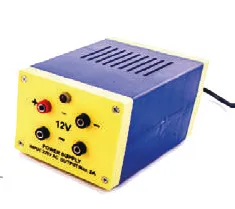
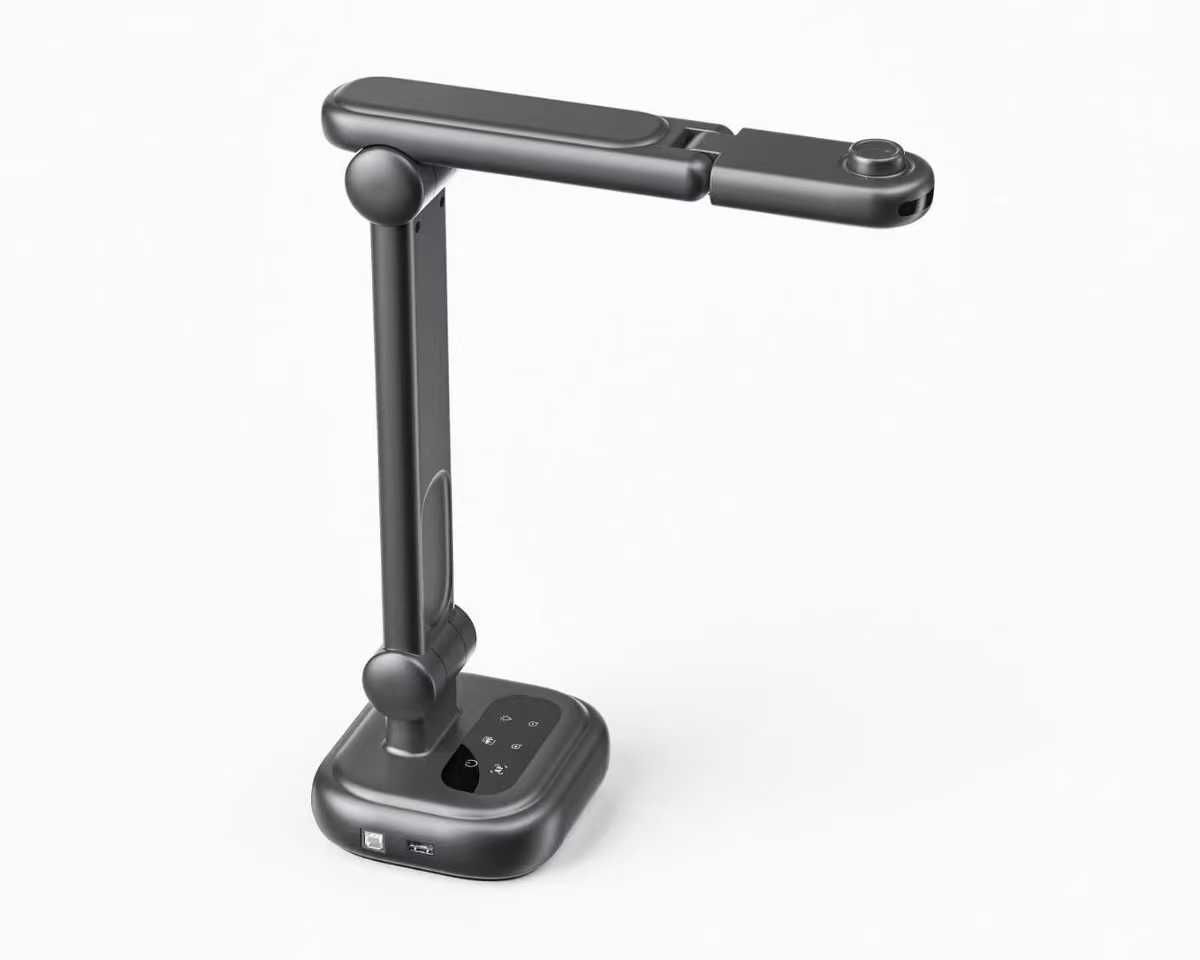
A regulated DC power supply for the K-12 physics classroom, used to power teaching instruments, circuits and loads during demonstration and laboratory experiments. Voltage and current are adjusted continuously by separate controls and read off built-in digital indicators, so no external voltmeter and ammeter are needed.

Thank you! Your submission has been received!
Oops! Something went wrong while submitting the form.

Specification

icon plus
  • Product type: regulated DC power supply for demonstration and laboratory experiments in the physics classroom
  • Output voltage, regulated DC: 0-30 V
  • Output current: 0-5 A
  • Output adjustment: continuous, with separate controls for voltage and for current
  • Output monitoring: built-in digital LED indicators of voltage and current, both shown at the same time, so no external voltmeter and ammeter are needed
  • Indication accuracy: ±0.1% + 2 counts of the least significant digit
  • Line and load voltage regulation: 0.1% + 10 mV
  • Output ripple and noise: 0.1% + 15 mV (RMS)
  • Current regulation: 0.1% + 10 mA for line, 0.1% + 20 mA for load
  • Protection: current-limiting mode against overload and short circuit at the output
  • Power supply: AC mains 180-230 V (10% tolerance), 50 Hz
  • Operating temperature range: minus 10 °C to plus 40 °C
  • Dimensions (depth x width x height): 260 x 125 x 145 mm
  • Weight: 2.3 kg
  • Connection: output terminals and controls on the housing
  • Recommended age: 10 years and older (grade 5 and above), under teacher supervision

Product passport: ULABS-P093 (PDF)

Additional info

icon plus
Electrical Safety
  • Connect the unit only to a supply whose voltage, frequency and rating match the data on the rating plate.
  • Supervise closely whenever students use the unit or it operates near them; never leave it switched on unattended.
  • Do not use the unit with a damaged cord or plug, after it has been dropped, or if it shows any sign of damage.
  • To reduce the risk of electric shock, do not immerse the unit or its cord in liquid and do not expose them to moisture.
  • Switch the unit off and unplug it when it is not in use and before cleaning; pull the plug, not the cord.
  • Use only accessories recommended by the manufacturer; the unit is intended for educational use only.
Working Safely with the Output
  • Before connecting a load, set the voltage and current controls to zero and switch the unit off: circuits are assembled and dismantled only with the output de-energised.
  • Observe the polarity of the output terminals — the unit delivers DC, and reverse connection destroys polarity-sensitive loads: LEDs, electrolytic capacitors, motors and measuring instruments.
  • Do not feed the output to loads rated for alternating current only, and do not exceed the voltage the load is rated for.
  • Do not block the ventilation openings and do not place the unit hard against a wall or other instruments — the housing heats up under load.
  • Switch the unit off immediately after the experiment. Operate it in a dry room within the range of minus 10 °C to plus 40 °C — condensation on the boards causes a short circuit.
Setting Up
  • Unpack the unit and inspect the housing, the controls, the output terminals and the power cord. Operation with damaged cord insulation, loose terminals or cracks in the housing is prohibited.
  • Place the unit on a level horizontal surface of the demonstration table so that the indicators are clearly visible from the observers' places and the ventilation openings stay clear. With dimensions of 260 x 125 x 145 mm and a weight of 2.3 kg, the unit is placed on a firm support and not on the edge of the table.
  • Set the voltage and current controls to zero before switching on. Connect the unit to an AC mains socket at 230 V, 50 Hz; the permissible input range is 180-230 V with a 10% tolerance.
  • If the unit has been brought in from a cold room, leave it at room temperature for two hours until the condensation has evaporated completely, and only then switch it on.
Operation
  • Switch the unit on with the load disconnected and set the required output voltage within 0-30 V, watching the voltage indicator. Setting the voltage without a load is more convenient — the reading then corresponds to the open-circuit voltage.
  • Use the current control to set the limit for the experiment. The limit is chosen slightly above the calculated load current but within 0-5 A: it is this limit that caps the current in the event of a wiring error or a short circuit.
  • Switch the unit off, connect the load to the output terminals observing polarity, and only then switch the power on. Connections have to be tight: arcing in a terminal distorts the readings and overheats the contact.
  • Watch both indicators during the experiment. The current indicator shows the actual consumption of the circuit and the voltage indicator the voltage at the terminals under load; the indication accuracy is ±0.1% + 2 counts of the least significant digit.
  • Change the voltage smoothly, without abrupt movements of the control. When the experiment is finished, return the controls to zero, switch the unit off and disconnect the load.
Current-Limiting Mode
  • The unit works in two modes. While the load current stays below the set limit, the unit holds the set voltage — this is constant-voltage mode. As soon as the current reaches the set limit, the unit holds the current constant and the output voltage falls according to the load resistance — this is current-limiting mode.
  • The transition is visible on the indicators: the current reading stops at the set value and the voltage reading drops below the value set. This is the protection operating, not a fault.
  • Current-limiting mode is used deliberately where the element under study must not be overloaded: when powering LEDs, heating elements, electrolytic cells and coils. The current is set in advance on the unloaded output, and the load is connected afterwards.
  • If the unit unexpectedly goes into current limiting, switch it off and check the circuit for a short circuit and for correct connections; raise the current limit only after the cause has been removed.
Maintenance
  • Switch the unit off and unplug the power cord before any servicing. Removing the cover and carrying out repairs yourself is prohibited — there are parts inside at mains voltage.
  • Wipe the outer surfaces with a dry or barely damp soft cloth. Pay particular attention to the ventilation openings: dust settling on the heatsinks impairs cooling and causes overheating under load. Do not use solvents or abrasives and do not pour liquid onto the housing.
  • Inspect the power cord, the plug and the output terminals periodically; tighten terminals that have worked loose and have a cord with damaged insulation replaced at a service centre.
  • Once per school year, compare the readings of the built-in indicators with a reference voltmeter and ammeter; if the difference exceeds the indication accuracy, send the unit to a service centre for checking.
Operating Conditions and Storage
  • Air temperature: +5 °C to +40 °C
  • Relative humidity: 40% to 60%
  • Atmospheric pressure: 84 to 107 kPa
  • Store the unit in a dry heated room, covered against dust, at a temperature within the operating range of minus 10 °C to plus 40 °C.
Warranty and Compliance
  • Defect repair and replacement of defective parts or equipment covered by the warranty for three years; spare parts and consumables available for five years.
  • The product complies with the applicable European Union directives and regulations and carries the CE and WEEE markings. It must not be disposed of with unsorted household waste and is handed over to a collection point for waste electrical and electronic equipment.

icon plus
How long is the MIKKO Course?
Is the MIKKO Course good for new teachers
How long is the MIKKO Course?
Ask something?
More information

More information

Related products
view all

What our clients are saying about us.
view all

Customer testimonials

What our clients are saying about us.

Working with UNOWA was a turning point for our university. Their expert-led training in ABA, ADOS-2 and MIKKO reshaped how we think, teach, and prepare inclusive educators. The model inclusion classroom they equipped has become a living lab, a space where theory becomes hands-on skill. This partnership didn’t just support a project. It laid the foundation for a more humane, modern and inclusive education system in Kazakhstan.
Yerkin Zhumankulova
Vice-Rector in Academic Affairs. Kazakh National Women's Teacher Training University
Thanks to UNOWA’s innovative approach and professional guidance, we’ve redefined how we prepare future educators. The MIKKO training and inclusion lab brought international best practices to our university, not just as theory, but as living, hands-on tools that inspire confidence and real change.
Irina Rovnyakova
Vice-Rector for Strategic Development and International Relations. Sarsen Amanzholov East Kazakhstan University
Working with the UNOWA team was a valuable and supportive experience in delivering psychological and educational projects. Their reliable platform, openness to dialogue, and continuous technical support allowed me to focus on the quality and meaning of education. I confidently recommend UNOWA as a trusted partner for the development of psychological education and human-centered support.
Liudmyla Lahuta
President of the International Institute of Psychological Maturity INC
Thanks to our partnership with UNOWA, even schools in Armenia’s most remote regions now have access to fully equipped science and technology labs. Nearly half of the country’s schools have been modernized, bringing equal learning conditions to every student, no matter where they live.
Zhanna Andreasyan
Minister of Education, Science, Culture and Sport. The Government of the Republic of Armenia
UNOWA's national project equipped 14 Kazakhstan universities with inclusive classrooms to a unified standard. They delivered top-quality kits, equipment, digital courses with 24/7 access, and localized resources. This game-changer strengthened inclusive education foundations nationwide.
Dastan Yessenov
Coordinator of the PIU of World Bank in the Republic of Kazakhstan
UNOWA's national-level ABA and ADOS-2 training became a milestone for Kazakhstan's education system. The program was comprehensive, well-structured, and perfectly aligned with inclusive education modernization goals nationwide. I appreciated the balance of deep theory, practical sessions, and 24/7 online access. This strengthened specialists' ABA and diagnostics skills, directly improving support for children with special needs.
Karlygash Zholdassova
Inclusion Education Specialist of PIU of World Bank in the Republic of Kazakhstan
icon arrow left
icon arrow right

Customer testimonials

What our clients are saying about us.

UNOWA's national project equipped 14 Kazakhstan universities with inclusive classrooms to a unified standard. They delivered top-quality kits, equipment, digital courses with 24/7 access, and localized resources. This game-changer strengthened inclusive education foundations nationwide.
Dastan Yessenov
Coordinator of the PIU of World Bank in the Republic of Kazakhstan
UNOWA's national-level ABA and ADOS-2 training became a milestone for Kazakhstan's education system. The program was comprehensive, well-structured, and perfectly aligned with inclusive education modernization goals nationwide. I appreciated the balance of deep theory, practical sessions, and 24/7 online access. This strengthened specialists' ABA and diagnostics skills, directly improving support for children with special needs.
Karlygash Zholdassova
Inclusion Education Specialist of PIU of World Bank in the Republic of Kazakhstan
Working with the UNOWA team was a valuable and supportive experience in delivering psychological and educational projects. Their reliable platform, openness to dialogue, and continuous technical support allowed me to focus on the quality and meaning of education. I confidently recommend UNOWA as a trusted partner for the development of psychological education and human-centered support.
Liudmyla Lahuta
President of the International Institute of Psychological Maturity INC
Thanks to our partnership with UNOWA, even schools in Armenia’s most remote regions now have access to fully equipped science and technology labs. Nearly half of the country’s schools have been modernized, bringing equal learning conditions to every student, no matter where they live.
Zhanna Andreasyan
Minister of Education, Science, Culture and Sport. The Government of the Republic of Armenia
Thanks to UNOWA’s innovative approach and professional guidance, we’ve redefined how we prepare future educators. The MIKKO training and inclusion lab brought international best practices to our university, not just as theory, but as living, hands-on tools that inspire confidence and real change.
Irina Rovnyakova
Vice-Rector for Strategic Development and International Relations Sarsen Amanzholov East Kazakhstan University
Working with UNOWA was a turning point for our university. Their expert-led training in ABA, ADOS-2 and MIKKO reshaped how we think, teach, and prepare inclusive educators. The model inclusion classroom they equipped has become a living lab, a space where theory becomes hands-on skill. This partnership didn’t just support a project. It laid the foundation for a more humane, modern and inclusive education system in Kazakhstan.
Yerkin Zhumankulova
Vice-Rector in Academic Affairs Kazakh National Women's Teacher Training University
icon arrow left
icon arrow right
Demonstration Power Supply
Speak to expertimage of finger pointing to a graph