Anatomical Models of Joints with Ligaments

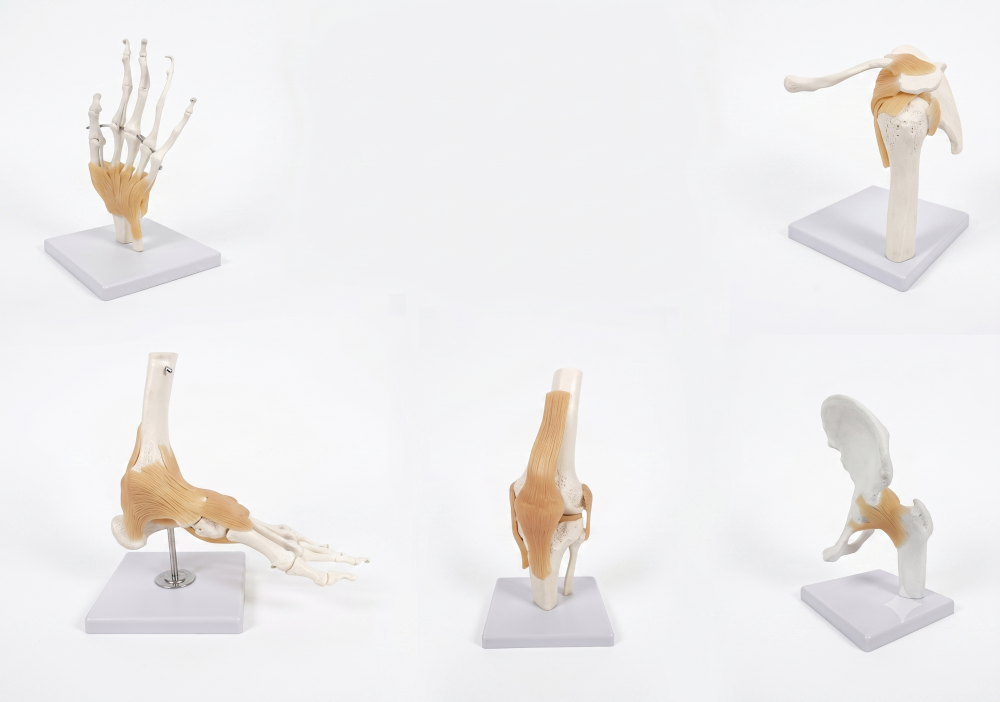
A set of five life-size demonstration models of the main human joints with ligaments for the K-12 biology classroom, used to study the structure of the joints and the mechanics of their movement. Each model sits on its own base and is removed for examination in the hands.

Thank you! Your submission has been received!
Oops! Something went wrong while submitting the form.

Specification

icon plus
  • Product type: set of demonstration models of the main human joints with ligaments
  • Number of models in the set: 5 pcs
  • Scale: life size
  • Material of the models: polyvinyl chloride (PVC)
  • Material of the ligaments: flexible transparent plastic
  • Mounting: on a base, removable for examination in the hands
  • Mobility: each joint moves within the limits of its natural range
  • Supplied with: a chart marking the main anatomical parts for each model
  • Recommended age: 10 years and older (grade 5 and above), under teacher supervision

Kit Contents:

Joint Models
  • Shoulder joint, life size, PVC bones with flexible transparent ligaments — 1 pc
  • Hip joint, life size, PVC bones with flexible transparent ligaments — 1 pc
  • Knee joint, life size, PVC bones with flexible transparent ligaments — 1 pc
  • Joints of the hand, life size, PVC bones with flexible transparent ligaments — 1 pc
  • Joints of the foot, life size, PVC bones with flexible transparent ligaments — 1 pc
Accessories
  • Base, one for each model — 5 pcs
  • Chart with the main anatomical parts marked, one for each model — 5 pcs
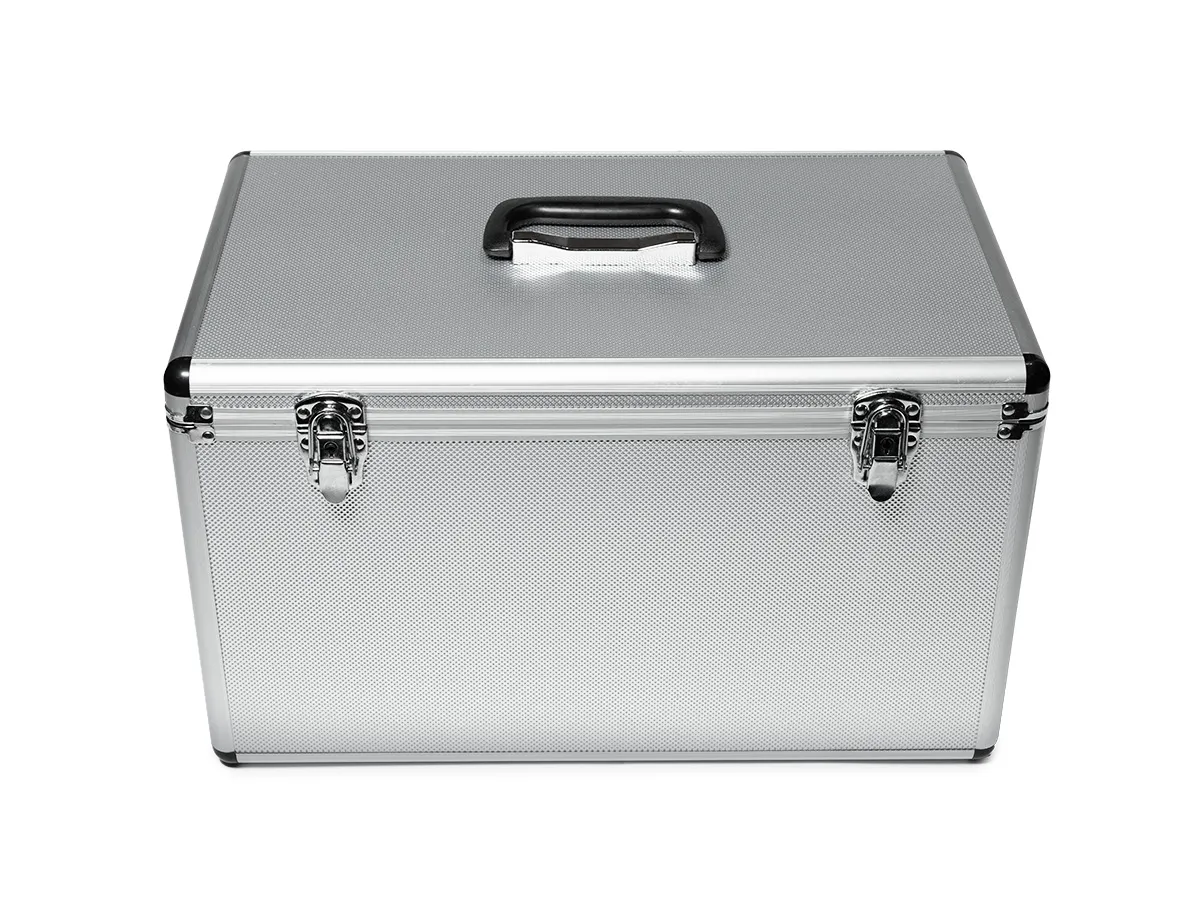
  • Individual box for storing each model between lessons — 5 pcs

Product passport: ULABS-B029 (PDF)

Additional info

icon plus
Safety
  • Use the models only for the purpose described in their documentation; protect them from impacts, falls and excessive mechanical load.
  • Take a model off its base and put it back with both hands, holding it by the bulky part of the bone and not by the ligaments.
  • Do not force a joint past the position where the movement stops — ligaments of flexible plastic tear at their attachment points.
  • Do not leave the models on a windowsill in direct sunlight or near heating appliances: polyvinyl chloride warps and the models lose their shape.
  • Do not wipe the models with alcohol, acetone or other solvents and do not wash them in hot water — these soften the plastic and wash off the colouring and the markings.
  • Keep small components in the supplied packaging; students work with the models under the supervision of a teacher.
Setting Up
  • Take the models out of the packaging and check the set: five joint models, their bases and the charts with the anatomical parts marked. Keep the individual boxes — the models are stored in them between lessons.
  • Inspect each model. Check that the articular surfaces are intact and free of chips, the ligaments free of tears and not peeling away from their attachment points, and the colouring free of wear that would make the elements hard to tell apart. A model with a torn ligament is not used for demonstrating movement.
  • Mount the model on its base so that it stands steady and does not rock or tip under its own weight. Place the base on a level horizontal surface of the demonstration table, closer to the middle than to the edge.
  • Before the demonstration, wipe the model with a soft dry cloth and turn it towards the audience with the side to be examined first.
Demonstration
  • Start with the model at rest: name the bones that form the joint, point out the articular surfaces and their shape, then trace each ligament from one bone to the other. The joint space is visible through the transparent ligament material.
  • To show movement, hold one bone still and move the other slowly. The movement is smooth, to the natural stop, and the bone is then returned to its starting position. The shoulder and hip joints are used to show rotation and abduction, the knee flexion and extension, and the joints of the hand and foot the movement of the individual segments.
  • Follow how some ligaments tighten and others slacken during movement: it is the tension of the ligaments that limits the movement and sets its direction. Bringing the joint to the position where all ligaments are taut and stopping there is the limit of its natural range.
  • Compare the models by placing two bases side by side: this shows the difference between a ball-and-socket joint with a wide range of movement and a hinge joint that works in a single plane.
  • To take a model off for closer examination, hold the base with one hand and lift the model with the other, without rocking it from side to side. Pass the model from hand to hand by the bones, not by the ligaments or the base.
  • After use, return the model to its base and check that it stands steady. Straighten the ligaments into their natural position, leaving none twisted or pinched between the bones.
Maintenance
  • Wipe the models with a soft cloth lightly moistened with water and a neutral detergent, then wipe dry. Remove dust from the recesses of the articular surfaces with a soft brush. Do not use abrasive powders or stiff brushes — they leave scratches that trap dirt.
  • Once a term, check the condition of the ligaments and their attachment points and the stability of the models on their bases. A model with a torn ligament is set aside for repair and is not used for demonstrating movement.
Operating Conditions and Storage
  • Air temperature: +5 °C to +40 °C
  • Relative humidity: 40% to 60%
  • Atmospheric pressure: 84 to 107 kPa
  • Store each model in its own box, and the boxes in the biology classroom cabinet in a dry heated room at room temperature, protected from direct sunlight, with no heavy objects placed on them. The models must not be stacked on one another without boxes — the lower ones deform.
Warranty and Compliance
  • Defect repair and replacement of defective parts or equipment covered by the warranty for three years; spare parts and consumables available for five years.
  • The product meets the general product safety requirements of European Union legislation. It is not electrical or electronic equipment, so the WEEE marking does not apply to it.

icon plus
How long is the MIKKO Course?
Is the MIKKO Course good for new teachers
How long is the MIKKO Course?
Ask something?
More information

More information

Related products
view all

What our clients are saying about us.
view all

Customer testimonials

What our clients are saying about us.

Working with UNOWA was a turning point for our university. Their expert-led training in ABA, ADOS-2 and MIKKO reshaped how we think, teach, and prepare inclusive educators. The model inclusion classroom they equipped has become a living lab, a space where theory becomes hands-on skill. This partnership didn’t just support a project. It laid the foundation for a more humane, modern and inclusive education system in Kazakhstan.
Yerkin Zhumankulova
Vice-Rector in Academic Affairs. Kazakh National Women's Teacher Training University
Thanks to UNOWA’s innovative approach and professional guidance, we’ve redefined how we prepare future educators. The MIKKO training and inclusion lab brought international best practices to our university, not just as theory, but as living, hands-on tools that inspire confidence and real change.
Irina Rovnyakova
Vice-Rector for Strategic Development and International Relations. Sarsen Amanzholov East Kazakhstan University
Working with the UNOWA team was a valuable and supportive experience in delivering psychological and educational projects. Their reliable platform, openness to dialogue, and continuous technical support allowed me to focus on the quality and meaning of education. I confidently recommend UNOWA as a trusted partner for the development of psychological education and human-centered support.
Liudmyla Lahuta
President of the International Institute of Psychological Maturity INC
Thanks to our partnership with UNOWA, even schools in Armenia’s most remote regions now have access to fully equipped science and technology labs. Nearly half of the country’s schools have been modernized, bringing equal learning conditions to every student, no matter where they live.
Zhanna Andreasyan
Minister of Education, Science, Culture and Sport. The Government of the Republic of Armenia
UNOWA's national project equipped 14 Kazakhstan universities with inclusive classrooms to a unified standard. They delivered top-quality kits, equipment, digital courses with 24/7 access, and localized resources. This game-changer strengthened inclusive education foundations nationwide.
Dastan Yessenov
Coordinator of the PIU of World Bank in the Republic of Kazakhstan
UNOWA's national-level ABA and ADOS-2 training became a milestone for Kazakhstan's education system. The program was comprehensive, well-structured, and perfectly aligned with inclusive education modernization goals nationwide. I appreciated the balance of deep theory, practical sessions, and 24/7 online access. This strengthened specialists' ABA and diagnostics skills, directly improving support for children with special needs.
Karlygash Zholdassova
Inclusion Education Specialist of PIU of World Bank in the Republic of Kazakhstan
icon arrow left
icon arrow right

Customer testimonials

What our clients are saying about us.

UNOWA's national project equipped 14 Kazakhstan universities with inclusive classrooms to a unified standard. They delivered top-quality kits, equipment, digital courses with 24/7 access, and localized resources. This game-changer strengthened inclusive education foundations nationwide.
Dastan Yessenov
Coordinator of the PIU of World Bank in the Republic of Kazakhstan
UNOWA's national-level ABA and ADOS-2 training became a milestone for Kazakhstan's education system. The program was comprehensive, well-structured, and perfectly aligned with inclusive education modernization goals nationwide. I appreciated the balance of deep theory, practical sessions, and 24/7 online access. This strengthened specialists' ABA and diagnostics skills, directly improving support for children with special needs.
Karlygash Zholdassova
Inclusion Education Specialist of PIU of World Bank in the Republic of Kazakhstan
Working with the UNOWA team was a valuable and supportive experience in delivering psychological and educational projects. Their reliable platform, openness to dialogue, and continuous technical support allowed me to focus on the quality and meaning of education. I confidently recommend UNOWA as a trusted partner for the development of psychological education and human-centered support.
Liudmyla Lahuta
President of the International Institute of Psychological Maturity INC
Thanks to our partnership with UNOWA, even schools in Armenia’s most remote regions now have access to fully equipped science and technology labs. Nearly half of the country’s schools have been modernized, bringing equal learning conditions to every student, no matter where they live.
Zhanna Andreasyan
Minister of Education, Science, Culture and Sport. The Government of the Republic of Armenia
Thanks to UNOWA’s innovative approach and professional guidance, we’ve redefined how we prepare future educators. The MIKKO training and inclusion lab brought international best practices to our university, not just as theory, but as living, hands-on tools that inspire confidence and real change.
Irina Rovnyakova
Vice-Rector for Strategic Development and International Relations Sarsen Amanzholov East Kazakhstan University
Working with UNOWA was a turning point for our university. Their expert-led training in ABA, ADOS-2 and MIKKO reshaped how we think, teach, and prepare inclusive educators. The model inclusion classroom they equipped has become a living lab, a space where theory becomes hands-on skill. This partnership didn’t just support a project. It laid the foundation for a more humane, modern and inclusive education system in Kazakhstan.
Yerkin Zhumankulova
Vice-Rector in Academic Affairs Kazakh National Women's Teacher Training University
icon arrow left
icon arrow right
Anatomical Models of Joints with Ligaments
Speak to expertimage of finger pointing to a graph