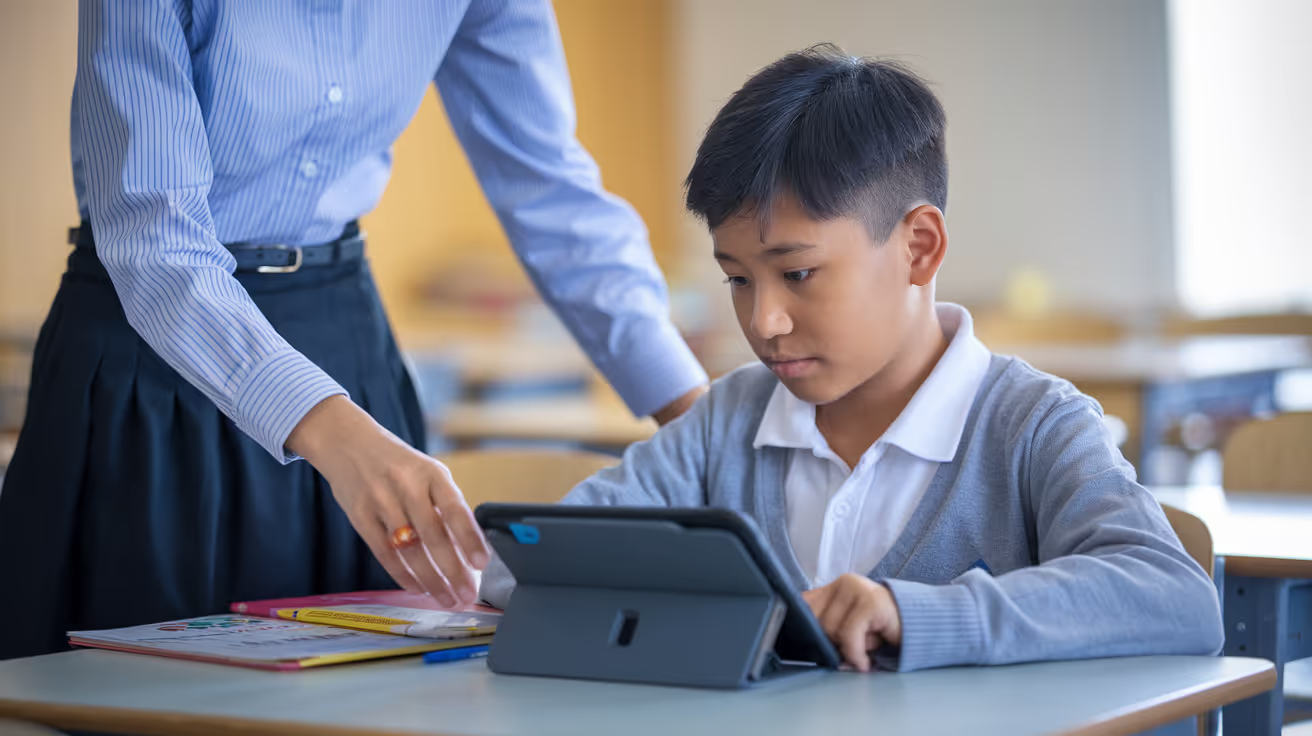

Artificial Intelligence (AI) is revolutionizing education by enabling earlier, more accurate detection of learning disabilities. At UNOWA, we are committed to leveraging these advancements to empower institutions, educators, and students, ensuring that every learner receives the support they need to thrive. This article explores how AI learning disability detection is reshaping inclusive education, the challenges and opportunities it presents, and how we can collectively drive large-scale impact across the EU, MENA, and CIS regions.
The Power of Early Detection: Why It Matters
Learning disabilities such as dyslexia, ADHD, and autism often go undetected until a child is well into their school years. Traditional diagnostic methods are time-consuming, require specialized professionals, and frequently result in late identification — limiting the effectiveness of interventions. According to recent studies, late diagnoses often occur after age six, missing a critical window for early support.
AI learning disability detection changes this paradigm. By analyzing vast and varied data — behavioral patterns, classroom performance, even genetic and brain imaging data — AI tools can identify subtle indicators of learning disabilities much earlier than conventional methods. Some AI models have demonstrated up to 94% accuracy in early disease detection, underscoring their potential for educational applications.
"AI technology tools hold remarkable promise for providing more accessible, equitable, and inclusive learning experiences for students with disabilities." — Edutopia
How AI Learning Disability Detection Works
AI-powered systems process large datasets from multiple sources, identifying patterns that may indicate a learning disability. These systems can:
- Automate early behavioral diagnosis: AI models can analyze classroom behavior, language use, and social interactions to flag potential concerns.
- Integrate diverse data: By combining behavioral, imaging, and genetic data, AI can break age barriers in diagnosis, enabling earlier and more accurate identification.
- Provide real-time feedback: Intelligent monitoring tools track student progress and adapt interventions dynamically, ensuring continuous support.
This approach not only accelerates identification but also enables personalized learning. AI can tailor lesson plans and interventions to each student’s unique needs, supporting inclusive education at scale.
Global Perspectives: EU, MENA, and CIS Regions
European Union (EU)
The EU leads in adopting AI for education, emphasizing inclusivity and accessibility. The General Data Protection Regulation (GDPR) governs the ethical use of student data, ensuring privacy and security. Many EU countries have national AI strategies focusing on early intervention and personalized learning.
Middle East and North Africa (MENA)
Governments in the MENA region are investing heavily in digital transformation and inclusive education. While regulatory frameworks are still emerging, there is a strong push to expand access to AI tools, bridge gaps in diagnosis, and train educators in new technologies.
Commonwealth of Independent States (CIS)
CIS countries are piloting AI-driven education projects, with growing interest in scalable solutions for early intervention. Resource constraints and evolving policies present challenges, but the potential for large-scale impact is significant.
For more on AI in education policy, see European Commission: Artificial Intelligence in Education.
Real-World Impact: Early Intervention and Inclusive Education
AI’s ability to enable large-scale, early screening and intervention is critical for inclusive education systems. By automating and personalizing support, AI helps national education systems reduce disparities and improve outcomes for students with learning disabilities.
Key benefits include:
- Early, accurate identification: AI can spot learning disabilities before traditional symptoms become pronounced, allowing for timely intervention.
- Personalized support: Adaptive learning environments ensure each student receives the right help at the right time.
- Teacher empowerment: AI reduces administrative burdens, freeing educators to focus on teaching and individualized support.
- Scalable solutions: AI-driven systems can be deployed across entire school networks, supporting national and regional education goals.
For insights into AI’s role in special education, visit UNESCO: Artificial Intelligence in Education.
Challenges and Considerations
Despite its promise, AI learning disability detection faces several challenges:
- Data privacy and ethics: Handling sensitive student data requires robust protection and adherence to regulations like GDPR.
- Access and equity: Ensuring all schools, regardless of region or resources, can benefit from AI tools is essential.
- Quality of data: Effective AI models require large, diverse datasets — often a barrier in under-resourced areas.
- Integration with policy and practice: Aligning AI tools with existing educational frameworks and teacher training is crucial for success.
"AI methods have built predictive models to improve the automation of early behavioral diagnosis, analyzed brain imaging and genetic data to break the age barrier for diagnosis, and established intelligent screening systems for early mass screening." — Frontiers in Psychiatry
Best Practices for Implementing AI in Learning Disability Detection
At UNOWA, we recommend the following strategies for ministries, institutions, and partners seeking to harness AI for inclusive education:
- Start early: Integrate AI-based screening tools in early childhood education to maximize the benefits of early intervention.
- Prioritize personalization: Use AI to customize learning experiences, ensuring every student’s needs are met.
- Monitor continuously: Employ intelligent systems that track progress and adapt interventions in real time.
- Protect data: Implement strong privacy policies and ethical guidelines for handling student information.
- Invest in training: Equip educators with the knowledge and skills to effectively use AI tools in their classrooms.
For more on best practices, see EdTech Hub: AI in Education.
UNOWA’s Commitment to Inclusive, Future-Ready Education
With over 15 years of experience and a track record of delivering over 300 national projects, we at UNOWA are at the forefront of developing and deploying AI-powered solutions for inclusive education. Our MIKKO platform, STEM innovation labs (Ulabs), curriculum-aligned content, and analytics are designed to empower institutions, educators, and students — transforming learning experiences for the better.
We believe every child deserves access to quality education, regardless of their abilities. By partnering with ministries, educational leaders, and schools across the EU, MENA, and CIS regions, we are shaping a future where AI learning disability detection is a cornerstone of equitable, high-impact education.
Learn more about our solutions at UNOWA.
FAQ: AI Learning Disability Detection
What is AI learning disability detection? AI learning disability detection refers to the use of artificial intelligence to identify learning disabilities such as dyslexia, ADHD, and autism at an early stage, enabling timely and personalized interventions.
How accurate are AI tools in detecting learning disabilities? Recent research shows that some AI models can achieve up to 94% accuracy in early disease detection, indicating strong potential for educational applications.
Is student data safe when using AI in education? In the EU, GDPR and similar regulations ensure that student data is handled securely and ethically. It is essential for institutions to implement robust privacy policies and transparent data practices.
How can AI support teachers and schools? AI reduces administrative tasks, provides real-time insights, and enables personalized learning plans, allowing teachers to focus on teaching and supporting individual students.
What are the main challenges in adopting AI for learning disability detection? Key challenges include data privacy, access to quality data, equitable access to technology, and aligning AI tools with existing educational policies and teacher training.
By embracing AI learning disability detection, we can create more inclusive, adaptive, and future-ready education systems — empowering every learner to reach their full potential. Let’s work together to transform learning experiences for the better.
References:
- Edutopia: AI in Special Education
- Frontiers in Psychiatry: AI for Early Autism Detection
- European Commission: AI in Education
- UNESCO: Artificial Intelligence in Education
- UNOWA

Check out other articles
Explore the latest perspectives from our digital research team

Equipping 439 schools: what a national STEM rollout actually takes
Armenia aims to equip every school with a science laboratory by the end of 2026. A look at the delivery layer of a 439-school rollout: seven laboratory configurations, 1.8 million items, 200+ localised teaching materials — and what ministries should ask suppliers.

Responsible AI in Education Starts Before the Algorithm
Responsible AI in education depends on knowing what your data actually represents. A UNOWA pilot study shows why measurement validity has to come before AI interpretation.

Differentiated Support in Inclusive Education: Why a Score Is Only the Start
Differentiated support in inclusive education starts where scoring ends. Here's why assessment should answer "what's getting in the way," not just "what's wrong."