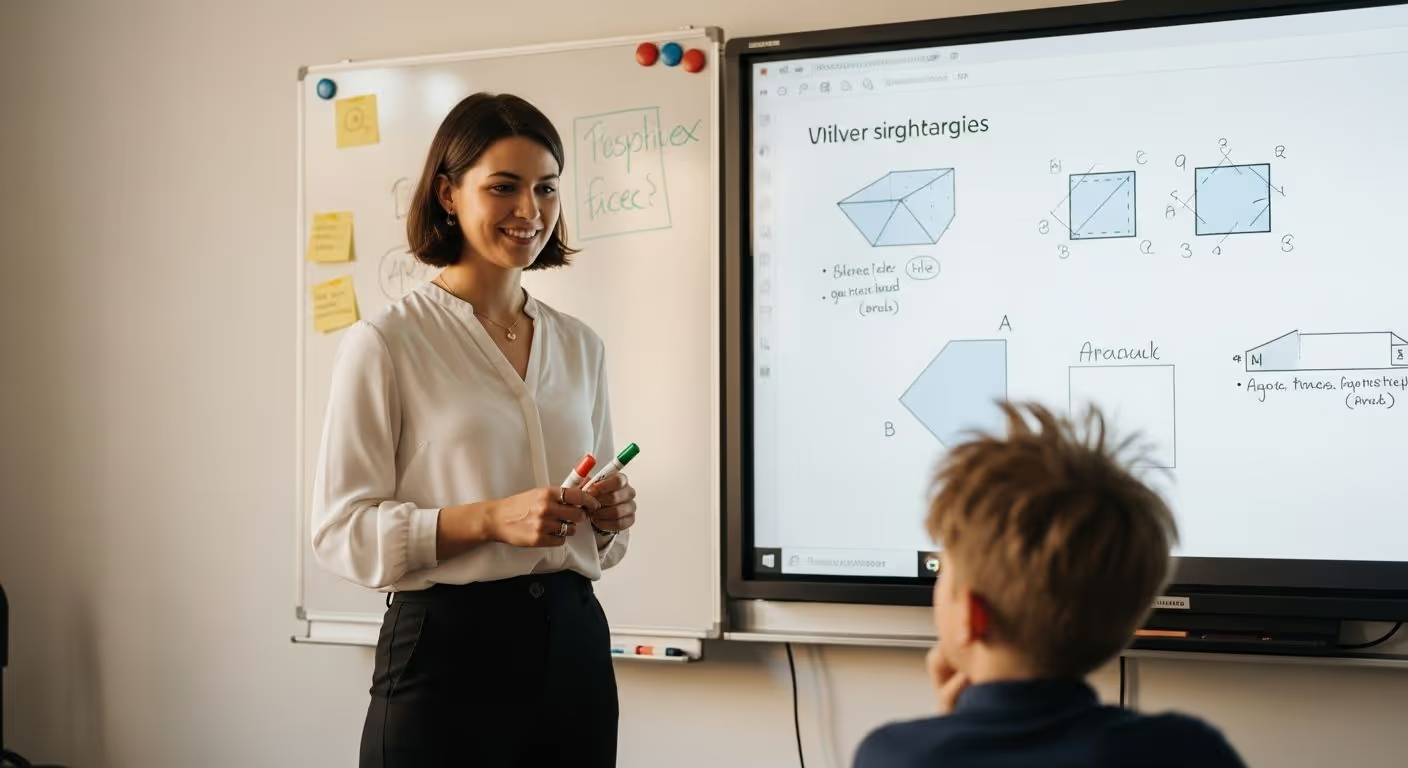

Did you know that interactive whiteboards can boost student engagement by up to 55% compared to traditional methods? In this article, we explore how these innovative tools are transforming classrooms worldwide, their benefits for inclusive education, key challenges, regional insights from EU, MENA, and CIS countries, and practical strategies to maximize their impact — drawing on the latest research to position us as your partner in future-ready learning.
The Rise of Interactive Whiteboards in Modern Education
Interactive whiteboards have evolved from simple digital displays into essential hubs for collaborative, multimodal learning. With the global market projected to reach USD 8.57 billion by 2033 at a 13.1% CAGR, driven primarily by K-12 education, these tools are now integral to government-led digital classroom initiatives Grand View Research. At UNOWA, we integrate interactive whiteboards into our comprehensive solutions, including MIKKO for inclusive education and Ulabs for STEM innovation, ensuring they align with national standards and empower educators to create engaging, accessible experiences.
Backed by over 15 years of experience, we've delivered solutions that turn interactive whiteboards into catalysts for equity, helping institutions bridge urban-rural divides and support diverse learners.
Key Benefits of Interactive Whiteboards
Interactive whiteboards offer transformative advantages, particularly in fostering inclusive and innovative education. Here's how they deliver value:
- Enhanced Engagement and Multimodal Learning: By combining text, images, video, and real-time annotation, they support visual, auditory, and kinesthetic learners, leading to up to 55% higher engagement EdTech Magazine.
- Inclusivity for All Students: Features like zoom tools, text-to-speech, and multilingual interfaces make them ideal for special education, aligning with Universal Design for Learning (UDL) principles to accommodate low-vision students or those with language barriers.
- Remote and Hybrid Capabilities: Cloud integration enables seamless sharing for absent or remote students, promoting equity in diverse settings.
- Gamification and Collaboration: Real-time polls, group activities, and AI-driven adaptive content make lessons interactive and memorable, as noted in recent analyses emphasizing their role in blended learning UNESCO.
These benefits position interactive whiteboards as more than hardware — they're tools for empowerment, helping educators transform learning experiences for the better.
Challenges in Implementing Interactive Whiteboards
While powerful, deploying interactive whiteboards requires addressing key hurdles to ensure sustainable impact:
- Teacher Training Gaps: Effective use demands ongoing pedagogical training; without it, boards may underperform, as highlighted in market reports MarketsandMarkets.
- Equity and Access Issues: Rural-urban divides in internet and support can exacerbate inequalities, with studies showing uneven adoption in lower-income areas.
- Maintenance and Costs: High total ownership costs, including software licenses and IT support, strain budgets, emphasizing the need for modular, remotely manageable systems.
- Over-Reliance on Technology: Gains plateau if used merely as projectors, underscoring the importance of integrating them with curriculum-aligned content.
At UNOWA, we tackle these by providing tailored training, analytics, and adaptable solutions, ensuring interactive whiteboards drive real educational transformation.
Regional Insights: Interactive Whiteboards in EU, MENA, and CIS
Across our focus geographies, interactive whiteboards are advancing inclusive education through national strategies:
- EU Nations (Bulgaria, Malta, Poland, Latvia, Lithuania, Estonia, Serbia): High penetration in urban classrooms, funded by EU ICT programs, focuses on digital competence and accessibility under the European Accessibility Act European Commission.
- MENA Countries (Saudi Arabia, UAE, Qatar, Oman): Ambitious visions like Saudi Vision 2030 integrate interactive whiteboards with Arabic interfaces and blended learning, making them standard in smart schools.
- CIS Regions (Kazakhstan, Uzbekistan, Armenia, Moldova, Azerbaijan, Kyrgyzstan, Georgia): Phased rollouts prioritize rural equity, using boards for bilingual instruction and remote teaching to address teacher shortages.
These trends, supported by donor programs, highlight opportunities for scalable impact — areas where we excel in delivering locally adaptable systems. Learn more about our global projects at UNOWA.
Proven Strategies for Successful Deployment
Drawing from our expertise, here are UNOWA's recommendations for leveraging interactive whiteboards effectively:
- Prioritize Pedagogy: Define inclusive goals first, then select features like AI adaptation for differentiated learning.
- Invest in Continuous Training: Embed multi-year programs using the boards themselves for hands-on professional development.
- Ensure Equity: Target rural and special education settings early, bundling with offline solutions and assistive tools.
- Measure Impact: Use analytics to track engagement and outcomes, aligning with policies like those from the World Bank World Bank.
- Future-Proof Investments: Choose systems meeting accessibility and data standards to comply with evolving regulations.
By following these, institutions can turn interactive whiteboards into engines of empowerment. Contact us at UNOWA for a consultation.
FAQ
What are interactive whiteboards? Interactive whiteboards are digital displays that allow real-time interaction, annotation, and content sharing, enhancing classroom collaboration.
How do interactive whiteboards support inclusive education? They offer accessibility features like multilingual support and adaptive tools, ensuring all students, including those with special needs, can participate fully.
What is the market outlook for interactive whiteboards? The global market is expected to grow to USD 8.57 billion by 2033, with education driving over 60% of demand Grand View Research.
How can we overcome implementation challenges? Focus on teacher training, equity planning, and analytics — strategies we at UNOWA integrate into our solutions.
Where can I learn more about UNOWA's interactive whiteboard integrations? Visit UNOWA to explore our MIKKO and Ulabs offerings tailored for your needs.

Check out other articles
Explore the latest perspectives from our digital research team

Equipping 439 schools: what a national STEM rollout actually takes
Armenia aims to equip every school with a science laboratory by the end of 2026. A look at the delivery layer of a 439-school rollout: seven laboratory configurations, 1.8 million items, 200+ localised teaching materials — and what ministries should ask suppliers.

Responsible AI in Education Starts Before the Algorithm
Responsible AI in education depends on knowing what your data actually represents. A UNOWA pilot study shows why measurement validity has to come before AI interpretation.
Differentiated Support in Inclusive Education: Why a Score Is Only the Start
Differentiated support in inclusive education starts where scoring ends. Here's why assessment should answer "what's getting in the way," not just "what's wrong."