Ireland’s Signal: Inclusive education is already mandated. But no system has yet proven it can scale it.


What Ireland reveals about the real challenge facing schools today
Inclusive education is no longer a debate.
In many countries, it is already policy. It is built into public commitments, school expectations, and reform agendas. The language is there. The intention is there. The pressure is there too.
What is still missing, in too many systems, is implementation.
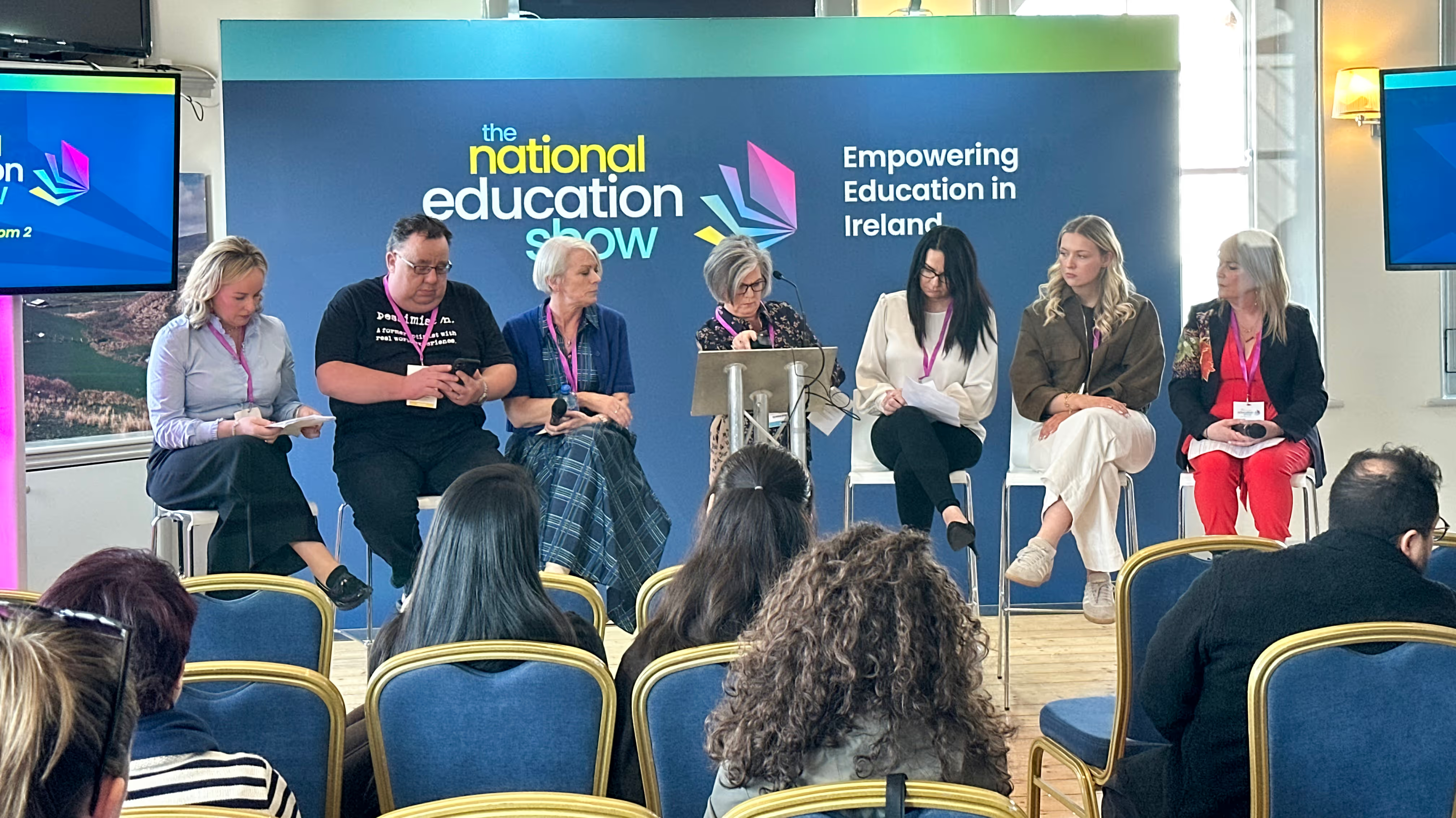
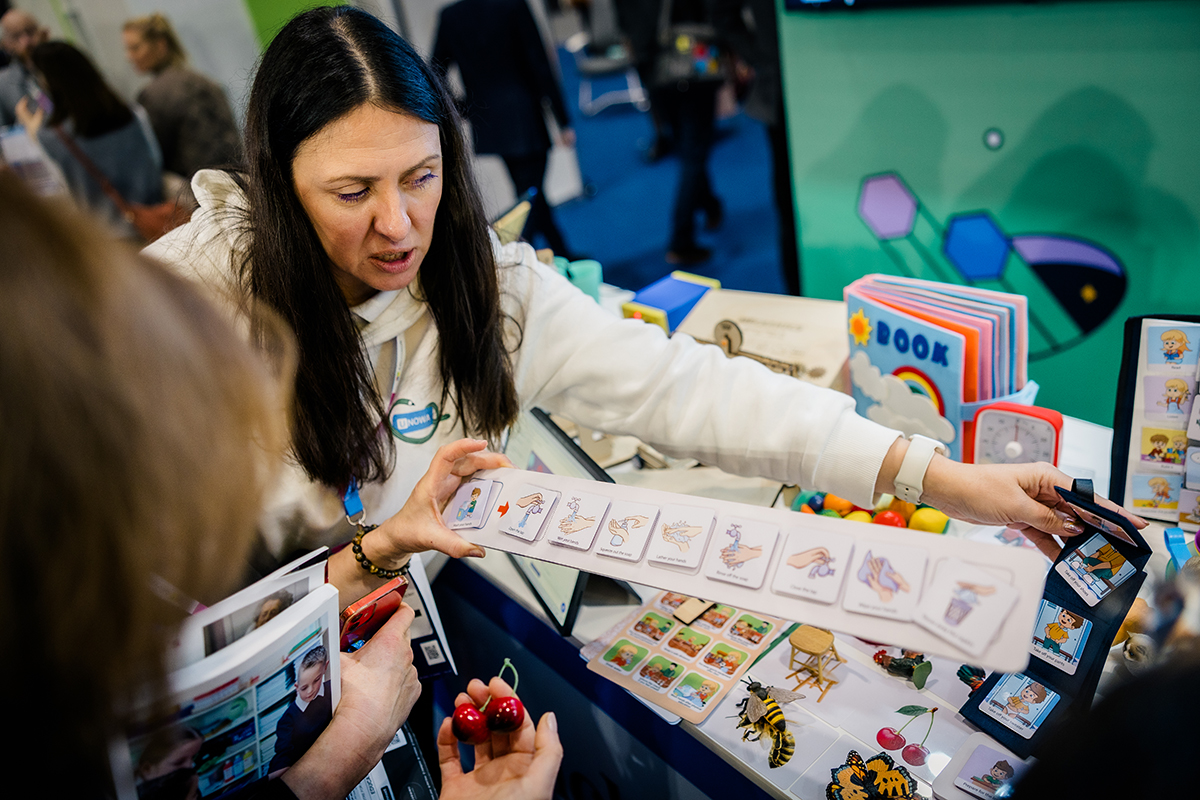
That was one of the clearest signals from the National Education Show in Dublin.
Not because it was the biggest education event in Europe. It was not. But that is exactly what made it useful. Smaller, more focused events often reveal something global exhibitions do not: what educators are actually struggling with when the stage lights are off and the marketing language disappears.
And in Dublin, the message was direct.
Inclusive education in Ireland is no longer being discussed as a principle. It is being experienced as a system challenge.
Smaller events often show the real picture
Large international exhibitions are built around visibility. They amplify innovation, position brands, and showcase future-facing ideas.
Local education events do something different. They reveal what systems are trying to solve right now.
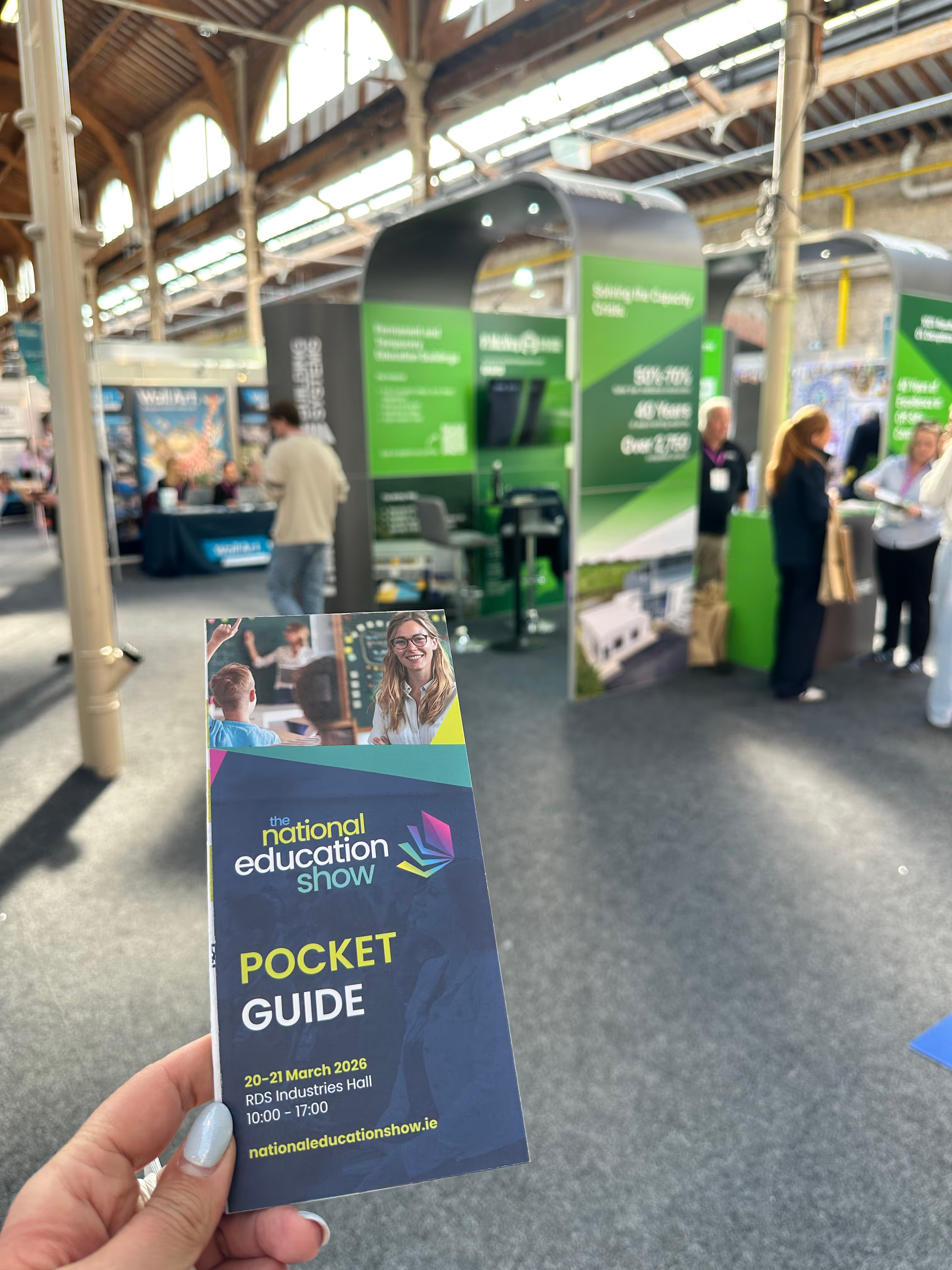
The National Education Show at the RDS brought together educators, school leaders, CPD sessions, and local providers around issues that felt immediate, practical, and unresolved. The strongest signals were not about trend-driven innovation. They were about pressure points inside the classroom.
Diverse learning needs.
Early years intervention.
Dyspraxia and complex developmental profiles.
Teacher wellbeing.
Burnout.
These are not isolated topics. They are indicators of a system under strain.
They show where inclusion has already moved beyond policy language and into operational reality.
The challenge is no longer whether inclusion matters
That part is already settled.
What systems are now facing is a harder question: how to make inclusion work consistently in real schools, with real teachers, under real constraints.
Ireland reflects that shift clearly.
The issue is not a lack of commitment to inclusion. The issue is that commitment alone does not create capacity. It does not give teachers a structured methodology. It does not translate assessment into daily practice. And it does not automatically create coordinated support across professionals, schools, and families.
This is where many systems are now stuck.
Not at the level of ambition. At the level of execution.

Teachers are not the barrier. Fragmentation is.
This matters because the wrong diagnosis leads to the wrong solutions.
When inclusive education fails in practice, the problem is often explained as resistance, slow adoption, or lack of readiness in schools. But what Dublin reflects is something more uncomfortable and more important.
Teachers are often willing.
Schools are trying.
The need is understood.
What is missing is structure.
Across many education systems, the barriers look familiar:
limited specialist support,
unclear implementation pathways,
lack of structured methodologies,
and insufficient systems that connect developmental understanding with classroom action.
That creates a predictable result. Teachers are expected to support increasingly diverse learners, but they are often doing so within fragmented models that rely on adaptation, improvisation, and personal effort.
That is not a sustainable implementation strategy.
Inclusion does not fail because educators reject it.
It fails because too many systems still expect it to work without a coherent framework.
Inclusion is not placement
One of the most persistent misunderstandings in education is reducing inclusion to presence.
A child is placed in a mainstream classroom, and the system assumes inclusion has happened.
But placement is not the same as support.
Real inclusion requires more than access to space. It requires a model that helps schools understand individual developmental needs, adapt learning pathways, support teachers, coordinate specialists, and monitor progress over time.
Without that, inclusion becomes symbolic. It is visible on paper, but inconsistent in practice.
And systems increasingly know this.
That is why the conversation is shifting. The question is no longer:
Should inclusion happen?
The real question is:
How do we make inclusion work in a way that is structured, measurable, and scalable?
That shift is important because it moves education out of theory and into design.

What Ireland reflects is a global pattern
What appeared in Dublin is not only about Ireland.
It reflects a wider reality across Europe and beyond. Inclusive education is becoming more formalized. Expectations are rising. Schools are under pressure to respond to increasingly diverse classroom needs. At the same time, the support architecture behind implementation remains uneven.
Demand is growing faster than system capacity.
This is the real tension.
Even where policy is moving in the right direction, delivery remains vulnerable when schools depend on unstable staffing, isolated interventions, or disconnected tools. Systems end up expecting consistency from structures that are not built for consistency.
That is why this issue matters beyond one country.
Education systems are no longer being judged by whether they endorse inclusion. They are being judged by whether they can operationalize it.

Schools do not need more tools. They need a system
This is where many solutions still miss the point.
They offer products when schools need process.
They offer isolated interventions when schools need continuity.
They offer features when systems need implementation architecture.
Inclusive education cannot be solved through a one-time training session, a stand-alone assessment, or a single digital tool. It only works when the full cycle is connected:
assessment → interpretation → action → monitoring.
Break that cycle, and implementation weakens.
A child may be screened without follow-through.
A teacher may receive guidance without practical tools.
A school may adopt a resource without a framework for measuring outcomes.
This is why so many promising initiatives fail to scale. Not because the intention is wrong, but because the model is incomplete.
What a full-cycle approach looks like
This is the gap UNOWA addresses through the MIKKO methodology.
The principle is simple: inclusion becomes sustainable only when it is structured as a system rather than delivered as fragmented support.
That means connecting the full implementation cycle:
screening and assessment,
interpretation of results,
structured learning tools,
teacher training,
and measurable progress tracking.
At the core of MIKKO is the framework of the 6 Domains of Development: cognitive, speech, social, sensory, physical, and daily living skills.
This matters because child development is not linear and not isolated. Educational support should not be isolated either.
A systemic model helps schools move from scattered decisions to structured action. It reduces dependence on individual effort alone. It gives teachers a clearer pathway. It helps specialists work in coordination. And it makes progress more visible and manageable over time.
That is what schools increasingly need: not more separate inputs, but a model that holds the process together.
Why Ireland confirms the direction
What makes Ireland significant is not that the system is perfect.
It is that the pressure is visible, the questions are real, and the conversation is already moving toward implementation.
That is where meaningful transformation starts.
Not when systems talk about innovation in general terms.
When they begin asking what actually works inside schools.
Dublin showed that this transition is already happening. The focus is moving away from broad declarations and toward practical delivery. Away from theory and toward operating models. Away from abstract inclusion and toward classroom execution.
This is a more demanding stage of educational change.
It is also a more useful one.

Inclusion is already expected. Effective implementation is still rare.
That is the real takeaway.
The market does not need more awareness that inclusion matters. That case has already been made.
What education systems need now are models that reduce fragmentation, support teachers, and turn policy into consistent action.
Because the next opportunity in education is not simply innovation.
It is implementation.
Not presenting new ideas.
Making them work.
Not adding more disconnected tools.
Building systems schools can actually use.
The future of inclusive education will not be defined by the loudest promises. It will be defined by what can be implemented consistently, across classrooms, teams, and regions.
And that is where the real work begins.
If you are working on inclusive education at the level of policy, distribution, or school implementation, the key question is no longer whether inclusion matters. It is how to make it work in practice.
Explore how full-cycle inclusive solutions can be implemented in your region through UNOWA and MIKKO.
Check out other articles
Explore the latest perspectives from our digital research team

Equipping 439 schools: what a national STEM rollout actually takes
Armenia aims to equip every school with a science laboratory by the end of 2026. A look at the delivery layer of a 439-school rollout: seven laboratory configurations, 1.8 million items, 200+ localised teaching materials — and what ministries should ask suppliers.

Responsible AI in Education Starts Before the Algorithm
Responsible AI in education depends on knowing what your data actually represents. A UNOWA pilot study shows why measurement validity has to come before AI interpretation.
Differentiated Support in Inclusive Education: Why a Score Is Only the Start
Differentiated support in inclusive education starts where scoring ends. Here's why assessment should answer "what's getting in the way," not just "what's wrong."