

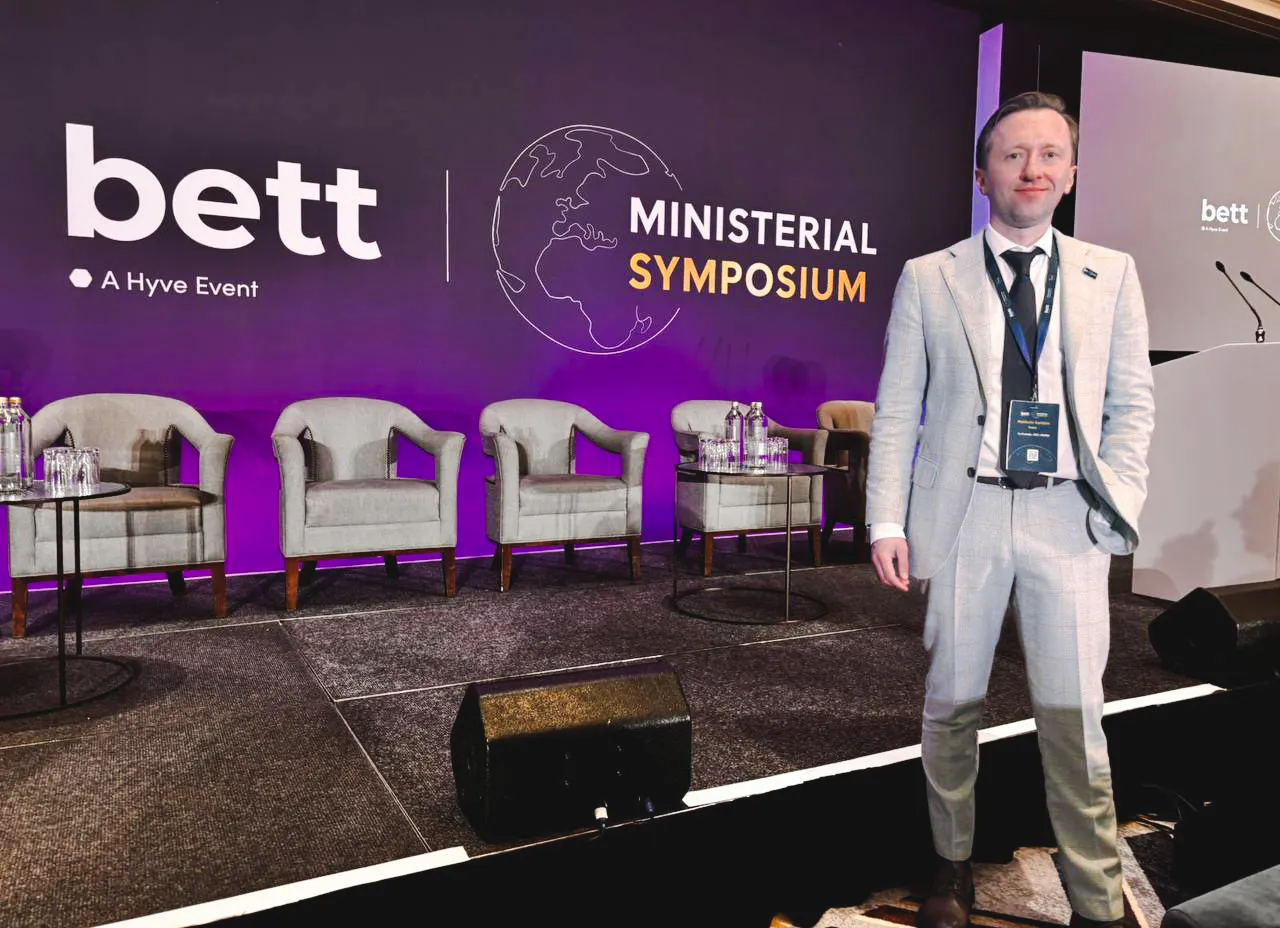
Ministerial Symposium at Bett UK 2026
Today, education leaders from more than 60 countries are gathering in London at Bett UK 2026, one of the world’s most influential global EdTech events.
Alongside the exhibition, the Ministerial Symposium at Bett UK 2026 brings together ministers of education, international organizations, EdTech companies, and global technology corporations to address a shared challenge:
How do we build education systems that are digitally advanced, inclusive, and resilient — without leaving anyone behind?
The symposium brings together representatives from Europe, Asia, the Middle East, Africa, and North and South America, highlighting the growing need for international cooperation in shaping the future of education. Discussions focus on AI in education, digital transformation, inclusive and accessible learning, future-ready skills, and sustainable education systems.
As part of this dialogue, UNOWA participated in a closed UNICEF-led roundtable workshop dedicated to equity, inclusion, and the systemic barriers preventing EdTech from delivering real impact.

How the workshop was structured.
The workshop was intentionally designed not to jump into solutions too quickly.
Participants were divided into tables, each representing a specific stakeholder group within the education ecosystem:
- learners
- parents
- teachers
- school leaders
- EdTech providers
The task was not to defend institutional positions, but to step into the lived reality of that stakeholder and map:
- challenges
- barriers
- unmet needs
- systemic contradictions
Only after identifying these challenges were participants asked to formulate a shared “How might we…” problem statement that could guide responsible, system-level solutions.
The EdTech providers’ table was moderated by Beth Havinga (Germany), Managing Director of the European EdTech Alliance e.V.
Participants at the table included representatives from Apple, UNICEF, national ministries of education (including the Republic of Korea), international organizations, EdTech alliances, and UNOWA, represented by Mykhailo Kalitkin.
The core challenges identified
Across discussions, several systemic issues emerged repeatedly:
1. Profit versus conscience
EdTech providers face a structural tension between building inclusive, needs-based solutions and creating products that are commercially viable at scale. Inclusive education often serves smaller, more complex user groups — yet procurement and funding models reward mass adoption and low cost.
2. Broken procurement logic
Technology procurement is frequently driven by ministries of digitalization rather than ministries of education. As a result, decisions prioritize price and scale over pedagogical relevance, safety, and inclusion.
3. Curriculum misalignment
One of the primary reasons teachers reject EdTech tools is simple:
If a tool does not align with national curricula, it cannot be used in real classrooms.
4. Research versus implementation
While evidence-based policy is essential, traditional multi-year research cycles often cannot keep pace with AI-driven innovation. In some cases, tenders reward research institutions with limited implementation capacity, leading to legal disputes and failed projects.
5. The hidden risks of “freemium” tools
Consumer-grade tools not designed for education are increasingly used in classrooms. Many rely on data monetization models that raise serious ethical concerns when applied to children.
Mykhailo Kalitkin: a lived-experience perspective on inclusion
One of the strongest contributions to the discussion came from Mykhailo Kalitkin, who spoke not only as an EdTech founder, but also as a parent of a child with autism and a practitioner with over 15 years of hands-on implementation experience.
“Without personal experience with children with special educational needs, it is impossible to build truly inclusive EdTech.”
For Mykhailo, inclusion is not a theoretical framework. It starts with lived reality.
Practice before market fit
He emphasized that products must be developed in real schools, with real teachers, assistants, and children — not in isolation from classrooms or driven purely by market trends.
“Real environments are the only source of real feedback.
Not presentations. Not tenders. Not market targeting.”
Curriculum is the law
One of his most direct statements addressed a core systemic flaw:
“Curriculum is the law — for governments and for EdTech providers.”
If teachers cannot see how a digital tool fits into their curriculum, it will be pushed out of the system — regardless of how advanced the technology may be.
AI must be bounded, not generic
Mykhailo was particularly clear about the risks of deploying general-purpose AI tools in classrooms:
“Unrestricted AI tools are dangerous in real classrooms.
Education requires boundaries — pedagogical, curricular, and ethical.”
He argued that AI in education must be:
- curriculum-aligned
- integrated with didactic materials
- designed specifically for educational environments
- supportive of teachers’ professional judgment, not a replacement for it
A system-level view
Perhaps his most important contribution was a systems perspective:
“You cannot design EdTech from one point of view.
You must see the whole system — the child, the parent, the teacher, the specialist, the school, and the government.”
Only after this holistic understanding, he argued, does it make sense to talk about products, scaling, and revenue.
“Money is not first.
First comes the idea and the quality of the product.”

What this means for the future of EdTech
The workshop made one conclusion clear:
Inclusion cannot be added later.
Equity cannot be a feature.
It must be built into the system itself.
Responsible EdTech requires:
- lived experience
- real-world practice
- global expertise
- curriculum integration
- ethical funding and procurement models
Where this connects to UNOWA and AI Agent MIKKO
At UNOWA, these principles are not theoretical.
They form the foundation of AI Agent MIKKO — a purpose-built, domain-specific AI solution designed for inclusive education.
MIKKO supports professional judgment, structures complex educational processes, and enables full-cycle support — from assessment to practical application — within real educational systems.
👉 Learn more about AI Agent MIKKO: AI Agent MIKKO

Check out other articles
Explore the latest perspectives from our digital research team

Equipping 439 schools: what a national STEM rollout actually takes
Armenia aims to equip every school with a science laboratory by the end of 2026. A look at the delivery layer of a 439-school rollout: seven laboratory configurations, 1.8 million items, 200+ localised teaching materials — and what ministries should ask suppliers.

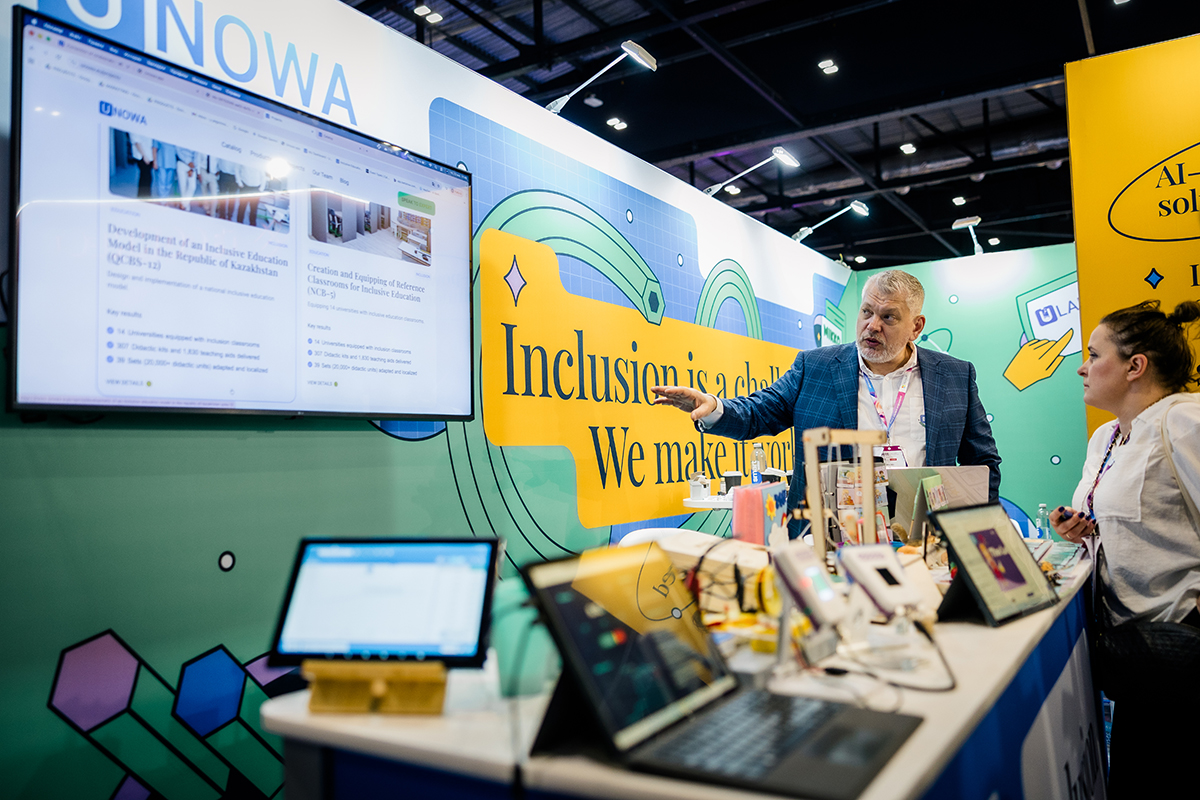
Responsible AI in Education Starts Before the Algorithm
Responsible AI in education depends on knowing what your data actually represents. A UNOWA pilot study shows why measurement validity has to come before AI interpretation.

Differentiated Support in Inclusive Education: Why a Score Is Only the Start
Differentiated support in inclusive education starts where scoring ends. Here's why assessment should answer "what's getting in the way," not just "what's wrong."