
In this article, you will learn how the MIKKO AI Agent works by transforming diagnostic data into dynamic development plans and building behaviour intervention plans. See how it supports professionals 24/7. Through real-life examples and practical case studies, you will see that the future of inclusion is already here.
How MIKKO Changes the Game
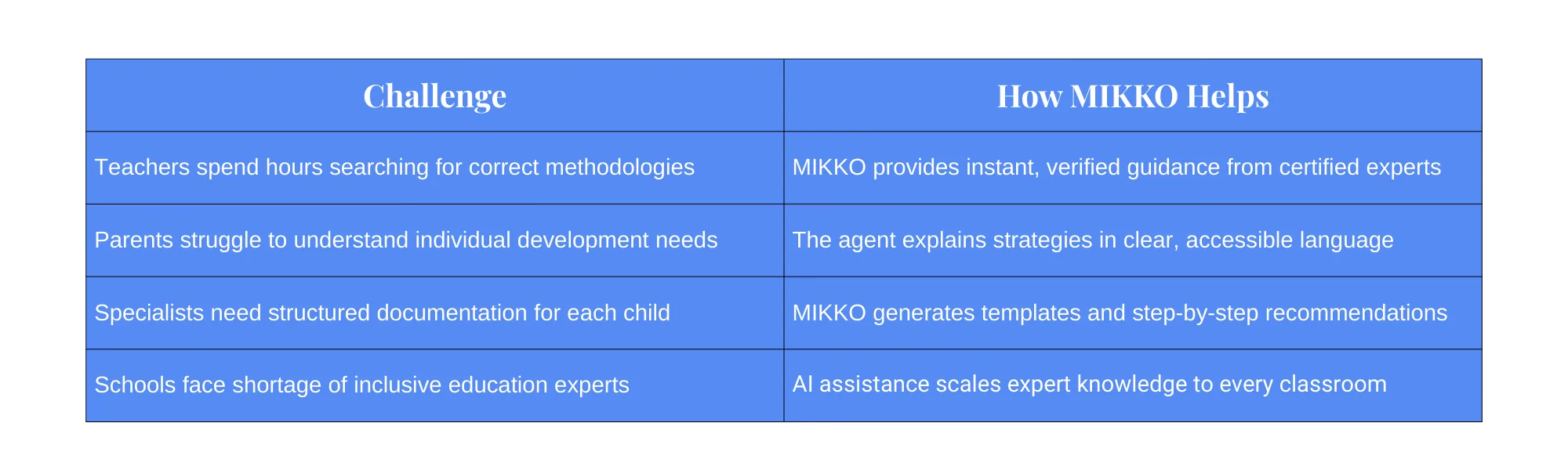
Teachers, psychologists, and tutors are often overwhelmed — they carry the burden of diagnostics, behavior analysis, documentation, and tracking a child’s progress. MIKKO AI Agent, the world’s first AI agent for inclusive education, was created precisely to reduce this workload and give specialists more time for what matters most: the child.
Education today faces numerous challenges — and MIKKO was built to solve them.
When Technology Truly Helps
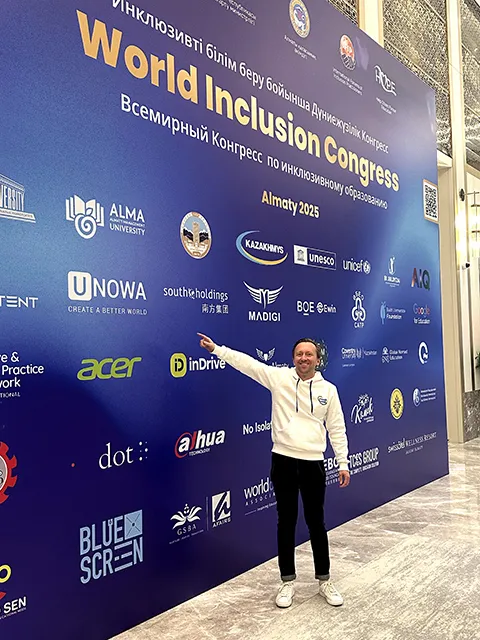
Teachers and specialists working with children with special educational needs are often overloaded: diagnostics, individualization of programs, documentation, progress tracking — all fall on their shoulders. This issue was especially emphasized at the World Inclusive Congress (WIC 2025) in Almaty.
“We repeatedly heard a clear request — specialists need psychological and physical relief,” Mykhailo Kalitkin, CEO of UNOWA. “In this context, I am confident that the MIKKO AI Agent will become an indispensable assistant in the hands of every educator.”
This is exactly why the MIKKO AI Agent was created — a digital assistant integrated into UNOWA’s LMS platform. It automates one of the most labor-intensive processes in inclusive education: the development of an Individual Development Plan (IDP).
Based on diagnostic results from the “6 Spheres of Development” system, the agent generates:
- an individual development plan with priorities across key areas,
- a behavior intervention plan when challenging behaviors are present,
- 24/7 access to professional recommendations within UNOWA’s validated knowledge base.
Now teachers can spend less time on paperwork and more on meaningful interaction with the child — while the whole team works with a single, clear, unified plan.
From Diagnostics to Action
MIKKO’s recommendations are based on structured diagnostics, not guesses. The full “6 Spheres of Development” assessment system, created by UNOWA experts, has been digitized and integrated into the platform.
A specialist evaluates a child’s skills across six core domains:
- Cognitive — attention, learning prerequisites, basic mathematical concepts.
- Speech — receptive and expressive language, communication, requests, responses.
- Social — interaction with adults and peers, play, emotional responsiveness.
- Sensory — reactions to stimuli, sensory needs, sensory overload.
- Daily Living Skills — self-care and everyday independence.
- Physical — fine and gross motor skills, coordination, activity.
Every skill is evaluated as formed, partially formed, or not formed. Additional comments and observations can be added. All this becomes part of the child’s digital profile — the foundation for MIKKO’s personalized recommendations.
How MIKKO Builds a Development Path
MIKKO is a full digital assistant that turns diagnostics into an actionable Individual Development Plan (IDP) and, when necessary, a behavior plan.
Step 1. MIKKO Analyzes the Child’s Profile
After the profile is filled (based on the 6 Spheres Assessment), MIKKO AI Agent begins the analysis:
It:
- compares current skills with age norms,
- identifies areas of difficulty,
- highlights strengths that can support learning,
- considers interconnections between spheres (e.g., low receptive language impacts other areas).
Based on this, MIKKO prioritizes goals in each sphere and builds a logical sequence of development.
Example:
If fine motor skills are weak but cognitive skills are strong, MIKKO will propose development of writing and manipulative tasks through meaningful cognitive activities.
Step 2. MIKKO Generates the Individual Development Plan
The system automatically creates an IDP, structured across all six spheres.
Each block includes:
- clear goals based on diagnostics,
- measurable success criteria,
- recommended methods from UNOWA’s library,
- references to MIKKO didactic kits when applicable.
The specialist can edit or customize the plan — but the starting version is already systematic and diagnostic-driven.
Step 3. When There Is Challenging Behavior — MIKKO Builds a Behavior Plan
If challenging behaviors are reported (meltdowns, aggression, elopement), the behavior module activates.
It follows steps:
1. Behavior Identification:
The specialist indicates which forms of behavior are observed and how often they occur (e.g., “aggression — occasionally,” “tantrums — daily”).
2. Context Analysis
MIKKO AI Agent asks when the behavior occurs:
- during demands,
- when denied a preferred item,
- during attention deprivation,
- during sensory overload.
3. Consequence Analysis:
The agent analyzes what happens after the behavior:
- Do the demands change or disappear?
- Does the child receive the desired item or activity?
- Does the adult approach and give attention?
These data help determine what reinforces the behavior and why the child is using it.
4. Function Analysis
Based on the collected data, MIKKO AI Agent determines the function of the behavior:
- attention,
- access to preferred items/activities,
- avoidance of demands,
- sensory stimulation,
or a combination of functions.
If needed, the agent asks additional clarifying questions to ensure accuracy.
For example:
If a tantrum occurs when the child is asked to begin a task — and the task is usually postponed afterward — the system will identify the function as task avoidance.
Step 4. MIKKO Proposes a Behavior Intervention Plan
MIKKO selects a behavior intervention plan from UNOWA’s library.
Each plan includes:
- trigger analysis and prevention: what can be changed in the environment to prevent the behavior from occurring;
- alternative skill to teach: what alternative, appropriate behavior the child should be taught — for example, using a “pause” gesture or card instead of screaming;
- adult response protocol: how adults should remain calm and avoid reinforcing the behavior;
- positive reinforcement strategies: which actions should be praised or rewarded, and how to deliver that reinforcement effectively;
- progress monitoring tools: how to track progress and when to review or adjust the plan.
Example:
For “Tantrum with an avoidance function”, the plan includes visual timers, schedules, token systems for completing tasks, and teaching an alternative request such as “break.
For “Aggression with an attention + access function”, the plan suggests a combined approach: ignoring attention-seeking aggression while teaching the child an appropriate way to make a request.
The Key Point: Everything in One Place
Everything — the Individual Development Plan and the Behavior Intervention Plan — is integrated into one digital profile on the UNOWA platform.
The specialist sees the full picture — both the skills that need to be developed and the strategies required to address challenging behaviors. And MIKKO AI Agent supports the implementation of this program step by step, offering the necessary materials, techniques, and guidance on what to do next.
MIKKO as a Professional Assistant
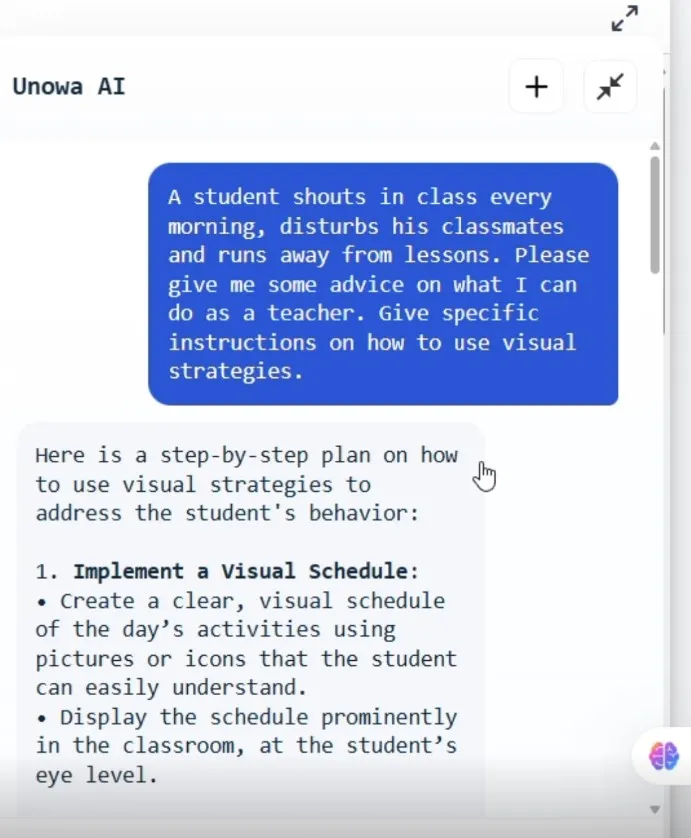
Beyond planning, MIKKO AI Agent becomes a 24/7 methodological assistant. A specialist can ask:
- How do I teach a child to request help?
- What exercises support self-care?
- How to start with low receptive language?
Or request:
- clarification of a specific IDP section,
- guidance on how to apply the “visual schedule” strategy at home,
- examples of exercises aligned with a particular goal (for example, “following instructions”).
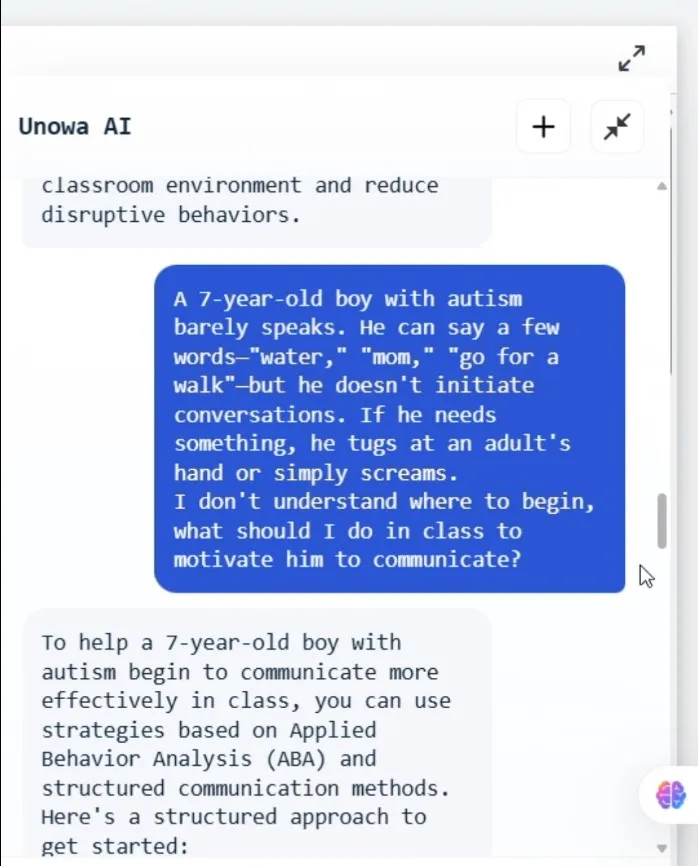
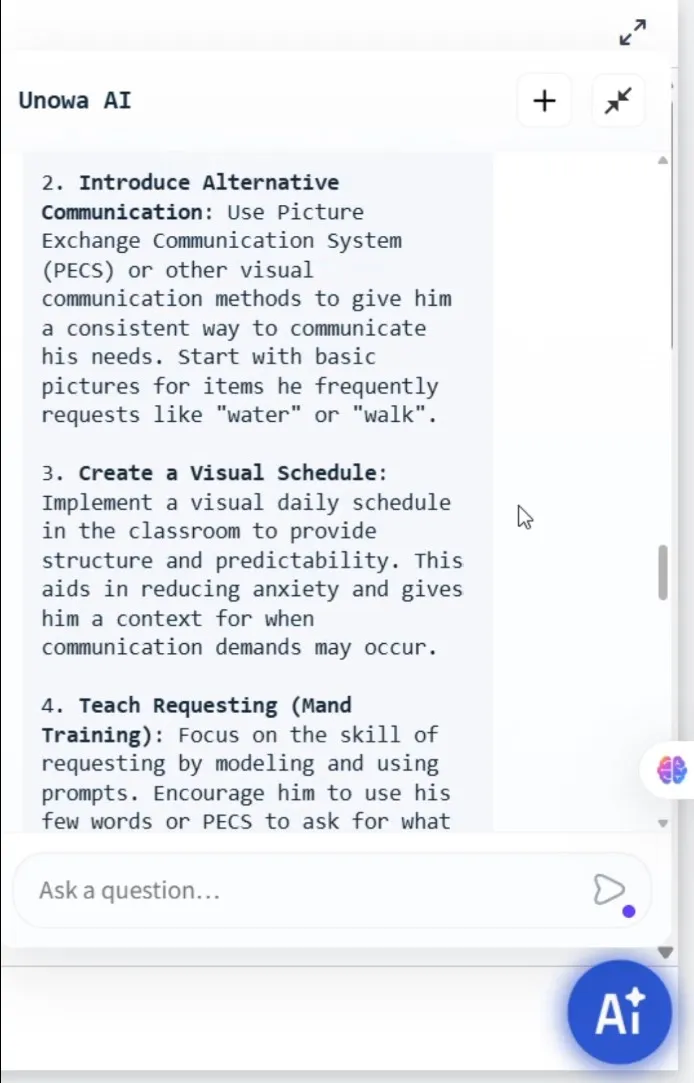
MIKKO AI Agent doesn’t simply generate answers — it relies on a validated, structured knowledge base that includes:
- UNOWA’s courses,
- methodological materials and instructional protocols,
- real specialist case studies and the digital development library based on the 6 Spheres of Development.
AI Agent responds strictly within UNOWA’s validated knowledge base — without internet searches or unreliable sources.
Why MIKKO Is Truly Valuable
MIKKO’s knowledge base reflects years of UNOWA’s work — protocols, courses, case studies, and extensive diagnostic data.
- Knowledge becomes accessible instantly
- Adapted to each child
- Clear even for beginners
- Practical, actionable steps
Benefits for the Entire Educational Team
- Standardized approach to diagnostics and IDPs — all specialists speak the same language, using a unified structure for diagnostics and IDP development.
- Higher quality of programs — every action is linked to diagnostic data and a clear methodological logic.
- Time savings for teachers — less time spent on paperwork, more time available for direct work with children.
- Better collaboration among educators and parents — speech therapists, teachers, and parents work within a single digital program, eliminating duplication and documentation chaos.
- Growth of professional competencies — the AI assistant, integrated into training and daily practice, makes specialists’ work simpler, clearer, and more confident.
In a Few Words
MIKKO is not a replacement for specialists — it is their right hand.
It helps:
- collect and analyze data,
- prioritize tasks,
- develop diagnostic-based plans,
- support daily implementation.
Above all, it gives specialists what they value most:
time, attention, and energy for the child.

Check out other articles
Explore the latest perspectives from our digital research team

Equipping 439 schools: what a national STEM rollout actually takes
Armenia aims to equip every school with a science laboratory by the end of 2026. A look at the delivery layer of a 439-school rollout: seven laboratory configurations, 1.8 million items, 200+ localised teaching materials — and what ministries should ask suppliers.

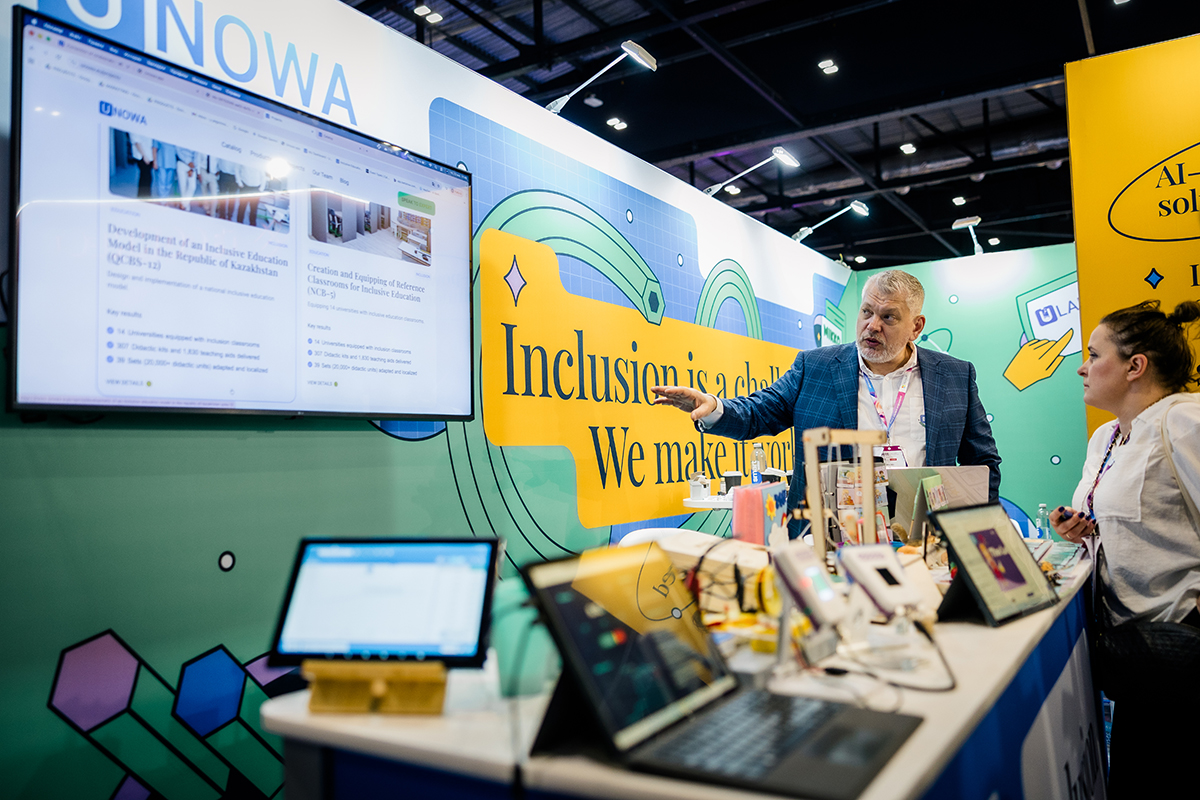
Responsible AI in Education Starts Before the Algorithm
Responsible AI in education depends on knowing what your data actually represents. A UNOWA pilot study shows why measurement validity has to come before AI interpretation.
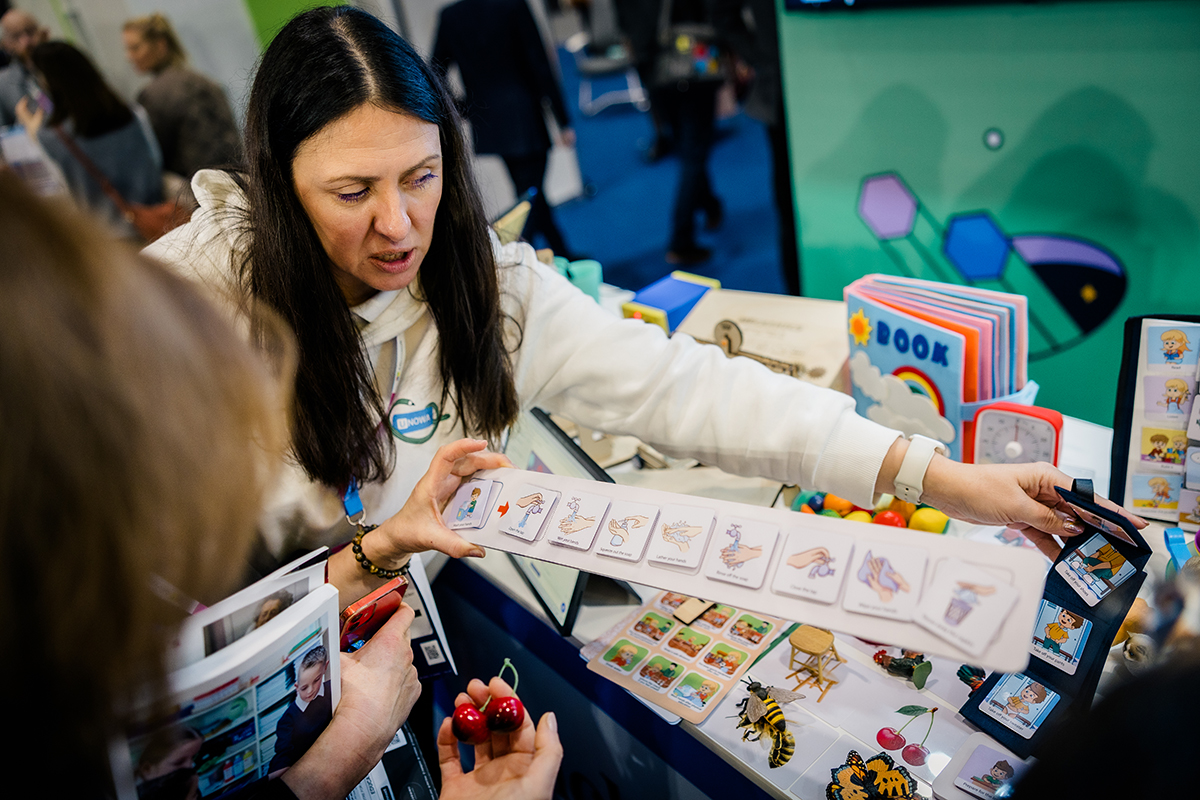
Differentiated Support in Inclusive Education: Why a Score Is Only the Start
Differentiated support in inclusive education starts where scoring ends. Here's why assessment should answer "what's getting in the way," not just "what's wrong."