
Artificial Intelligence (AI) is reshaping education across the globe, driving innovation in both STEM (Science, Technology, Engineering, Mathematics) and humanities disciplines. As we at UNOWA continue to empower educational institutions with cutting-edge solutions, understanding the unique strengths and challenges of AI in these fields is crucial for shaping inclusive, locally adaptable, and future-ready education systems.
AI in STEM and Humanities: A Transformative Force
AI’s integration into education is accelerating, with UNESCO and the World Bank highlighting its potential to address major challenges, personalize learning, and support Sustainable Development Goal 4: inclusive and equitable quality education for all (UNESCO, World Bank). But where does AI truly excel in STEM and humanities, and how can educational leaders harness its power for maximum impact?
AI in STEM: Precision, Personalization, and Problem-Solving
AI’s strengths in STEM education are clear and compelling:
- Adaptive Learning and Personalization: AI-driven platforms analyze student performance in real time, tailoring content and pacing to individual needs. This ensures that each learner receives targeted support, closing knowledge gaps efficiently.
- Automated Assessment: AI can instantly grade assignments, quizzes, and even complex problem sets, providing immediate feedback and freeing educators to focus on higher-order teaching.
- Simulation and Visualization: Advanced AI tools simulate scientific phenomena, from molecular interactions to engineering prototypes, making abstract concepts tangible and engaging.
- Data-Driven Insights: Educators and administrators gain actionable analytics on student progress, enabling evidence-based interventions and curriculum adjustments.
A recent World Bank report notes that AI-powered initiatives, such as the “Somos Profes, Somos Educadores” program, are already improving educational outcomes by supporting teachers with real-time data and resources (World Bank).
AI in Humanities: Language, Culture, and Critical Thinking
While STEM fields often dominate AI discussions, the humanities are also experiencing a quiet revolution:
- Language Processing and Translation: AI excels at analyzing and translating texts, supporting language learning and making global literature accessible to diverse learners.
- Text Analysis and Cultural Studies: AI can process vast corpora, uncovering patterns, themes, and historical trends that would be impossible for humans to analyze manually.
- Accessibility and Inclusion: AI-driven tools provide text-to-speech, speech-to-text, and language support, empowering students with special educational needs and those learning in non-native languages.
- Fostering Critical Thinking: By presenting multiple perspectives and curating diverse resources, AI encourages students to engage critically with complex social and cultural issues.
UNESCO emphasizes that a human-centered approach to AI in the humanities can enhance human capacities, protect rights, and foster effective collaboration between humans and machines (UNESCO AI Policy).
Key Statistics and Recent Developments
- AI adoption in higher education is accelerating, with universities leveraging AI for curriculum design, student support, and research facilitation (EdTech Magazine).
- AI-driven adaptive learning platforms have shown up to a 30% increase in student engagement and improved learning outcomes in STEM subjects (Brookings Institution).
- Language AI tools are now used in over 100 countries, supporting multilingual education and cultural preservation (UNESCO).
Challenges: Equity, Ethics, and Readiness
Despite its promise, AI in STEM and humanities faces significant challenges:
- Equity and Access: Without careful implementation, AI risks widening the digital divide, especially in low-resource settings across the EU, MENA, and CIS regions.
- Bias and Ethics: AI systems can perpetuate biases present in their training data, affecting fairness in assessment and content delivery.
- Teacher Readiness: Many educators lack training in AI, highlighting the need for ongoing professional development and support.
- Data Privacy: Protecting student data and ensuring ethical use is a top concern, especially under varying regulatory regimes.
Opportunities: Inclusion, Scalability, and Teacher Empowerment
AI’s potential to transform education is immense, particularly when solutions are inclusive and locally adaptable:
- Personalized Learning: AI enables tailored educational experiences, improving engagement and outcomes for all learners, including those with special needs.
- Scalability: AI can deliver high-quality education at scale, reaching remote and marginalized communities.
- Teacher Support: By automating administrative tasks, AI allows educators to focus on pedagogy, mentorship, and student interaction.
UNESCO’s “AI for all” initiative advocates for inclusive, culturally sensitive, and locally relevant AI solutions, a vision we share at UNOWA as we design systems adaptable to national standards and diverse learner needs (UNESCO AI for Education).
Regional Perspectives: EU, MENA, and CIS
European Union
The EU has established guidelines for trustworthy AI, emphasizing transparency, accountability, and data privacy in educational applications. National ministries are investing in digital infrastructure and teacher training to ensure equitable access and ethical use.
MENA and CIS
While regulatory maturity varies, there is growing interest in leveraging AI to bridge educational gaps, particularly in underserved communities. UNESCO and the World Bank are active in supporting policy development and capacity building, with pilot projects focusing on language diversity, curriculum alignment, and community engagement.
Professional Advice for Educational Leaders
- For Policymakers: Invest in digital infrastructure, teacher training, and inclusive AI policies. Collaborate with international organizations for best practices and capacity building.
- For Educators: Engage in continuous professional development on AI tools and ethics. Use AI to enhance, not replace, human interaction.
- For Institutions: Prioritize equity, data privacy, and local relevance in AI adoption. Monitor and evaluate AI’s impact on learning outcomes and inclusion.
As Stefania Giannini, UNESCO’s Assistant Director-General for Education, notes:
“We need to steer this revolution in the right direction, to improve livelihoods, to reduce inequalities and promote a fair and inclusive globalization.”
The UNOWA Approach: Empowering Education with AI
At UNOWA, we are committed to delivering inclusive, innovative, and locally adaptable educational systems. Our solutions — ranging from inclusive education (MIKKO) to STEM innovation (Ulabs), curriculum-aligned content, and analytics — are designed to empower institutions, educators, and students across the EU, MENA, and CIS regions. We believe that AI in STEM and humanities can drive meaningful educational transformation, but only through ethical, equitable, and context-sensitive implementation.
Explore how we can help your institution transform learning experiences: UNOWA Educational Solutions
FAQ: AI in STEM and Humanities
Q: How does AI personalize learning in STEM and humanities? A: AI analyzes student data to tailor content, pacing, and resources to individual needs, ensuring targeted support in both STEM and humanities subjects.
Q: What are the main challenges of using AI in education? A: Key challenges include ensuring equity and access, addressing bias and ethical concerns, preparing teachers, and protecting student data privacy.
Q: How can AI support inclusive education? A: AI-driven tools provide language support, accessibility features, and adaptive content, empowering students with diverse needs and backgrounds.
Q: What policies guide the ethical use of AI in education? A: UNESCO and the EU have developed guidelines emphasizing transparency, accountability, data privacy, and inclusion. Local adaptation and teacher training are also critical.
Q: Where can I learn more about AI in education? A: Explore resources from UNESCO, the World Bank, and EdTech Magazine.
By embracing the strengths of AI in STEM and humanities, and addressing its challenges with confidence and compassion, we can create educational systems that are not only innovative and effective, but also inclusive and future-ready. Let’s work together to transform learning experiences for the better. Contact us for a consultation.

Check out other articles
Explore the latest perspectives from our digital research team
Equipping 439 schools: what a national STEM rollout actually takes
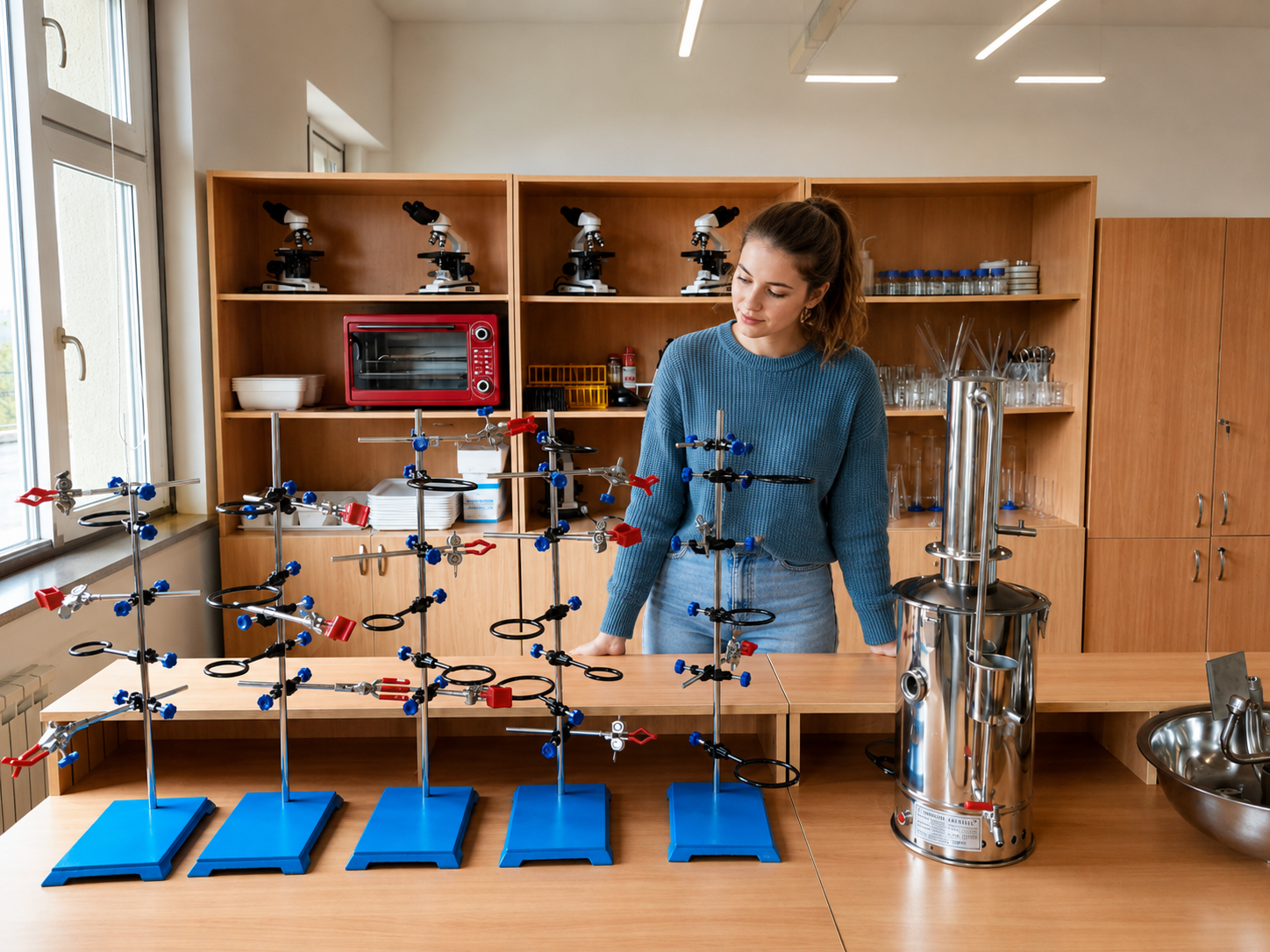
Armenia aims to equip every school with a science laboratory by the end of 2026. A look at the delivery layer of a 439-school rollout: seven laboratory configurations, 1.8 million items, 200+ localised teaching materials — and what ministries should ask suppliers.

Responsible AI in Education Starts Before the Algorithm
Responsible AI in education depends on knowing what your data actually represents. A UNOWA pilot study shows why measurement validity has to come before AI interpretation.
Differentiated Support in Inclusive Education: Why a Score Is Only the Start
Differentiated support in inclusive education starts where scoring ends. Here's why assessment should answer "what's getting in the way," not just "what's wrong."