 Speak to expert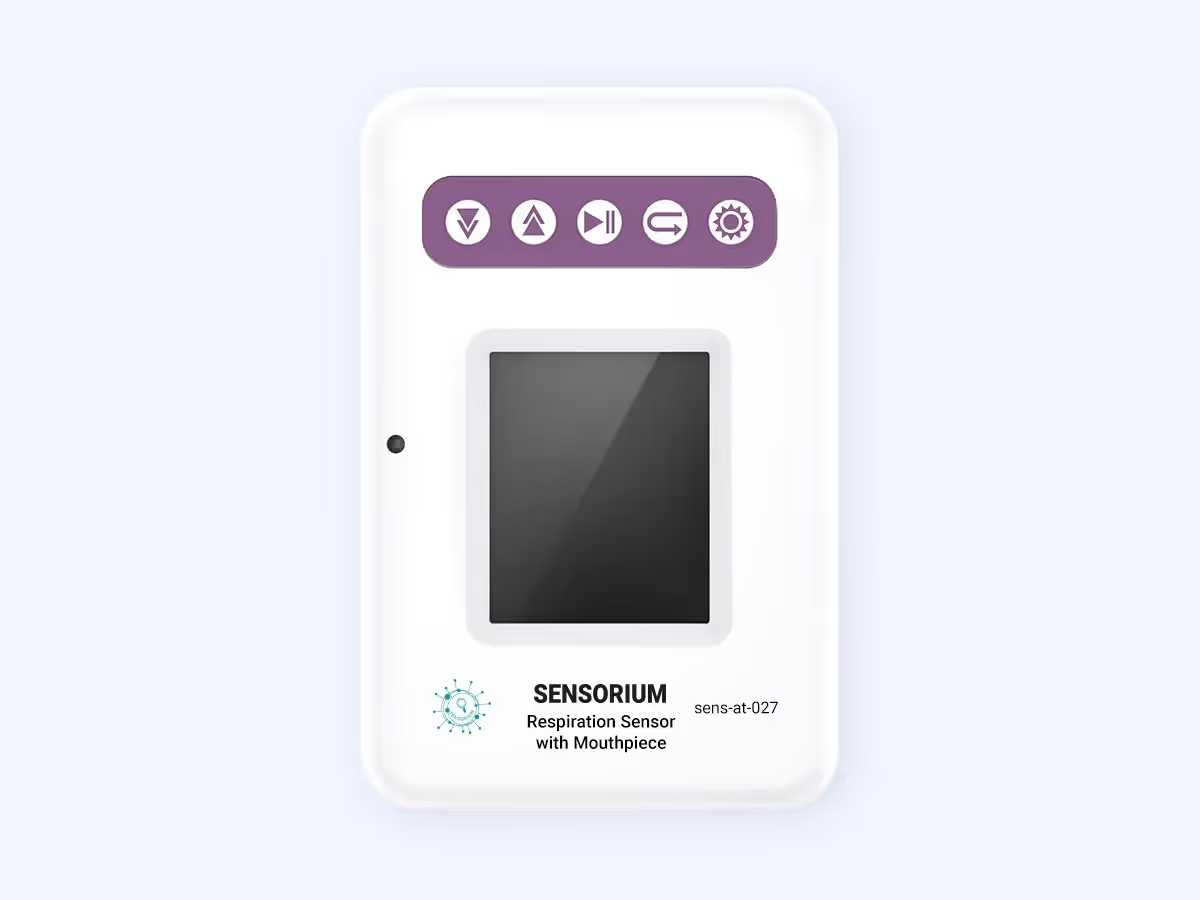


.png)

Spirometer sensor designed for measuring lung capacity and airflow velocity based on gas physics.

The principle of lung capacity testing is based on the laws of gas physics and physiology, measuring the maximum volume of air inhaled and exhaled by the human body. This test is a standard assessment for pulmonary function and physical training, and can also be used for disease diagnosis and treatment. The lung capacity test principle is based on Boyle's Law, which states that gas volume is directly proportional to pressure and inversely proportional to temperature and humidity. During the test, the subject stands or sits, takes a deep breath, exhales as much as possible, and then inhales as much as possible to fill the lungs with gas. The tester uses a spirometer or flow meter to measure the subject's lung volume and airflow velocity.
Range: -10 L/s to 10 L/s
Resolution: 0.01 L/s
Built‑in AI functions open new possibilities for data analysis, automated processing of results, and the creation of interactive experiments.
Testing lung capacity is a simple, safe, and non-invasive method that helps individuals understand their lung health status.
This product is suitable for educational use only and is not intended for industrial, medical, research, or commercial applications.
Wireless sensor with built‑in AI features that unlock new possibilities for data analysis and make experiments highly interactive.
Ideal for school laboratories, university courses, and STEM projects.
Built‑in AI functions open new possibilities for data analysis, automated processing of results, and the creation of interactive experiments.
What our clients are saying about us.




.avif)
.avif)


What our clients are saying about us.