 Speak to expert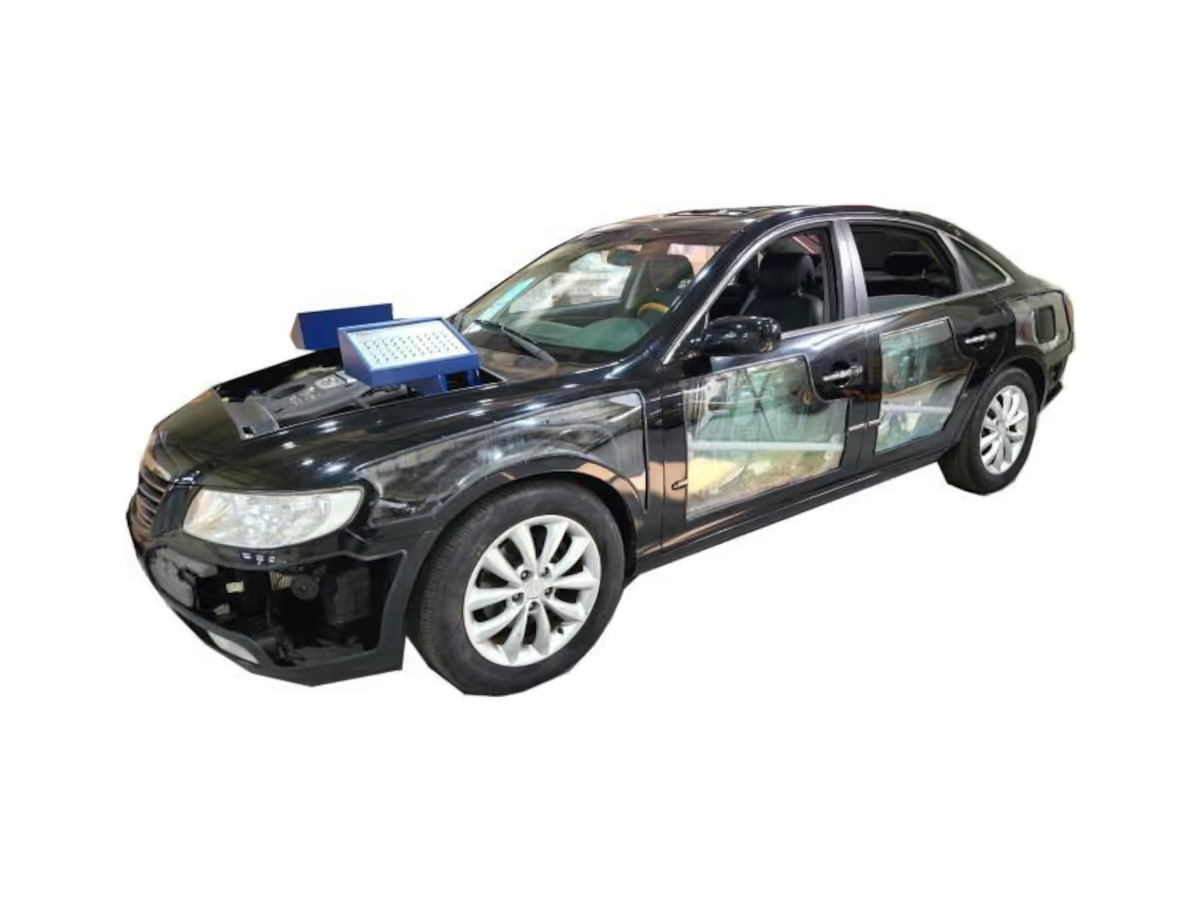

.png)


The educational and laboratory stand is designed as a training vehicle equipped with a diagnostic fault simulator.

● Type Petrol
● Volume 2000 cm³
● Number of Cylinders 4
This system allows students to practice identifying and troubleshooting typical vehicle faults in a controlled environment.
The system provides accurate measurement of parameters using control points for the following subsystems
● Power door lock 8 test points available
● Power outside mirror folding 4 test points available
● Passenger seat power seat 5 test points available
● Automatic shift control 45 test points available
● Automatic shift control 15 test points available
● Headlight system 8 test points available
● VDC system 11 test points available
● Power windows 14 test points available
● IMS 11 test points available
● Power outside mirror folding 4 test points available
● Steering, tilt & telescopic 15 test points available
● Equipped with a built-in fault controller that simulates typical vehicle faults, enabling students to practice diagnosing and resolving issues in various automotive systems.
● Provides access to multiple test points for analyzing and measuring parameters of key subsystems, including electric door locks, exterior mirrors, seat adjustments, automatic gear shifting, headlight systems, VDC systems, electric windows, IMS systems, and more.
● Students can interact directly with real-world components, fostering a deeper understanding of mechanical and electronic systems.
● Includes a car diagnostic instrument for conducting self-diagnosis and testing various automotive systems.
● The lift mechanism ensures ease of access to underbody components for inspection and maintenance (on request of the customer).
● Various practices of self-diagnosis.
● Various practices of electronically controlled gasoline engine tuning.
● Measurement and inspection of voltage and current in various circuits, such as charging circuit and starting circuit.
● Control terminal for inspecting sensors and actuators.
● Measurement of exhaust, measurement and inspection of compression pressure in the cylinder.
● Testing the operation of the fuel pump, measurement and inspection of oil pressure.
● Measurement and adjustment of the tension of the timing chain and fan belt.
● Inspection of all parts of the intake and exhaust system.
● Inspection of all parts of automotive electrical systems, fuel system, ECU, sensors, and actuators.
● Inspection of all kinds of belts and pumps.
● Hands-On Experience Students gain practical experience by interacting directly with a real training car equipped with a fault simulator.
● Comprehensive Coverage The stand covers all essential aspects of modern automotive systems, including electrical, mechanical, and electronic components.
● Simulation Capabilities Realistic simulation of faults enhances understanding of complex systems and improves diagnostic skills.
● Versatility Supports a wide range of tasks, from self-diagnosis to comprehensive inspections, making it an ideal tool for teaching and training in automotive engineering.
What our clients are saying about us.




.avif)
.avif)


What our clients are saying about us.