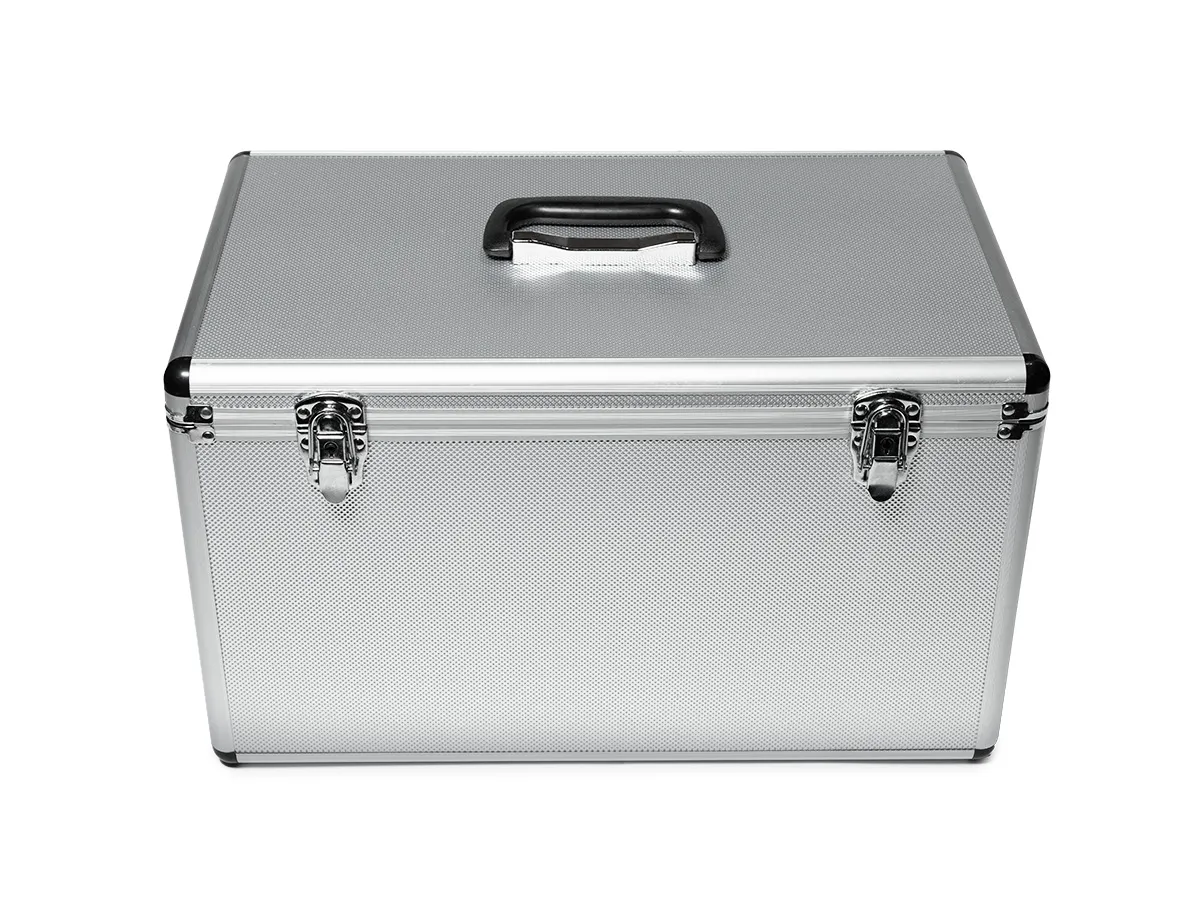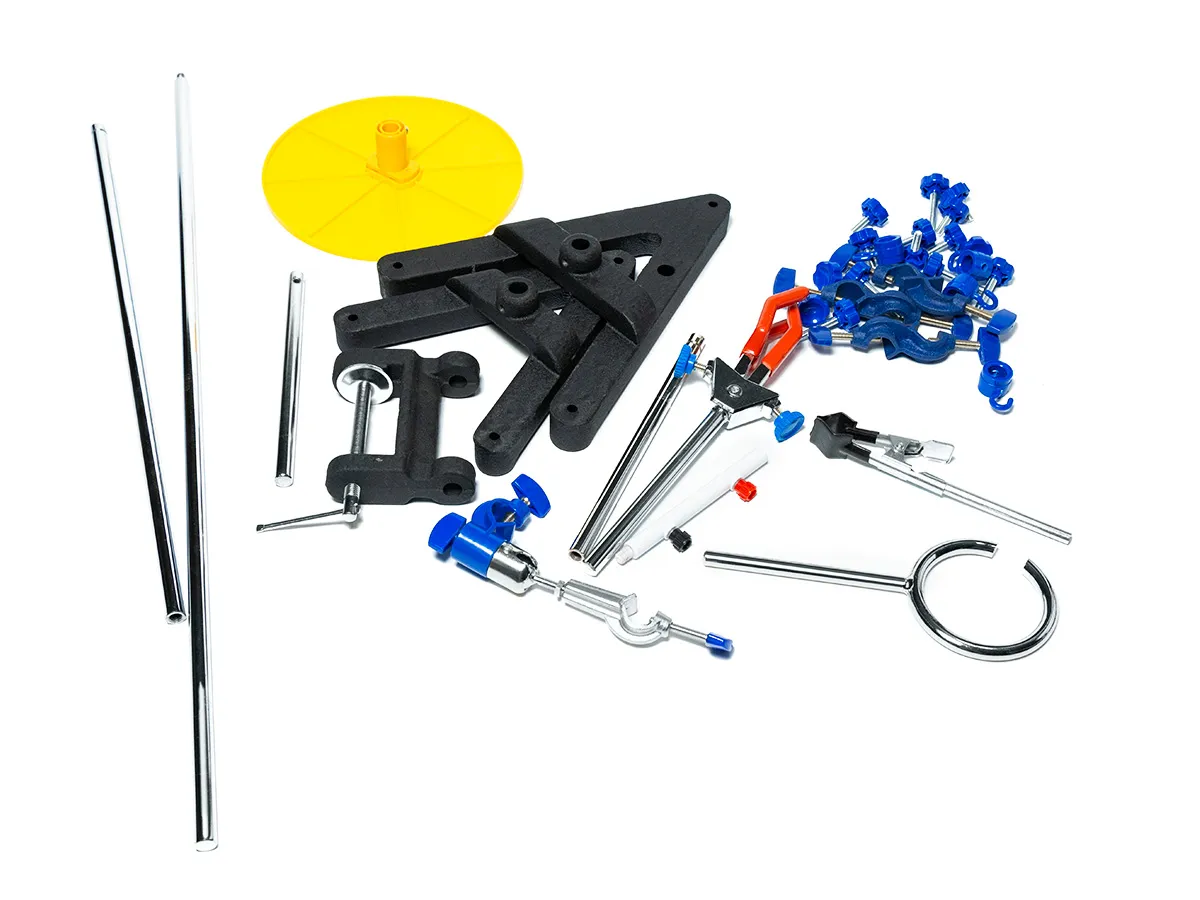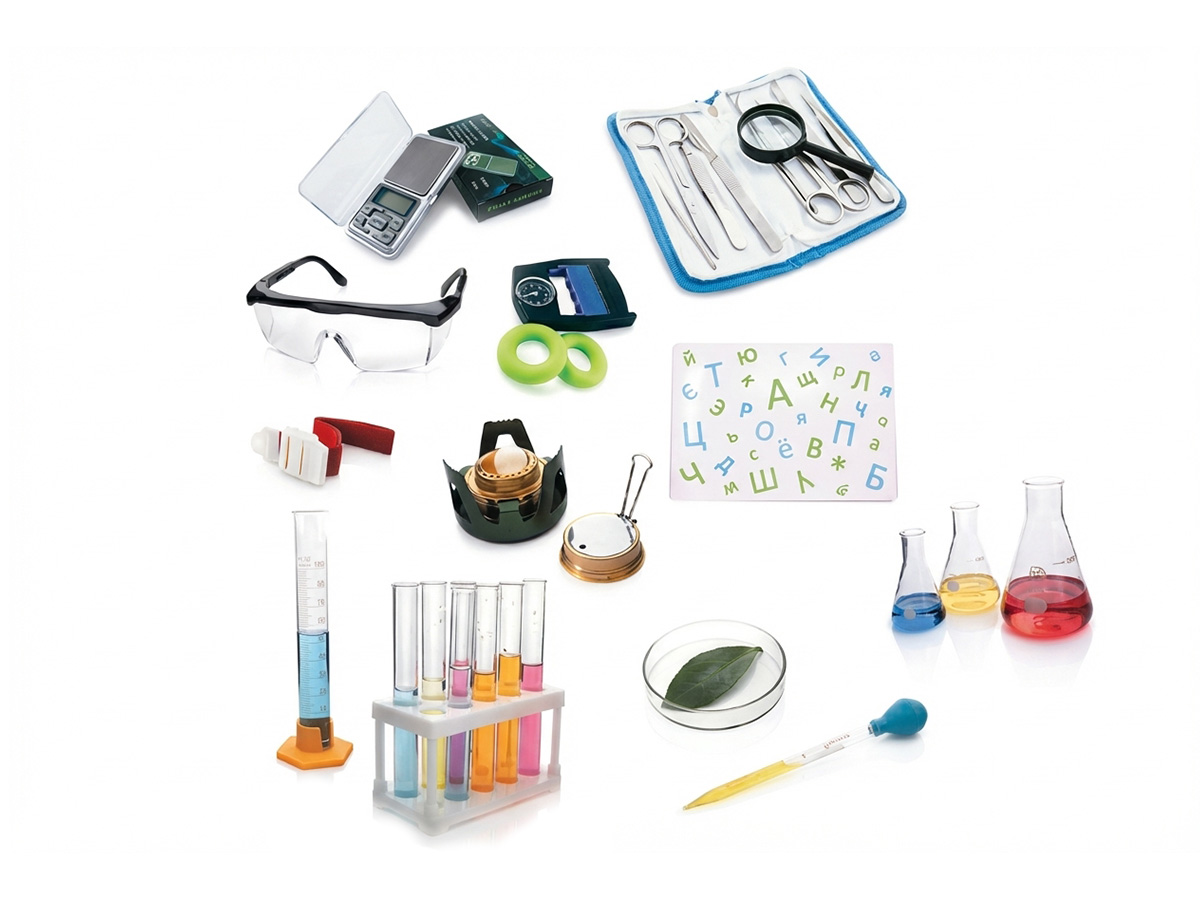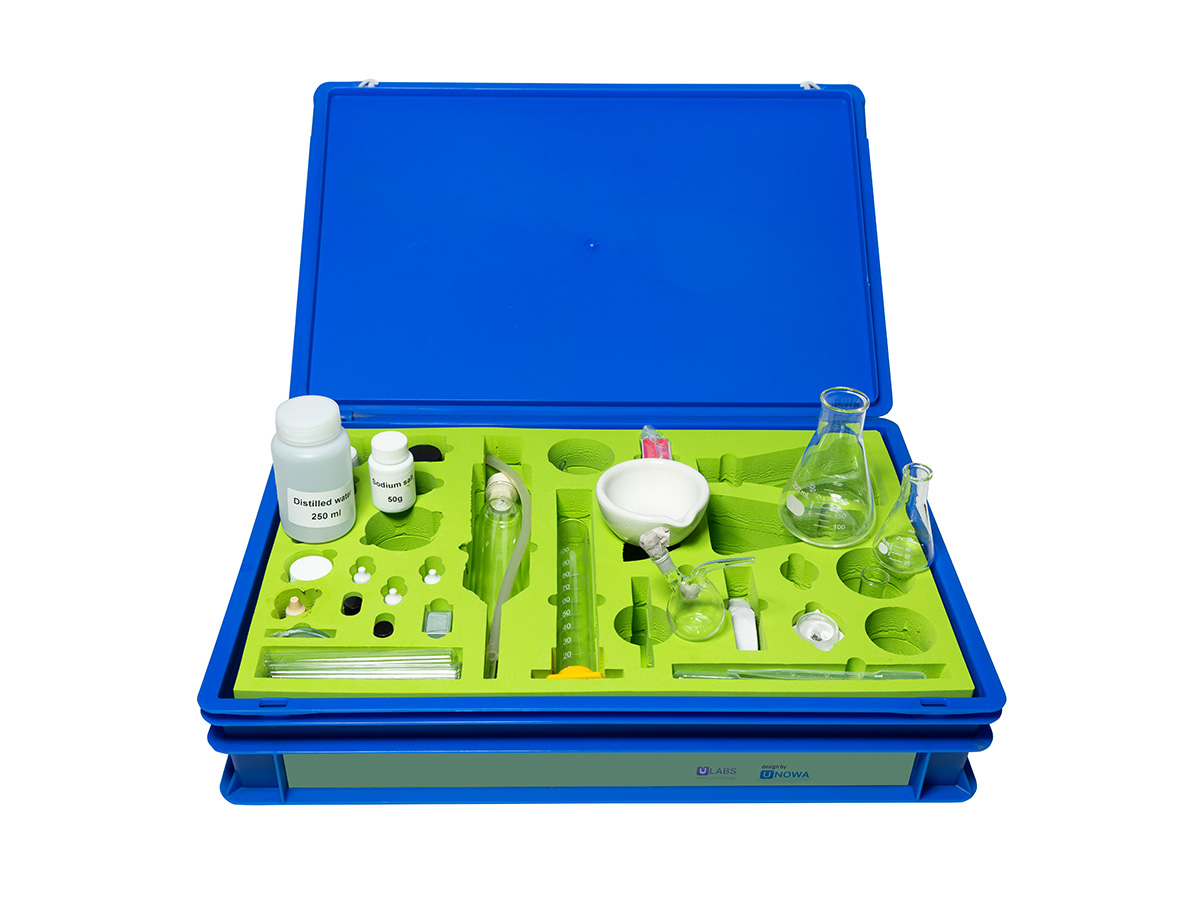
Laboratory Stand "Characteristics and Protection of Electrical Devices"

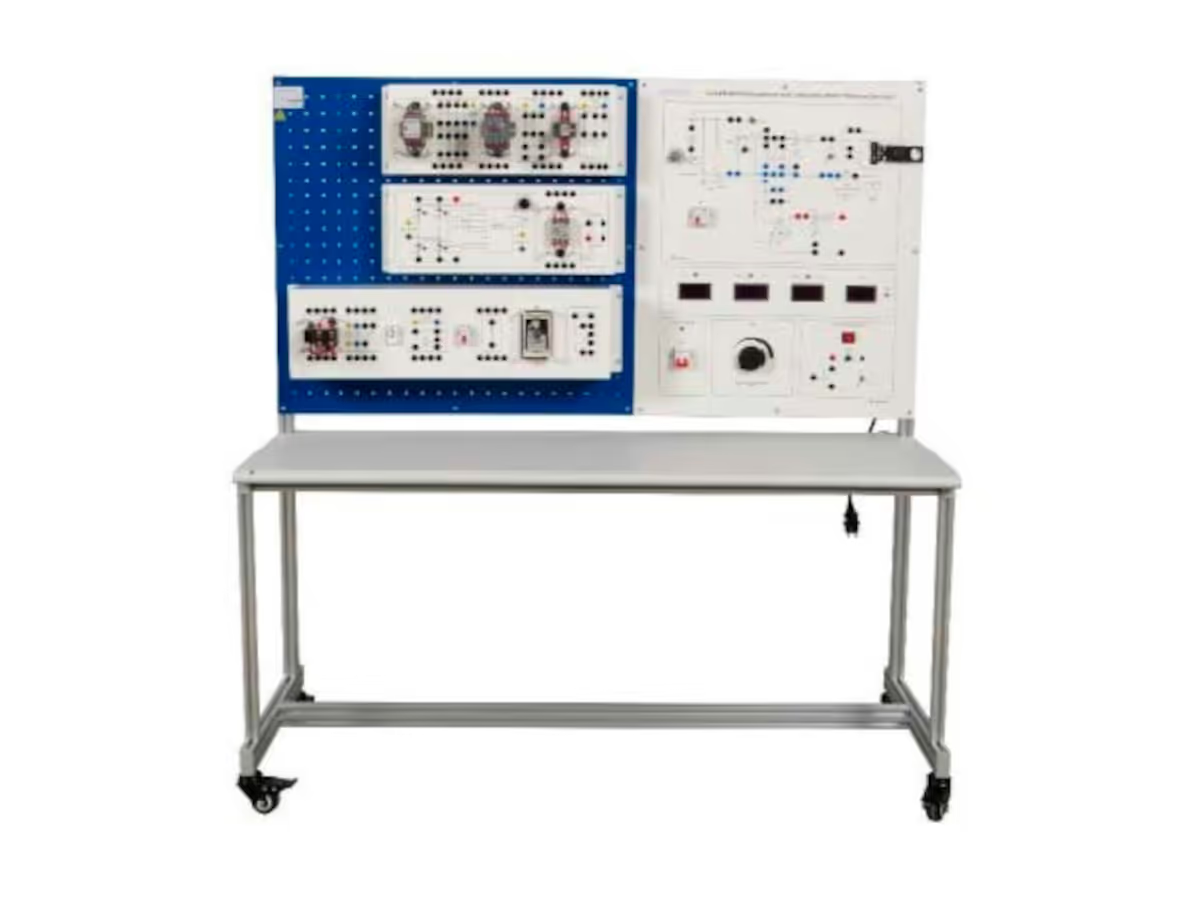
The training and laboratory stand "Characteristics and Protection of Electrical Devices" is designed to familiarize students with various electrical devices and their applications.

Thank you! Your submission has been received!
Oops! Something went wrong while submitting the form.

Specification

icon plus

Technical Parameters:

Power supply: 220 V

Can be equipped with transport rollers for mobility

Functional Features

Bench Housing

Contains electrical equipment, electronic boards, a perforated front panel, and an integrated work surface.

Front Panel

Displays electrical diagrams with measuring instruments. Contains switching sockets, a digital measuring panel, a stopwatch, switching devices, a voltage regulator (VARIAC), and a fuse link holder with a magnifying glass for observing the blowing process.

Interchangeable Modules:

Module with relay-contactor equipment:

Magnetic starter type In-9A, Un-110V, 1NO contacts

Magnetic starter type In-25A, Un-220V, 1NO contacts

Intermediate relays type Umax-30 V AC / 250 V DC, Imax-5 A, Pmax-210 W, contact resistance-100 mOhm

Module with protective equipment:

Overcurrent relay 230 V AC, 16 A, range 0.5–5 A

Thermal relay, 1 A

Circuit breaker, 1 A

Overcurrent relay, 0.4…1 A

Module with electronic devices:

Thyristor voltage regulator with sockets for control signals and power circuits

Solid-state relay (SSR)

Equipment Inside the Bench Housing:

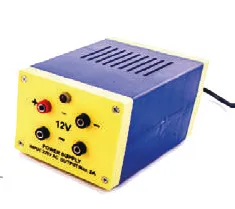
Power source +5 V (current 1 A)

Stopwatch with a measuring range of 0.01 – 99.99 s

Digital measuring device with a current relay

Power transformer 220/42 V

Resistor 50 W, 22 Ohm

Autotransformer (VARIAC) 0.4 kW

Rectifier for regulated VARIAC voltage

Power transformer

Controls:

Laboratory VARIAC switch

Potentiometer for RCD leakage current adjustment

Mode switches for the digital measuring device

Stopwatch reset button

Set of connecting wires

Additional info

icon plus

This comprehensive training platform allows for the study of the design, operation, and maintenance of common electrical apparatuses used in industrial and civil systems.

Bench Construction:

The housing contains electrical equipment components, electronic boards, a perforated front panel, and an integrated work surface.

The front panel features electrical power circuits with measuring instruments, allowing for a detailed analysis of each device's functionality.

Thanks to interchangeable modules, experiments can be flexibly conducted with different types of electrical equipment — relay-contactor groups, protective devices, and electronic units.

The panel is also equipped with sockets for circuit assembly, a digital indicator, a stopwatch, switching equipment, an adjustable voltage source (VARIAC), and a fuse holder.

Training Projects

Investigation of Fuses

Study of the design, operating principle, and maintenance of low-voltage fuses.

Obtaining the time-current characteristic by melting the insert and comparing it with the theoretical one.

Study of Contactors

Investigation of the operating principles and functioning of AC and DC contactors.

Testing an Electronic Current Relay

Study of the design and operating principle of an electronic current monitoring relay.

Experiments with Thermal Relays

Analysis of technical characteristics, design, and functioning of thermal relays.

Assembly of Electrical Circuits

Using connecting wires (jumpers) to assemble electrical circuits according to the diagrams provided in the manuals.

Educational Advantages

Hands-on Work Students interact with real components and assemble functional electrical diagrams.

Comprehensive Training The bench covers all key aspects of electrical apparatus: fuses, contactors, relays, and electronic devices.

Modular Design The ability to use interchangeable modules enhances the understanding of complex systems and provides flexibility in conducting experiments.

Safe Construction Equipped with protective devices and safety features, guaranteeing safe operation.

Conclusion

The training and laboratory stand "Characteristics and Protection of Electrical Devices" is modern educational equipment that combines real components and advanced simulation capabilities. Its robust frame, wide set of modules, and variety of functions make it an indispensable solution for teaching and learning modern electrical engineering technologies and the maintenance of electrical devices.

icon plus
How long is the MIKKO Course?
Is the MIKKO Course good for new teachers
How long is the MIKKO Course?
Ask something?
More information

More information

Related products
view all

What our clients are saying about us.

view all

Customer testimonials

What our clients are saying about us.

Working with UNOWA was a turning point for our university. Their expert-led training in ABA, ADOS-2 and MIKKO reshaped how we think, teach, and prepare inclusive educators. The model inclusion classroom they equipped has become a living lab, a space where theory becomes hands-on skill. This partnership didn’t just support a project. It laid the foundation for a more humane, modern and inclusive education system in Kazakhstan.
Yerkin Zhumankulova
Yerkin Zhumankulova
Thanks to UNOWA’s innovative approach and professional guidance, we’ve redefined how we prepare future educators. The MIKKO training and inclusion lab brought international best practices to our university, not just as theory, but as living, hands-on tools that inspire confidence and real change.
Irina Rovnyakova
Vice-Rector in Academic Affairs. Kazakh National Women's Teacher Training University
Working with the UNOWA team was a valuable and supportive experience in delivering psychological and educational projects. Their reliable platform, openness to dialogue, and continuous technical support allowed me to focus on the quality and meaning of education. I confidently recommend UNOWA as a trusted partner for the development of psychological education and human-centered support.
Liudmyla Lahuta
Liudmyla Lahuta
Thanks to our partnership with UNOWA, even schools in Armenia’s most remote regions now have access to fully equipped science and technology labs. Nearly half of the country’s schools have been modernized, bringing equal learning conditions to every student, no matter where they live.
Zhanna Andreasyan
President of the International Institute of Psychological Maturity INC
UNOWA's national project equipped 14 Kazakhstan universities with inclusive classrooms to a unified standard. They delivered top-quality kits, equipment, digital courses with 24/7 access, and localized resources. This game-changer strengthened inclusive education foundations nationwide.
Dastan Yessenov
Dastan Yessenov
UNOWA's national-level ABA and ADOS-2 training became a milestone for Kazakhstan's education system. The program was comprehensive, well-structured, and perfectly aligned with inclusive education modernization goals nationwide. I appreciated the balance of deep theory, practical sessions, and 24/7 online access. This strengthened specialists' ABA and diagnostics skills, directly improving support for children with special needs.
Karlygash Zholdassova
Coordinator of the PIU of World Bank in the Republic of Kazakhstan
icon arrow left
icon arrow right

Customer testimonials

What our clients are saying about us.

UNOWA's national project equipped 14 Kazakhstan universities with inclusive classrooms to a unified standard. They delivered top-quality kits, equipment, digital courses with 24/7 access, and localized resources. This game-changer strengthened inclusive education foundations nationwide.
Dastan Yessenov
Coordinator of the PIU of World Bank in the Republic of Kazakhstan
UNOWA's national-level ABA and ADOS-2 training became a milestone for Kazakhstan's education system. The program was comprehensive, well-structured, and perfectly aligned with inclusive education modernization goals nationwide. I appreciated the balance of deep theory, practical sessions, and 24/7 online access. This strengthened specialists' ABA and diagnostics skills, directly improving support for children with special needs.
Karlygash Zholdassova
Inclusion Education Specialist of PIU of World Bank in the Republic of Kazakhstan
Working with the UNOWA team was a valuable and supportive experience in delivering psychological and educational projects. Their reliable platform, openness to dialogue, and continuous technical support allowed me to focus on the quality and meaning of education. I confidently recommend UNOWA as a trusted partner for the development of psychological education and human-centered support.
Liudmyla Lahuta
President of the International Institute of Psychological Maturity INC
Thanks to our partnership with UNOWA, even schools in Armenia’s most remote regions now have access to fully equipped science and technology labs. Nearly half of the country’s schools have been modernized, bringing equal learning conditions to every student, no matter where they live.
Zhanna Andreasyan
Minister of Education, Science, Culture and Sport. The Government of the Republic of Armenia
Thanks to UNOWA’s innovative approach and professional guidance, we’ve redefined how we prepare future educators. The MIKKO training and inclusion lab brought international best practices to our university, not just as theory, but as living, hands-on tools that inspire confidence and real change.
Irina Rovnyakova
Vice-Rector for Strategic Development and International Relations Sarsen Amanzholov East Kazakhstan University
Working with UNOWA was a turning point for our university. Their expert-led training in ABA, ADOS-2 and MIKKO reshaped how we think, teach, and prepare inclusive educators. The model inclusion classroom they equipped has become a living lab, a space where theory becomes hands-on skill. This partnership didn’t just support a project. It laid the foundation for a more humane, modern and inclusive education system in Kazakhstan.
Yerkin Zhumankulova
Vice-Rector in Academic Affairs Kazakh National Women's Teacher Training University
icon arrow left
icon arrow right
Laboratory Stand "Characteristics and Protection of Electrical Devices"
Speak to expertimage of finger pointing to a graph