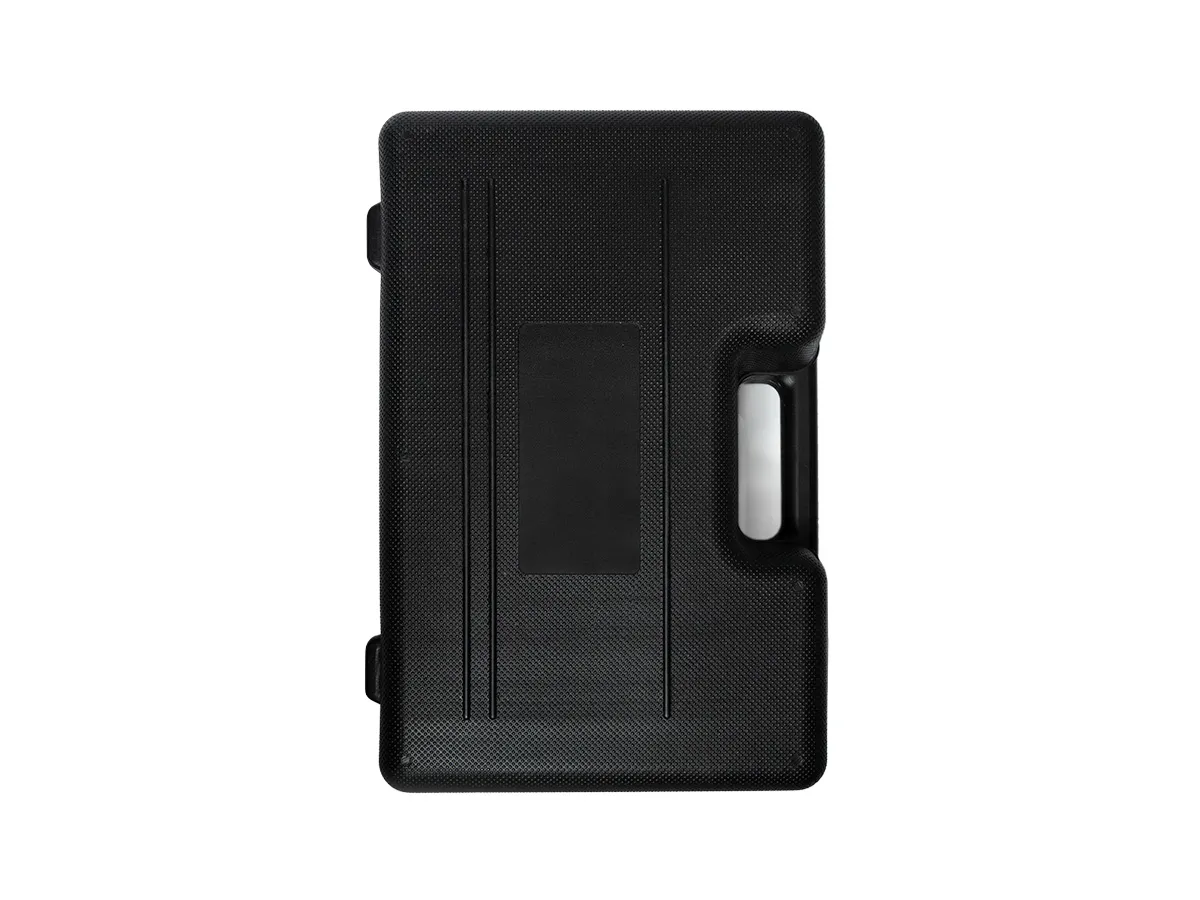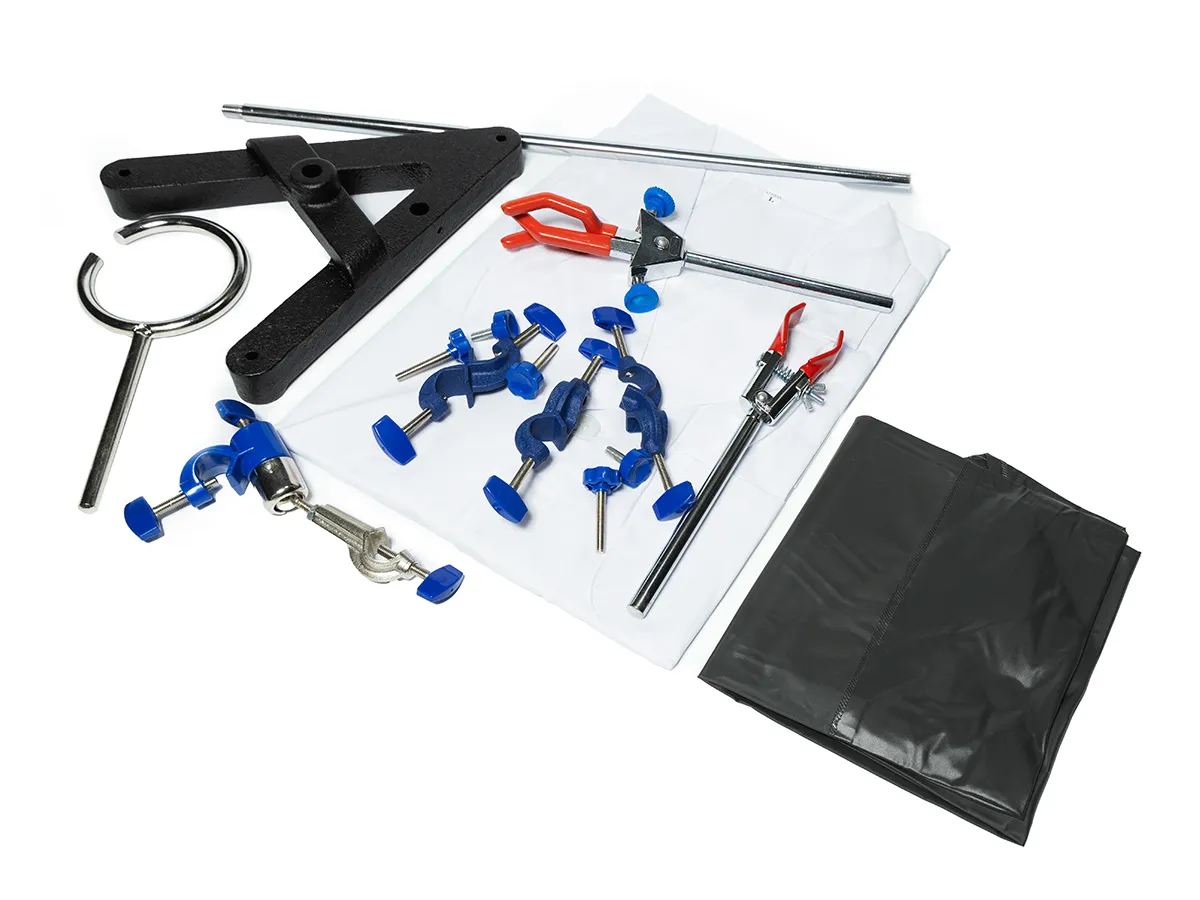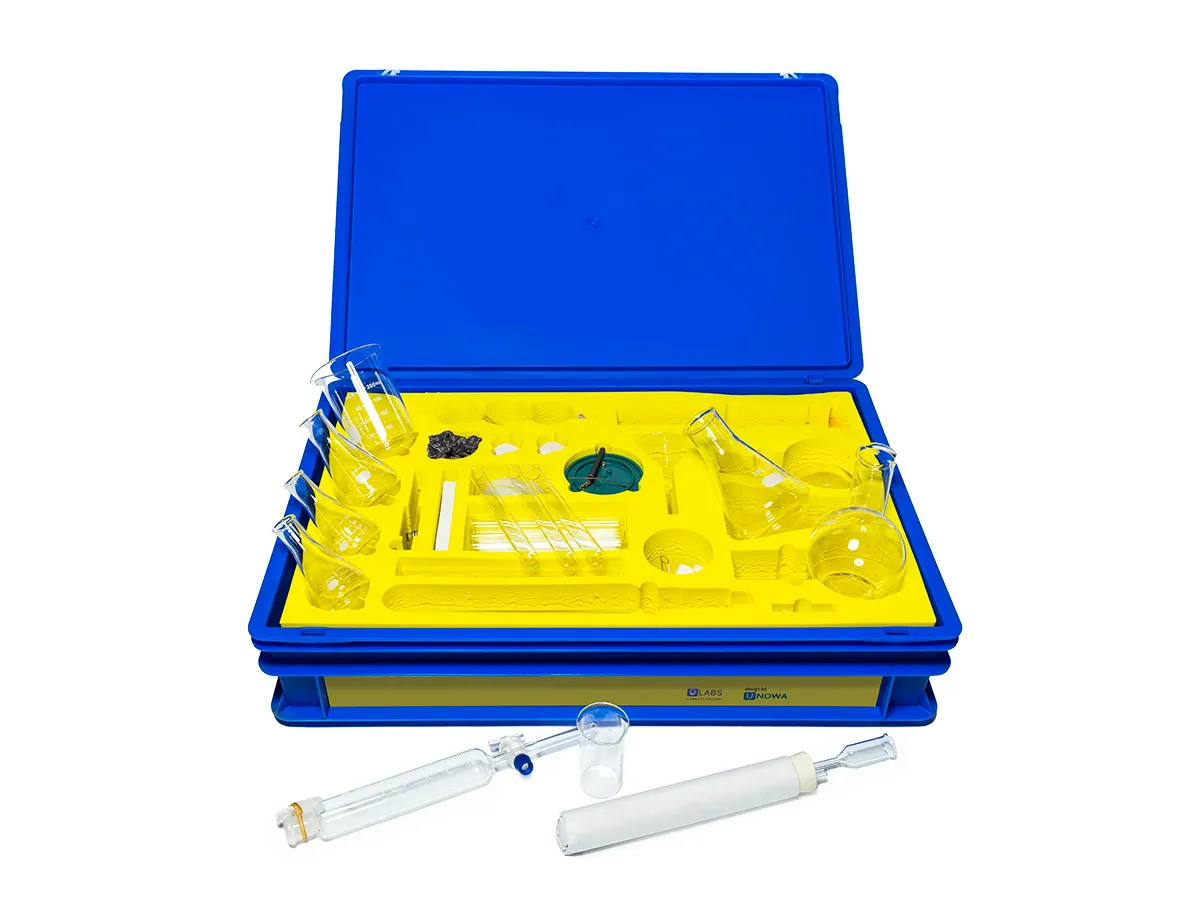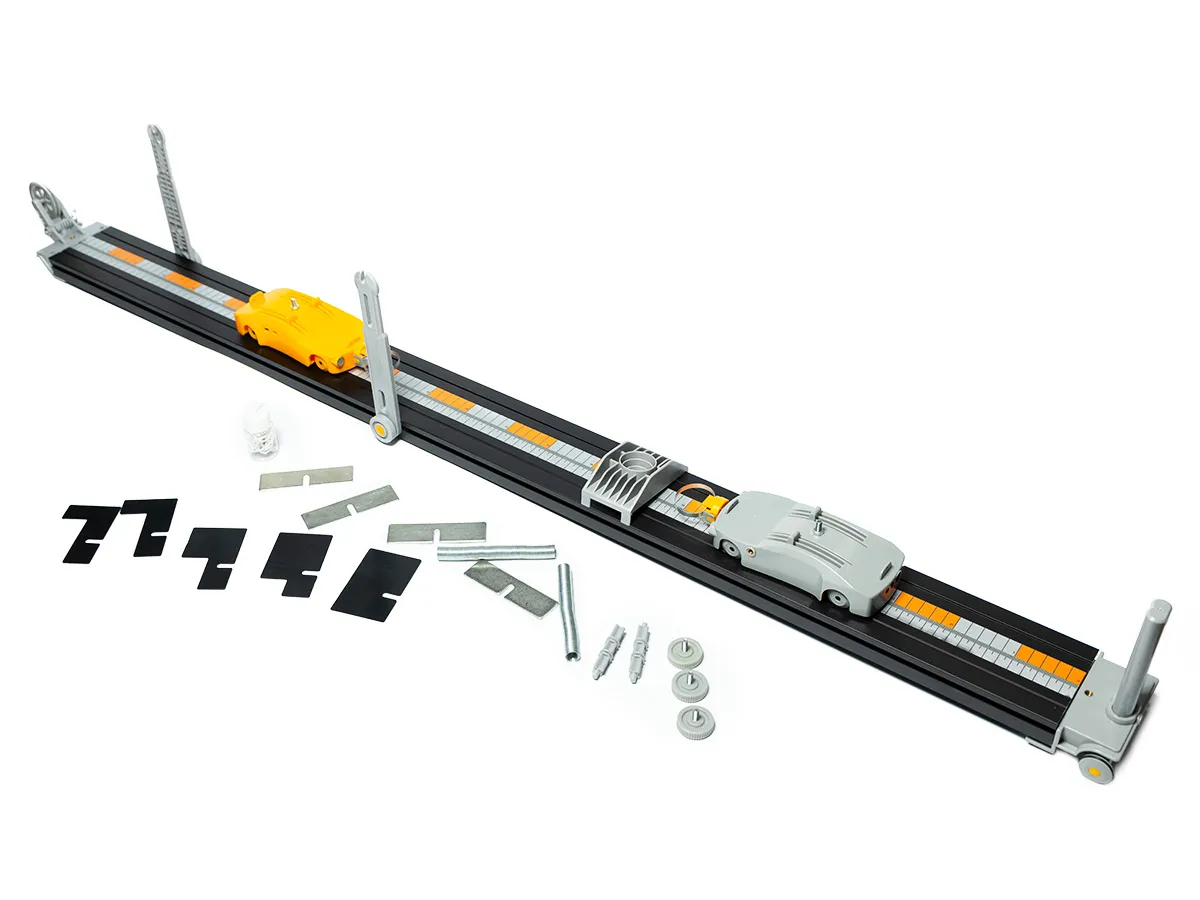
Digital CNC Milling Machine

A benchtop three-axis CNC milling machine that mills flat and shaped surfaces, engraves and cuts out blanks from a G-code program prepared on a computer. Intended for K-12 technology workshops and STEM laboratories, with a set of tools, consumables, software and teaching materials included.

Thank you! Your submission has been received!
Oops! Something went wrong while submitting the form.

Specification

icon plus
  • Control type: computer numerical control, three controlled axes
  • Working field, longitudinal × transverse travel × vertical stroke: 300 × 180 × 78 mm
  • Axis drive: chrome-plated guide shafts and trapezoidal-thread screws, stepper motors of 42 × 48 mm frame size
  • Spindle: diameter 52 mm, power 500 W, rotation speed 12000 rpm
  • Power supply: 48 V DC from a mains power supply unit, power consumption 500 W
  • Maximum travel speed: 5000 mm/min
  • Maximum feed rate during machining: 2000 mm/min
  • Maximum acceleration: 200 mm/s²
  • Machining accuracy: ±0.1 mm
  • Safety and control elements: limit switches on the X, Y and Z axes, emergency stop button, Z-axis zero-level probe
  • Control: from a personal computer running Windows 7, 8, 10, Linux or macOS; control program in G-code
  • Laser module mounting: provided, for a module 40 mm wide, fitted in place of the spindle
  • Overall dimensions: 485 × 415 × 374 mm
  • Weight: 11 kg
  • Operating conditions: air temperature +5 °C to +40 °C, relative humidity 40–60 %, atmospheric pressure 84–107 kPa
  • Warranty: 3 years; spare parts and consumables available for 5 years
  • Compliance: CE and WEEE marking

Kit Contents:

Machine and power supply
  • Digital CNC milling machine, three controlled axes, limit switches, emergency stop button and Z-axis zero-level probe — 1 pc
  • Mains power supply unit, 48 V — 1 pc
Tooling and workholding
  • Special tool set, for operating the machine and finishing the manufactured items — 1 set
  • Universal vice, for clamping the blank on the work table — 1 pc
  • Set of metal-cutting milling cutters — 1 set
  • Set of protective goggles — 1 set
Consumables, software and teaching materials
  • Set of consumables for one year of operation, for the items learners plan to make during one academic year — 1 set
  • Software, preparation of control programs and machine control from a personal computer — 1 set
  • Teaching materials, for use in the educational process — 1 set

Product passport: ULABS-S006 (PDF)

Additional info

icon plus

Intended use

  • For general secondary education institutions, used only under the control and supervision of a teacher.
  • Recommended for learners aged 10 and over (grade 5 and above). The product is intended for educational purposes only.

Setting up

  • Remove the transport fixings from the moving assemblies and check the kit against the kit contents. Inspect the guide shafts, screws, spindle, cables and power supply unit: operation with damaged cable insulation, a loose spindle or a bent guide is prohibited.
  • Place the machine on a rigid horizontal bench able to carry a weight of 11 kg together with the cutting forces, and leave free space around the 485 × 415 × 374 mm housing for the table to travel its full stroke. A wobbling bench produces a wavy cutter trace and an error larger than the rated ±0.1 mm. The emergency stop button has to remain within reach of the operator.
  • Connect the power supply unit and the computer cable, install the bundled software and make sure the computer recognises the control board. The machine works with computers running Windows 7, 8, 10, Linux and macOS.
  • Home all three axes so that the control system obtains the coordinate origin, and test each limit switch and the emergency stop button before the first machining job, not during it.

Working procedure

  • Draw or import the contour in the bundled program, set the depth and number of passes, the feed and the spindle speed, and generate the G-code program. Feed is set within the maximum machining speed of 2000 mm/min, rapid moves within 5000 mm/min.
  • Clamp the blank with the universal vice or hold it down to the table so that the cutter path does not cross the fixings, and place a backing board under the blank where the tool cuts through. Blank sizes are chosen within the 300 × 180 × 78 mm working field.
  • Fit the cutter in the spindle with the minimum necessary overhang: the longer the overhang, the stronger the vibration and the deviation from the set dimension.
  • Set the workpiece zero: X and Y from the edge or the centre of the blank, Z with the zero-level probe, which registers the cutter touching the surface.
  • Run the program first without cutting, with the tool raised above the blank, and follow the path: this reveals a move beyond the working field or an error in the zero before the blank is spoiled.
  • Stay at the machine during machining. Whistling, chattering and blackened chips mean an excessive feed or a blunt tool — stop and revise the cutting mode. In case of a broken cutter, jamming or a shifted blank, press the emergency stop button.
  • After the program finishes, wait for the spindle to stop completely, retract the tool, switch off the power and only then remove the part. Deburr it with the finishing tools from the set and sweep away the chips with a brush.

Safety

  • Connect the product only to a power source with the voltage, frequency and ratings stated on the rating plate. Do not use it with a damaged cord or plug, after a fall, or with any sign of damage.
  • Do not immerse the product or the cord in liquid and do not expose them to moisture. Switch the machine off and unplug it when it is not in use and before cleaning, holding the plug rather than the cord.
  • Provide close supervision when the product is used by students or works near them; never leave it running unattended.
  • Before switching on, make sure the blank is firmly clamped and the cutter is seated in the spindle to the stop and locked: a blank or tool torn out of its fixing at 12000 rpm flies off at high speed.
  • Work only in the protective goggles from the kit — milling produces chips and hard particles that fly off the tool.
  • Keep hands, tools and measuring instruments away from the rotating cutter and never remove chips by hand or with an air jet: they are swept away with a brush after the spindle has stopped completely.
  • Work with hair tied back and clothing fastened, without gloves, scarves, ties, bracelets or corded headphones — loose items get wound onto the cutter.
  • Before any intervention in the working zone — changing the cutter, repositioning the blank, measuring — stop the spindle, wait for the tool to come to rest and disconnect the product from the power supply.
  • Do not block the axis limit switches, do not remove protective elements and use only accessories recommended by the manufacturer.

Consumables and laser module

  • The consumables in the kit cover one academic year, for the items learners plan to make in that time. Keep a record of what is used and replenish the stock in good time.
  • A blunt cutter spoils the surface and overloads the drive, so it is replaced before it is fully worn. Choose the cutter by the blank material and the required surface quality: roughing with a larger diameter and a deeper pass, finishing with a smaller diameter, a shallow depth and a reduced feed. Worn and chipped tools are taken out of service.
  • The design allows a laser module 40 mm wide to be fitted in place of the spindle. Fit and remove the module only with the product disconnected from the power supply. When working with the laser module, use goggles suitable for the wavelength and laser class stated on the module marking, do not direct the beam at people or mirrored surfaces, and ventilate or extract combustion products from the working area.

Maintenance

  • After each lesson remove chips and dust from the work table, guide shafts, screws and housing with a brush or a vacuum cleaner. Chips on the guides and in the screw thread act as an abrasive and are the main cause of lost accuracy.
  • Inspect the guide shafts and screws periodically and lubricate them with a thin layer of grease intended for machine-tool mechanisms. Check the axes for play: with the product de-energised, a moving assembly displaced by hand must show no noticeable free travel. Extraneous noise, runout or overheating of the spindle means worn bearings and the product is sent to a service centre.
  • Once per academic term, check the axis limit switches, the emergency stop button, the zero-level probe and the cable fixings. A product with a faulty safety element is not admitted to work.
  • Check machining accuracy by milling a test contour of a known size and measuring it: a deviation larger than ±0.1 mm means play in the drive, a loose blank fixing or a worn tool.

Storage, transport and disposal

  • Store in a dry, clean, ventilated room at +5 °C to +40 °C and relative humidity of 60 %, without condensation, protected from direct sunlight, moisture, dust and heat sources. The room air is kept free of impurities that cause corrosion of metals.
  • Keep the machine covered against dust with the power supply unit disconnected. Store cutting tools separately in a dry place so that rust does not form on them.
  • During transport, follow the cargo carriage and securing rules of the relevant mode of transport; the packed product is protected from precipitation and impacts during loading.
  • The product carries the WEEE marking (crossed-out wheeled bin), which prohibits disposal together with unsorted household waste. A product no longer fit for use is handed over to a collection point for waste electrical and electronic equipment; metal parts are recycled as scrap metal and electronic components go to specialised recycling.

icon plus
How long is the MIKKO Course?
Is the MIKKO Course good for new teachers
How long is the MIKKO Course?
Ask something?
More information

More information

Related products
view all

What our clients are saying about us.

view all

Customer testimonials

What our clients are saying about us.

Working with UNOWA was a turning point for our university. Their expert-led training in ABA, ADOS-2 and MIKKO reshaped how we think, teach, and prepare inclusive educators. The model inclusion classroom they equipped has become a living lab, a space where theory becomes hands-on skill. This partnership didn’t just support a project. It laid the foundation for a more humane, modern and inclusive education system in Kazakhstan.
Yerkin Zhumankulova
Vice-Rector in Academic Affairs. Kazakh National Women's Teacher Training University
Thanks to UNOWA’s innovative approach and professional guidance, we’ve redefined how we prepare future educators. The MIKKO training and inclusion lab brought international best practices to our university, not just as theory, but as living, hands-on tools that inspire confidence and real change.
Irina Rovnyakova
Vice-Rector for Strategic Development and International Relations. Sarsen Amanzholov East Kazakhstan University
Working with the UNOWA team was a valuable and supportive experience in delivering psychological and educational projects. Their reliable platform, openness to dialogue, and continuous technical support allowed me to focus on the quality and meaning of education. I confidently recommend UNOWA as a trusted partner for the development of psychological education and human-centered support.
Liudmyla Lahuta
President of the International Institute of Psychological Maturity INC
Thanks to our partnership with UNOWA, even schools in Armenia’s most remote regions now have access to fully equipped science and technology labs. Nearly half of the country’s schools have been modernized, bringing equal learning conditions to every student, no matter where they live.
Zhanna Andreasyan
Minister of Education, Science, Culture and Sport. The Government of the Republic of Armenia
UNOWA's national project equipped 14 Kazakhstan universities with inclusive classrooms to a unified standard. They delivered top-quality kits, equipment, digital courses with 24/7 access, and localized resources. This game-changer strengthened inclusive education foundations nationwide.
Dastan Yessenov
Coordinator of the PIU of World Bank in the Republic of Kazakhstan
UNOWA's national-level ABA and ADOS-2 training became a milestone for Kazakhstan's education system. The program was comprehensive, well-structured, and perfectly aligned with inclusive education modernization goals nationwide. I appreciated the balance of deep theory, practical sessions, and 24/7 online access. This strengthened specialists' ABA and diagnostics skills, directly improving support for children with special needs.
Karlygash Zholdassova
Inclusion Education Specialist of PIU of World Bank in the Republic of Kazakhstan
icon arrow left
icon arrow right

Customer testimonials

What our clients are saying about us.

UNOWA's national project equipped 14 Kazakhstan universities with inclusive classrooms to a unified standard. They delivered top-quality kits, equipment, digital courses with 24/7 access, and localized resources. This game-changer strengthened inclusive education foundations nationwide.
Dastan Yessenov
Coordinator of the PIU of World Bank in the Republic of Kazakhstan
UNOWA's national-level ABA and ADOS-2 training became a milestone for Kazakhstan's education system. The program was comprehensive, well-structured, and perfectly aligned with inclusive education modernization goals nationwide. I appreciated the balance of deep theory, practical sessions, and 24/7 online access. This strengthened specialists' ABA and diagnostics skills, directly improving support for children with special needs.
Karlygash Zholdassova
Inclusion Education Specialist of PIU of World Bank in the Republic of Kazakhstan
Working with the UNOWA team was a valuable and supportive experience in delivering psychological and educational projects. Their reliable platform, openness to dialogue, and continuous technical support allowed me to focus on the quality and meaning of education. I confidently recommend UNOWA as a trusted partner for the development of psychological education and human-centered support.
Liudmyla Lahuta
President of the International Institute of Psychological Maturity INC
Thanks to our partnership with UNOWA, even schools in Armenia’s most remote regions now have access to fully equipped science and technology labs. Nearly half of the country’s schools have been modernized, bringing equal learning conditions to every student, no matter where they live.
Zhanna Andreasyan
Minister of Education, Science, Culture and Sport. The Government of the Republic of Armenia
Thanks to UNOWA’s innovative approach and professional guidance, we’ve redefined how we prepare future educators. The MIKKO training and inclusion lab brought international best practices to our university, not just as theory, but as living, hands-on tools that inspire confidence and real change.
Irina Rovnyakova
Vice-Rector for Strategic Development and International Relations Sarsen Amanzholov East Kazakhstan University
Working with UNOWA was a turning point for our university. Their expert-led training in ABA, ADOS-2 and MIKKO reshaped how we think, teach, and prepare inclusive educators. The model inclusion classroom they equipped has become a living lab, a space where theory becomes hands-on skill. This partnership didn’t just support a project. It laid the foundation for a more humane, modern and inclusive education system in Kazakhstan.
Yerkin Zhumankulova
Vice-Rector in Academic Affairs Kazakh National Women's Teacher Training University
icon arrow left
icon arrow right
Digital CNC Milling Machine
Speak to expertimage of finger pointing to a graph