
Did you know that AI-driven tools have boosted knowledge retention from 25% to 60% over the last decade, transforming how educators address learning gaps worldwide? In this article, we explore emerging education technologies like AI, VR, and adaptive learning, sharing insights from global projects, regional policies, and proven strategies to foster inclusive, adaptable education — positioning us at UNOWA as your partner in creating future-ready systems.
The Power of AI in Modern Classrooms
Artificial intelligence stands at the forefront of emerging education technologies, empowering educators to personalize learning and streamline operations. From adaptive tutoring that identifies micro-gaps in student knowledge to AI co-pilots automating administrative tasks, these tools free teachers for meaningful interactions.
Key benefits include:
- Predictive analytics to flag at-risk learners early, with 60% of educators already integrating AI into their methods, according to a report from HolonIQ.
- Real-time feedback that enhances engagement, as seen in global reform projects where AI has redefined personalized education.
As Madeleine Mortimore, Global Education Innovation and Research Lead at Logitech, notes: “We are moving away from a ‘content delivery’ model, and toward what I call ‘The Augmented Educator.’ AI and predictive algorithms can analyze student performance data to spot micro-gaps in knowledge.”
In regions like the EU and MENA, AI aligns with national strategies, such as the EU AI Act, ensuring ethical use and data protection under GDPR.
Immersive Experiences with VR and AR
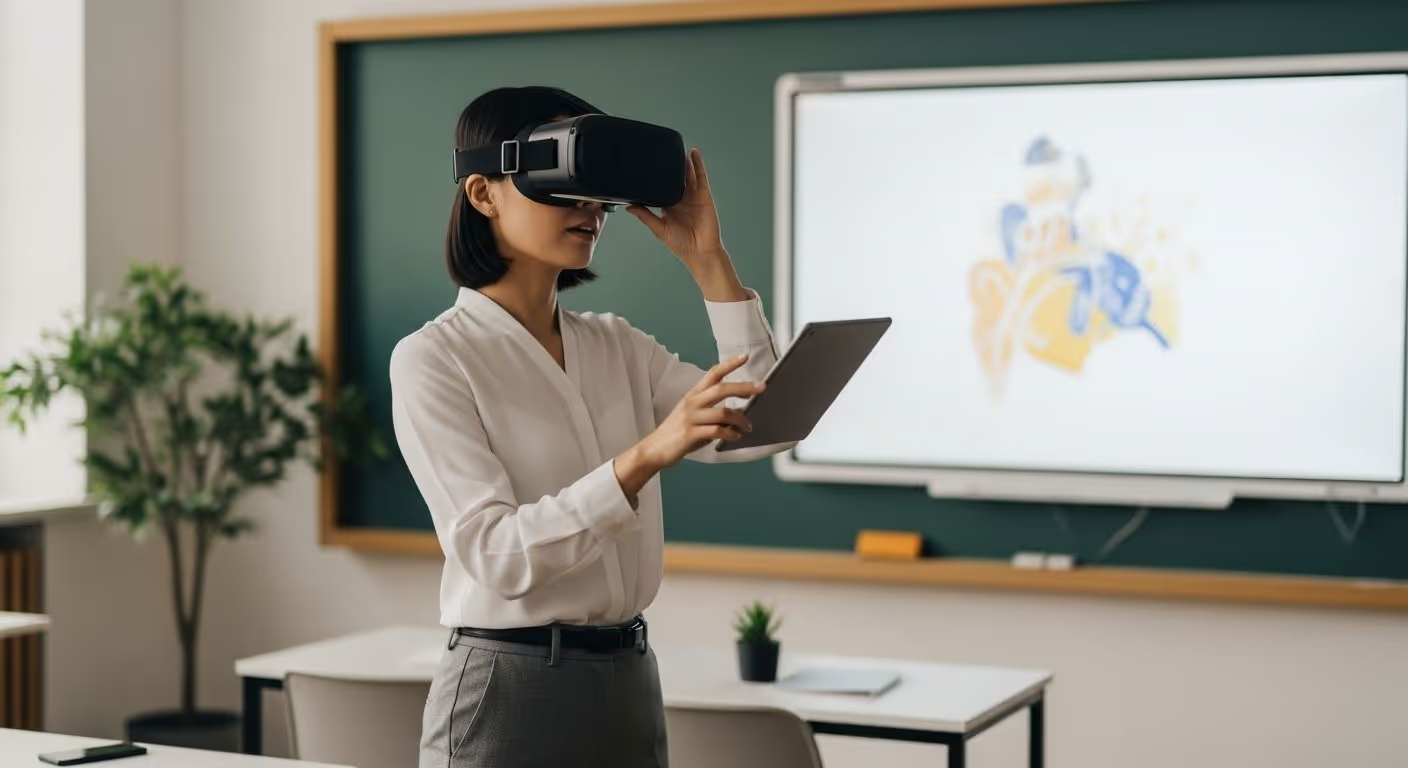
Emerging education technologies like virtual reality (VR) and augmented reality (AR) are revolutionizing STEM and career training by simulating real-world scenarios. Students can explore digital twins of labs or practice skills in safe, cost-effective environments, boosting retention and emotional connection.
Notable impacts:
- VR users feel 3.75 times more connected to content than in traditional settings, per PwC's VR study.
- In CIS countries like Kazakhstan, VR supports rural STEM access, aligning with national digitization efforts.
This forward-looking approach addresses inclusivity, making complex concepts accessible for special education needs, as we integrate these into our MIKKO and Ulabs solutions.
Adaptive Learning and Analytics for Inclusivity
Adaptive platforms represent a cornerstone of emerging education technologies, dynamically adjusting content to individual needs and promoting equity. By analyzing data, these systems have increased knowledge retention significantly, from 25% to 60%, enabling tailored interventions.
In practice:
- Hybrid models blend in-person and digital learning, essential for remote areas in Uzbekistan or Oman.
- Inclusive features like text-to-speech ensure accessibility, supporting Universal Design for Learning principles outlined in UNESCO's guidelines.
Our analytics tools empower institutions to monitor progress, fostering compassionate, data-driven education.
Navigating Challenges in Global Implementation
While emerging education technologies promise transformation, challenges persist in equity, governance, and adaptation. In EU nations like Poland and Latvia, data protection under GDPR demands privacy-by-design, while MENA's Vision 2030 in Saudi Arabia emphasizes cultural localization.
Common hurdles include:
- Equity gaps in device access, widening rural-urban divides without offline-capable solutions.
- Teacher capacity building, where AI literacy is uneven, as highlighted in World Bank's education reports.
From our 15 years of experience in over 300 projects, we've seen that ignoring local curricula leads to pitfalls like "shiny object" syndrome — piloting tools without integration.
Proven Strategies for Future-Ready Education
To overcome these, we advocate ecosystem approaches in emerging education technologies, co-creating with ministries for sustainable impact. Strategies include:
- Local adaptation: Aligning with national standards in Qatar or Estonia for multilingual, curriculum-aware AI.
- Teacher empowerment: Building dashboards that augment, not replace, educators.
- Ethical governance: Committing to transparent AI, as per emerging policies in Georgia and the UAE.
These draw from successful reforms, positioning us to deliver inclusive systems that leapfrog quality gaps. Discover how we can partner with you at UNOWA.
FAQ
What are the top emerging education technologies to watch? AI, VR/AR, and adaptive analytics are leading, with AI adoption at 60% among educators for personalized learning.
How do regulations affect emerging education technologies? In the EU, the AI Act classifies education AI as high-risk, requiring transparency. MENA and CIS policies focus on data sovereignty and STEM alignment.
Can these technologies support inclusive education? Yes, features like multimodal content ensure accessibility, as we emphasize in our MIKKO solutions for special needs.
What challenges do schools face with adoption? Equity in access and teacher training are key, but strategies like modular ecosystems help scale effectively.
How can UNOWA help implement these technologies? We offer tailored, curriculum-aligned solutions with training and analytics — contact us at UNOWA for a consultation.

Check out other articles
Explore the latest perspectives from our digital research team

Equipping 439 schools: what a national STEM rollout actually takes
Armenia aims to equip every school with a science laboratory by the end of 2026. A look at the delivery layer of a 439-school rollout: seven laboratory configurations, 1.8 million items, 200+ localised teaching materials — and what ministries should ask suppliers.

Responsible AI in Education Starts Before the Algorithm
Responsible AI in education depends on knowing what your data actually represents. A UNOWA pilot study shows why measurement validity has to come before AI interpretation.
Differentiated Support in Inclusive Education: Why a Score Is Only the Start
Differentiated support in inclusive education starts where scoring ends. Here's why assessment should answer "what's getting in the way," not just "what's wrong."