Did you know that while 86% of education organizations use generative AI, only 10% have formal guidelines, leaving students and educators navigating ethical minefields? In this article, we explore ai ethics in education, highlighting challenges like bias and privacy, global frameworks, and strategies for responsible integration — drawing on recent data and insights to empower inclusive, future-ready learning.
The Growing Role of AI in Modern Classrooms
AI is transforming education, with the market projected to reach $30.28 billion by 2029 from $7.57 billion in 2025. 83% of K-12 teachers and 60% of educators use AI daily for planning and feedback, boosting outcomes like 15% higher passing rates and 70% better course completion. Yet, ai ethics in education demands attention to ensure these tools promote equity rather than exacerbate divides.
At UNOWA, we integrate ethical AI into our inclusive education systems like MIKKO and STEM innovation through Ulabs, adapting to national standards across the EU, MENA, and CIS regions. Our 15+ years of experience in over 300 national projects position us to guide ethical AI adoption.
Key Ethical Challenges in AI Education
Navigating ai ethics in education involves addressing core issues:
- Bias and Fairness: AI can reinforce stereotypes, with 12% of students concerned and trust in non-discriminatory AI at just 54%. Black teenagers face 2.86 times higher false accusations of AI cheating, widening racial gaps.
- Privacy and Data Security: 19% of students fear breaches, as seen in New York's ban on facial recognition in schools EdWeek.
- Equity and Access: 14% report unequal tool access, disproportionately affecting LGBTQ+ students (28% negative impacts vs. 17% for others).
- Other Risks: Plagiarism fears (33%), overdependence (30%), and misinformation (28%) highlight the need for balanced approaches.
These challenges underscore why ai ethics in education must prioritize inclusivity, aligning with our commitment to special education and accessible tools.
Global Frameworks and Regulations Shaping AI Ethics
International guidelines are evolving to support responsible AI use. UNESCO's framework emphasizes ethical integration, noting only 13% of universities have policies and advocating for pedagogical guidance UNESCO.
In the U.S., all 50 states considered AI legislation by mid-2025, with 80% public support for regulations Brookings. The EU's AI Act provides risk-based rules for education tools European Commission, while emerging markets like those in MENA and CIS adapt similar policies.
We at UNOWA align our solutions with these standards, ensuring adaptable, ethical AI for ministries and institutions.
Expert Insights and Proven Strategies
Experts urge proactive measures: "AI's future for students is in our hands," notes Brookings, calling for policies that foster trust Brookings. 76% of school leaders see AI literacy as essential, yet only 5.89% of institutions offer comprehensive training.
Professional advice includes:
- Transparency: Build trust by explaining AI decisions.
- Inclusive Training: Integrate ethics into curricula, with 74% of U.S. districts now training teachers.
- Equity Focus: Address disparities through adaptable systems, as we do with curriculum-aligned content.
Recent news shows 51% of U.S. students using AI, but 25% of K-12 teachers see net harm, emphasizing balanced implementation Forbes.
Positioning for Future-Ready Education
By embracing ai ethics in education, we can harness AI for personalized, inclusive learning without risks. Our analytics and training empower educators to mitigate biases, ensuring every child accesses quality education.
Discover how we transform learning at UNOWA. Let's collaborate on ethical AI solutions tailored to your needs.
FAQ
What is ai ethics in education? It involves principles ensuring AI tools in learning are fair, private, and equitable, addressing issues like bias and access.
How does AI bias affect students? It can lead to unfair outcomes, such as higher false cheating accusations for minority groups, with 2.86 times the rate for Black teenagers.
What regulations guide AI in education? Frameworks like UNESCO's guidelines and the EU AI Act promote responsible use, with only 10% of organizations having formal policies.
How can institutions implement ethical AI? Start with training (74% of districts do this), transparent tools, and inclusive strategies, as we support at UNOWA.
Why is AI literacy important? 76% of leaders view it as career-essential, preparing students for a future where AI boosts 70% course completion but requires ethical handling.

Check out other articles
Explore the latest perspectives from our digital research team

Equipping 439 schools: what a national STEM rollout actually takes
Armenia aims to equip every school with a science laboratory by the end of 2026. A look at the delivery layer of a 439-school rollout: seven laboratory configurations, 1.8 million items, 200+ localised teaching materials — and what ministries should ask suppliers.

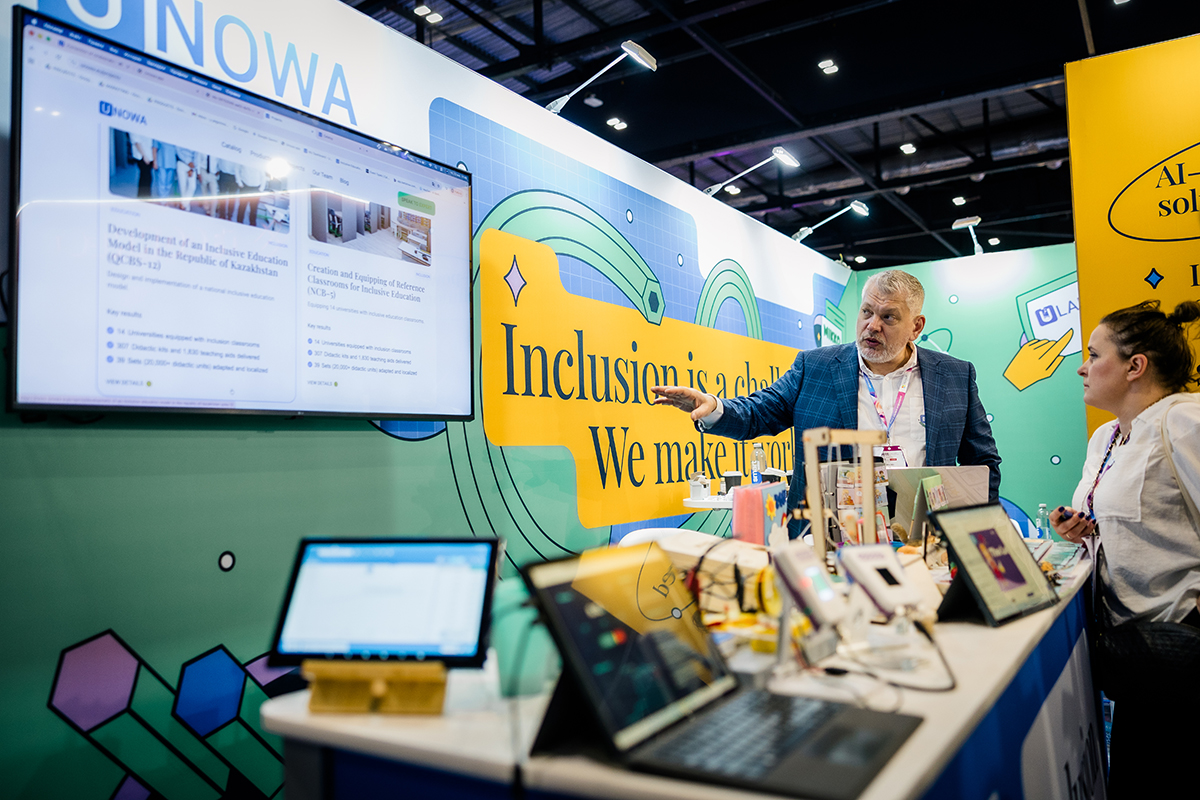
Responsible AI in Education Starts Before the Algorithm
Responsible AI in education depends on knowing what your data actually represents. A UNOWA pilot study shows why measurement validity has to come before AI interpretation.

Differentiated Support in Inclusive Education: Why a Score Is Only the Start
Differentiated support in inclusive education starts where scoring ends. Here's why assessment should answer "what's getting in the way," not just "what's wrong."